A friend asked if I could discuss what makes a good book review. I said that a good review is a creative response to a creative work. He asked if I could say a little more. Okay.
Book reviews come in four main kinds.
One: for people who are considering reading the book. They want to find out if it’s worth their time.
Two: for people who have already read the book. These reviews can analyze specific aspects the book, such as its symbols, character development, or techniques employed in different passages.
Three: for people who aren’t going to read the book but who want to learn about it. I’m not likely to read John Bolton’s memoir, The Room Where It Happened, but I’m curious about its contents.
Four: for your teacher at school when you had to do a book report. This kind of book review taught you bad habits because your real, unstated task was to prove to the teacher that you’d read the book and more or less understood it. You probably recounted the plot to show that you’d made it all the way to the end. Your teacher was probably bored to tears. Teachers cry a lot in the break room.
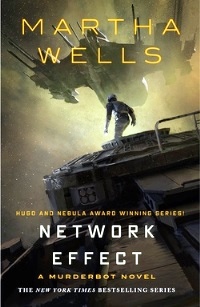 So forget the fourth kind of book report. Your job is to be interesting and to communicate. Also, spoilers aren’t welcome with would-be readers. If I were reviewing the latest Murderbot novel, Network Effect by Martha Wells, I couldn’t recount much of the plot without ruining the delightful twists. Murderbot meets ART again … and I’ve said too much already.
Before you start your review, decide who your readers are. At Goodreads for example, most people come to find new books by checking the threads about specific books. However, some Goodreads groups engage in critical discussion threads. Those different threads might require a different kind of review.
I can easily guess something about readers who are wondering if they’d like to read the novel Network Effect. They’ve probably already read the earlier novellas in the series, so they know what Murderbot is. They probably want to know if the book maintains the style of the earlier novellas. I can assure them that it does. Murderbot is the same sarcastic, acutely aware observer of its surroundings. The plot moves fast, almost too fast. There are aliens! Friends! Feelings! Perils! And, as I said, some delightful plot twists. I can’t wait for my husband to finish the book so we can talk about it because I can’t say anything of substance without spoilers. (This is a Type One book review.)
A Goodreads group I belong to has “spoiler-allowed” discussions. One discussion has debated whether Murderbot, who calls itself “it,” seems more masculine or feminine. My review in that thread might examine how a character in Network Effect, Amena, relates to Murderbot, and I could recount specific incidents, such as when she calls it “mom.” (This is a Type Two book review.)
A Type Three review isn’t something I’m going to do, only because I don’t think readers are going to come to me for that. If I were, I might want cite particular passages to trace an ongoing theme of the novel and the series, which examines the ways that the cyborg Murderbot and other sentient machines and artificial intelligences are denied the humanity they deserve. In fact, their humanity has been so rigorously denied that they themselves might not believe they’re worthy. Security units like Murderbot are treated as mere appliances that can be discarded without a second thought. Murderbot faces the question of self-worth repeatedly and directly in Network Effect. That theme, I believe, raises the book above mere action-adventure. (This kind of review could be much longer than a Type One or Two.)
A Type Four book report is out of the question. I received my high school diploma long ago, and I’m exempt for the rest of my life from inflicting such torture on myself and others.
So, how should you structure a book review? First make sure the readers know the title and author in the first couple of sentences. You may also want to say a little about the content — a very brief summary might be enough, depending on the kind of review. Curious would-be readers can always consult the blurb at the publisher or Amazon.
Then fulfill the readers’ expectations as creatively as you can. Will they enjoy the book? Did the book succeed at its intention? What can you say about your reaction to it, emotionally and intellectually? How did the characters and plot move you? If it’s non-fiction, was it thorough and persuasive? What in the book illustrates your conclusion?
What effect will the book have on the world? Did it remind you of anything? Did you learn something about the author? Did the writing or storytelling style contribute to the story or topic?
What were you looking for in the book? Did you find it? Did the author make any errors or do things you hated? Pointing out problems makes for an interesting review, but remember that to err is simple, but to do things well is complex. It’s easier to comment about simple things than complex things. It’s also hard to be creative, but that’s your goal in the review.
Finally, remember that your teacher isn’t going to read your review and grade you. Stodgy, “correct” English isn’t required. You can use multiple exclamation marks!!! Hey, you can be all conversational, and you can get as personal AF. You can write a haiku. Just try to be honest. Readers treasure honesty most of all.



 Chapter 1 of a novel I’m writing now, Princess Magpie,

 Daniel and Jorge Explain the Universe describes itself this way: “A fun-filled discussion of the big, mind-blowing, unanswered questions about the universe. In each episode, Daniel Whiteson (a physicist who works at CERN) and Jorge Cham (a popular online cartoonist) discuss some of the simple but profound questions that people have been wondering about for thousands of years, explaining the science in a fun, shorts-wearing, and jargon-free way.”
 Cognitive dissonance
 Step 3. Planting. This requires dirt and possibly some household trash. At the start of March, I planted the seeds in potting soil in ecologically friendly cups made from
