Sue Burke’s most recent science fiction novel is Usurpation, the conclusion of the trilogy that began with Semiosis and Interference. She began writing professionally as a teenager, working for newspapers and magazines as a reporter and editor, and began writing fiction in 1995. She has published more than 40 short stories, along with essays, poetry, and translations from Spanish into English of short stories, novels, poetry, and historical works. Find out more at https://sueburke.site/
I recently acquired hearing aids, so I wear tiny computer-managed sound equipment in my ears. Like other people new to hearing aids, I’ve rediscovered that the world is horribly noisy — I had become used to the quiet of hearing loss. Now my pen scratches too loud on the paper when I write. The tassels on my shoes rattle. Traffic is an insupportable roar.
At least I can turn my hearing aids down or off. How do the rest of you stand this all the time? I can also turn the hearing aids up and eavesdrop like never before, but at that level, even the rustle of my hair becomes bothersome.
This leads to another question: Would superhero-level super-hearing be a good thing? The background noise would be appalling. And you can’t turn your ears off.
Super-vision might not be a problem because you can close your eyes. Super-taste might be fine as long as you’re not eating something awful. Likewise super-smell, unless there’s a stench. But if you develop eczema, super-touch might be torture. Would enhanced tactile sense also mean super-pain?
Marvel Comic Universe and DC Comics: Have you fully thought this through?
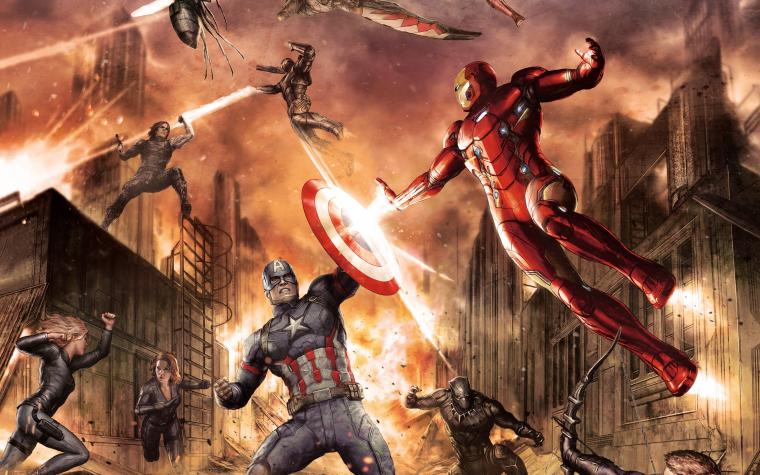
Speaking of superheroes, I have one more question. I used to work as a journalist covering municipal budgets. Whenever I see a thrilling fight scene where heroes and villains bash streets and infrastructure, trash cop cars, and smash buildings, I see millions of dollars in repairs. Who’s going to pay for that?
Windycon is Chicagoland’s longest-running science fiction convention. It’s now in its 52nd year and will be held October 9 to 11 at the Hyatt Regency Hotel conference center in Rosemont, Illinois.
The convention is relatively small, no more than 1000 people, and literary based — that is, focusing more on written works than movies and TV, although those won’t be forgotten, and astrophysics will get consideration, too.
Windycon 52’s chair, Austin “Alchemist” Regan says, “This year’s theme, Sanctuary Among the Stars, was inspired by the countless alien worlds, distant civilizations, and unlikely alliances that fill the science fiction we love, and by the people who gather here to celebrate them.
“Across books, movies, and series, we are shown again and again that the universe is vast, strange, and beautifully varied. We meet beings from worlds unlike our own, speaking unfamiliar languages, carrying different histories, values, and ways of seeing reality itself. Yet the stories that stay with us are the ones where those differences do not divide, they connect.”
Here are the panels I’ll be on. There will also be games, cosplay, crafts, theater, an art show, workshops, a vendor’s hall, readings, music, and parties.
Slower than Light Interstellar Societies, 6 p.m Friday, October 9, Mirabel Room. How can a unified society exist when communication can take years and travel can take decades? If every journey is a one-way trip, how can planets stay connected? Sue Burke, moderator; Clif Flynt, Geoff Strayer, and Jim Plaxco.
What’s the Right FTL Method for Your Story?8 p.m. Friday, October 9, Narita A Room. Science fiction has given us multiple ways of reaching other stars quickly — warp drives, jump gates, long-distance teleportation. Each one comes with pluses and minuses. Which one fits best for your story? Sue Burke, moderator; Mark Roth and Mimi Aruguete.
Speculative Literature Foundation Deep Dish Reading,noon Saturday, October 10, Paris Room. Join the Speculative Literature Foundation for the next installment of its Deep Dish Reading Series, which celebrates the work of local Chicago science fiction and fantasy writers. I plan to read Meditate Like the Stars. Alex Kingsley, moderator; Gregory Stark, G.E. Moore, Richard Chwedyk, Brendan Detzner, Alex Jennings, Llewella Forgie, Sue Burke, and Fannie Price.
Worldbuilding: Creating a Universe from a Blank Page, 9 p.m. Saturday, October 10, Tegel Room. It’s time to create your epic book or game series, and you want to set it in a rich and vibrant universe. How do you approach such a daunting task? How do you keep it familiar enough to be relatable, but also unique enough to carry the reader away to a brave new world? Do you start by creating an exhaustive bible outlining the characters, politics, and environment before writing the first word of the narrative, or do you jump into the story and then keep track of the details as you go? We’ll talk about all of this and much more as we guide you through this formidable challenge. Sue Burke, moderator; Malda Marlys, Victor Ladis Schultz, and Andrew Gaska.
To Live Forever: The Longest Human Dream with Larry Niven, 12 noon Sunday, October 11, Charles De Gaulle Room. Humanity has been trying to cheat death for as long as we’ve been telling stories. From ancient legends of magical fountains and miraculous potions to modern medicine and the latest promises of longevity, the desire to live longer has inspired everything from profound discoveries to bizarre schemes and dangerous extremes. Join legendary science fiction author Larry Niven for a wide-ranging discussion of our fascination with immortality and the many paths humanity has taken in pursuit of it. We’ll explore the history, science, speculation, and fiction surrounding longevity, including the ethical questions that arise when extending human life becomes possible. How far would humanity go to defeat death? And what might happen if we actually succeeded? Larry Niven, moderator; Paul Hah and Sue Burke.
The Theory Behind Utopia, 1 p.m. Sunday, October 11, Mirabel Room. What does a perfect society look like, and what can imagining one teach us about the world we live in? Utopian science fiction has a long and fascinating history, using imagined societies to explore ideas about politics, technology, culture, equality, freedom, and human possibility. Join us as we explore where utopian science fiction comes from, the theories and ideas that have shaped it, and the many forms utopian thinking has taken across science fiction and fantasy. From visions of ideal societies to stories that challenge the very idea of perfection, we’ll examine how these imagined worlds reflect the hopes, fears, and aspirations of their creators. Most importantly, we’ll consider why utopian fiction still matters and how imagining different ways of living can influence the way we think about our own society and the future. Sue Burke, moderator; Terry O’Brien and Alex Kingsley.
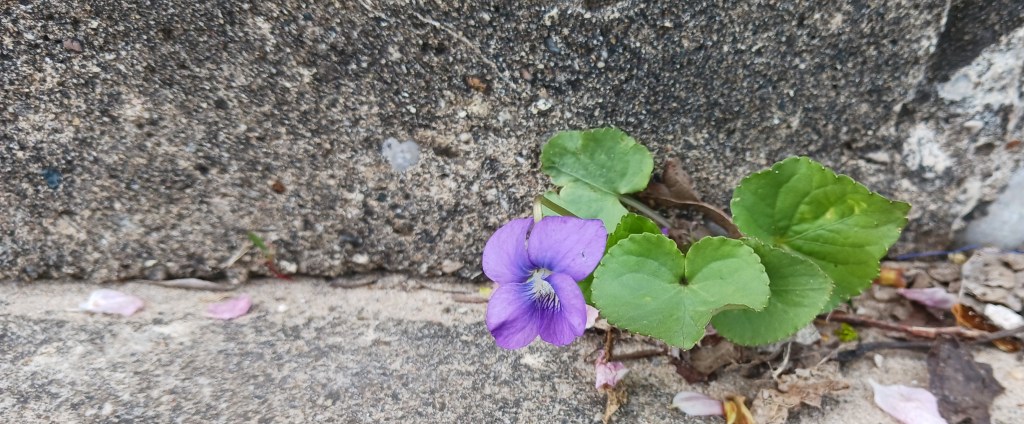
I live in Illinois, and like other US states, it has many state symbols. These include: flower, violet; fossil, Tully monster; fungus, giant puffball; insect, monarch butterfly; exercise, cycling; animal, white-tailed deer; dance, square dance; and microbe, Penicillium rubens.
Some of these are projects initiated by school children, but that microbe comes with some serious history.
In 1928, Alexander Fleming showed that Penicillium rubens had antibacterial properties, but penicillin was difficult to produce. Meanwhile, by the 1940s, World War II was underway, and the Allied troops needed a lot of antibiotics.
The US National Center for Agricultural Utilization Research got to work in Peoria, Illinois, searching for the right strain of the fungus to use for mass production. That strain was found in 1943 in a moldy cantaloupe from a local grocery store. Soon, millions of doses of the antibiotic were ready for the invasion of Normandy. As the result of government support for scientific research, the world was made safe for democracy again.
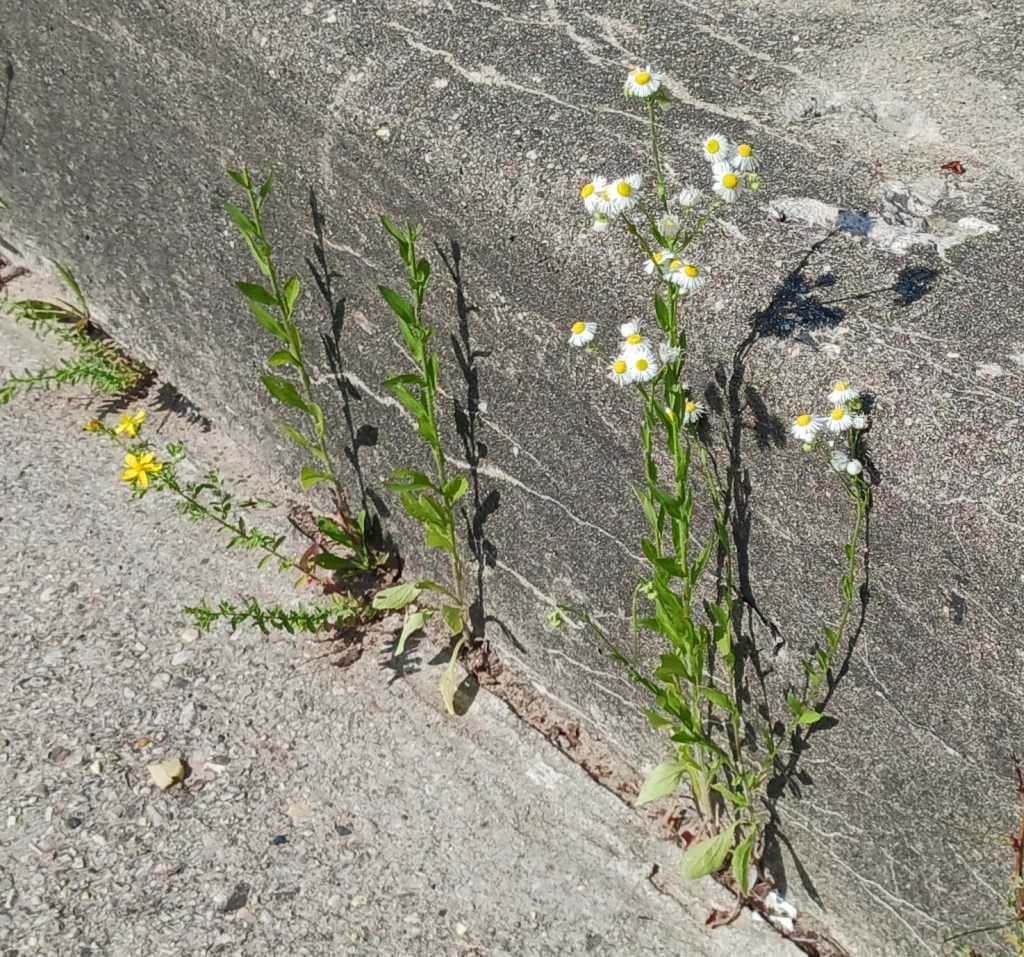
A weed, according to the Penguin Dictionary of Plant Sciences and the Wordsworth Dictionary of Botany, is a “plant growing where it is not wanted.” Merriam-Webster goes further: “a plant that is not valued where it is growing and is usually of vigorous growth; especially: one that tends to overgrow or choke out more desirable plants.”
“All the word ‘weed’ meant was that the plant wasn’t wanted; it wasn’t intentionally planted. It wasn’t ‘subordinate.’ It grew where it was able within the general monstrosity that is most human development.[…]
“My technical term for ‘weeds’ became ‘anthrophytes’ — plants that have adapted to the human setting, defined as it is by concrete, gravel, railroad ballast, chain-link fences, brick, and asphalt. Though far from ideal subjects for studying ecosystem dynamics because most were aggressive invasive species, these anthrophytes were a form of ‘nature’ moving back in, reclaiming the space humans had taken from them. […] I realized this was a whole realm of plant ecology virtually nobody was keeping track of or studying: ‘concrete botany,’ figuratively speaking.”
Full disclosure: I met the author, talked with him about his book, and asked for a copy to blurb if I liked it, and I did. My blurb:
An addictive read. Story by story, a fascinating world is revealed, at times heartbreaking, comic, or terrifying, but always compassionate and original. A fantasy has never felt so real, its people so true.
After a massacre, a soldier must return the bodies of the dead members of his company to their families. As he does, Álbaro Ceynos struggles to understand his own guilt and innocence in the massacre, as well as what came before and after it. He does so with utter candor as he tries to empathize with the families’ varied reactions. He also gains a deeper understanding of his world as he encounters its poverty, wealth, politics, faith, and folly.
Some books tell the story of changes to the characters in it. This book manages to change the reader a little, too. Álbaro is a soul laid bare, and while he never asks, the reader may wonder: Who am I to judge — not only him but everyone who must face loss, falsehood, and truth?
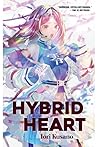
This novella is the polar opposite of the movie KPop Demon Hunters. The movie is heavy on fantasy and set in Korea; this book is a little bit science fictional and set in Japan. The movie offers fun and infectious music (I danced); this book is a relentlessly realistic look at the grinding self-destructive effort behind being a pop idol.
In the book, a very young woman named Rei is controlled at every moment by her manager to turn her into the perfect idol, slim to the point of malnourishment, always beautiful, always smiling, girlish but sexy, and constantly rehearsing and racing to keep up with the demands of a fickle public.
She’s desperately alone and lonely. Her best friend was banished for contract-breaking behavior (finding a boyfriend), and her manager is manipulative and unstable, but this is what she wanted, right? To be a famous pop idol? But as it turns out, the job doesn’t even pay well. So much for glamor. And eventually, she realizes how easily she could be replaced.
It’s a grim story, unlike the movie. Like the movie, though, the ending is uplifting, but in a completely different way: no more pretend happiness.
I’ve been asked if there’s anything new coming out. I have some short stories looking for a home, and if they’re published, I’ll announce it here.
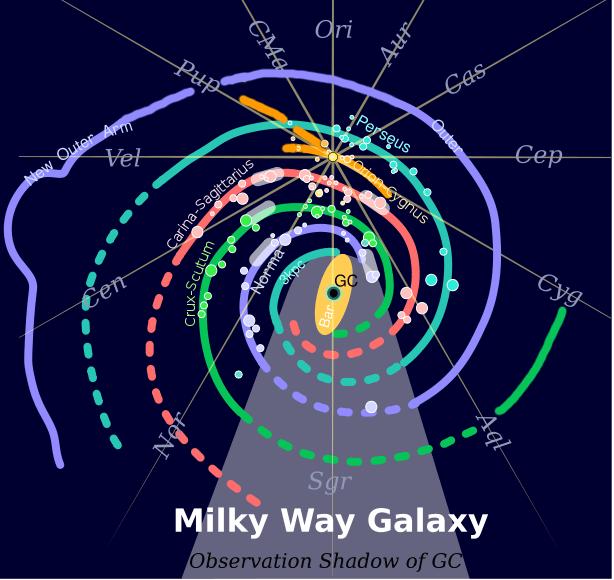
As for another novel, I’m almost done with the very shitty first draft tentatively titled A Nice Galaxy. It tries to deal seriously with the size of the Milky Way, which is almost unimaginably vast. Suppose we humans have settled the galaxy. How can humanity remain united when even something as basic as a radio transmission becomes too attenuated to decipher less than a quarter of the way across the galaxy, not to mention the thousands of light-years it would take to arrive?
Imagine no handwavium shortcuts like faster-than-light travel. Then imagine humanity’s many self-destructive foibles and the problems of survival in a galaxy mostly hostile to human life. That is, imagine trying to carry out the impossible task of keeping humanity connected.
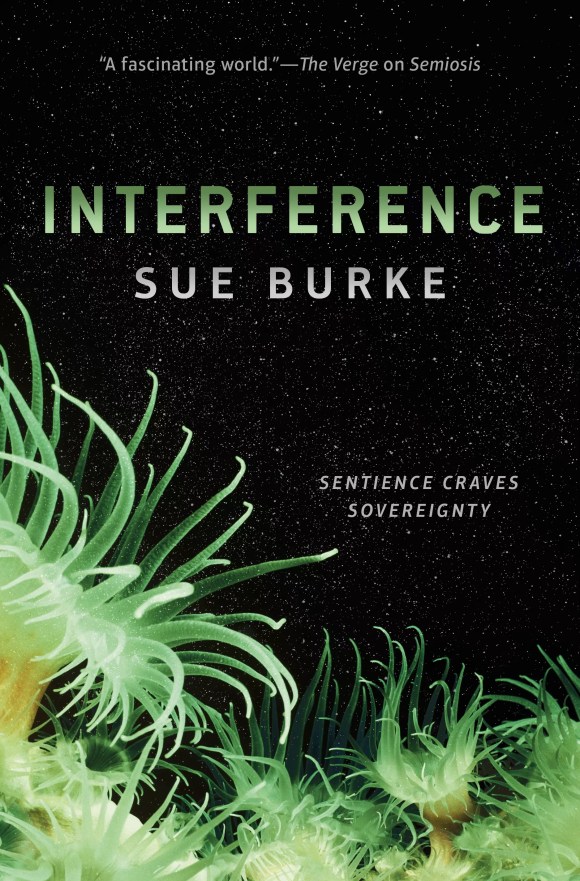
As part of an Audible sale, my novel Interference will be available for $6.99 from June 4 to June 26! This sale is only offered to Prime membership subscribers in the US. This is also a cash sale, meaning it will not affect those using an Audible credit to purchase.
Interference is the second novel in the Semiosis trilogy. More than two hundred years after the first colonists landed on Pax, a new set of explorers arrives from Earth on what they claim is a temporary scientific mission. But the Earthlings misunderstand the nature of the Pax settlement and its real leader. Even as Stevland attempts to protect his humans, a more insidious enemy than the Earthlings makes itself known.
“Narrators Caitlin Davies and Daniel Thomas May reprise their roles, and between them, they’ve once more captured the essence behind the voices of multiple characters, and even more impressively, this time there are non-humans thrown into the mix.” — Bibliosanctum Book Blog.
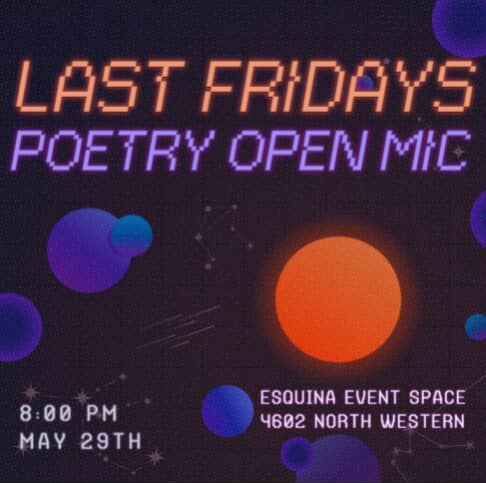
I’ll be reading at the Last Fridays Poetry open mic on Friday, May 29, 8 p.m., at Esquinaevent space, 4602 N. Western Ave., Chicago. It’s a supportive environment, and all are welcome. This time, I won’t be reading poetry, I’ll be talking about poetry, specifically about translating poetry. Here’s what I plan to say:
***
Today, I won’t be reading poetry, I’ll be talking about poetry, specifically about translating poetry. I’ve lived in Spain and the United States, and sometimes I write poetry in English and Spanish, and there can be problems with translation.
For example, the Spanish language doesn’t have a verb equivalent to “finesse.” You can express the idea, of course. “She finessed her way into the party,” can be said in Spanish: Se las ingenió para entrar en la fiesta. “She used ingenuity on things to get into the party.” Not quite the same, but close.
That technique, using “ingenuity” to approximate “finesse,” is called compensation. Here’s another example. My English-language haiku:
nodding heads —
lavender flowers
weighted by bees
My translation into Spanish:
abejas
meciendo las flores
de lavanda
In Spanish, you nod by asentir con la cabeza or “to agree with the head.” A literal translation would not work. The closest word, mecer, means “to rock,” as in “the hand that rocks the cradle.” So I wrote a Spanish version that means, literally, “bees / rocking the flowers / of lavender.” It supplies the same physical picture, but the implied meaning is different.
You can also paraphrase, which may or may not get you what you need. In Spain, the famous festival in July in Pamplona, known for its running of the bulls, honors St. Fermin, so the fiesta and by extension the run are known as los sanfermines. The Spanish haiku:
sanfermines
el semáforo parpadea
amarillo
Literal translation:
the running of the bulls in Pamplona
a stoplight blinking
yellow
It still needs a little work.
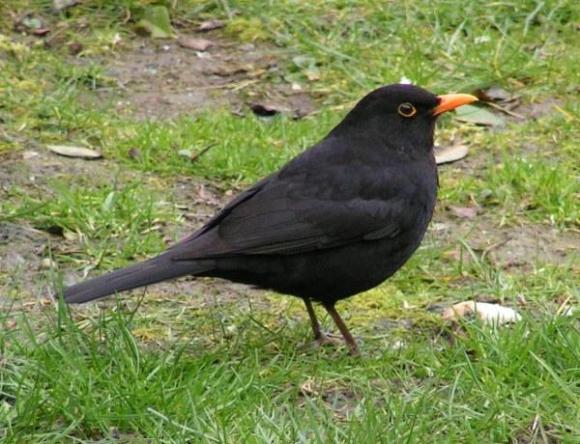
Another problem is cultural, which can be solved with adaptations. In Europe, the bird called a blackbird is the Turdus merula, basically an all-black version of the American robin, Turdus migratorius. (The European robin is a flycatcher, Erithacus rubecula. New World blackbirds don’t exist in Europe. Yes, it’s confusing.) For both these Turdus birds, their beautiful song is a harbinger of spring, so if I’m writing for an American audience, I might adapt the name of the bird to avoid confusion.
Eurasian blackbird
But the following haiku has another problem that also requires a compensation. In Spanish, the adverb ya emphasizes the time of the event. What time? Now, then, soon, already, immediately, finally, never … you know from the context, and there’s no exact English equivalent. Consider this haiku:
el mirlo canta
cigüeñas rumbo al norte
¿ya? ¿cómo que ya?
The Spanish version, translated over-literally, is “the blackbird sings / storks in direction to the north / ~time? how that ~time?
My translation:
the robin sings
storks headed north
now? so soon?
A particular problem is wordplay and puns. In this example, Spanish words often distinguish gender, although English words can’t. The translation of this poem is exact, but the humor doesn’t quite come through.
lectores – lectoras
los servicios de
la Feria del Libro
In English:
male readers – female readers
the rest rooms
at the Book Fair
Of course, poems can also employ rhyme, rhythm, assonance, figures of speech, and all the other resources that form the art of language. They tend to resist translation, but these exacting challenges are what makes translating poetry as much fun as writing it.