Categories
Uncategorized

I’ll be at C2E2 on December 10 and 11

I’ll be at C2E2, the Chicago Comic and Entertainment Expo, which will be held December 10 to 12 at McCormick Place on the lakefront here in Chicago. It’s one of the nerd highlights of the year, and it may draw 50,000 people — wear your mask and get your vaccine or covid test to attend.

I’ll be on two panels:

Beyond the Stars: Worldbuilding in Science Fiction, Friday, December 10, 5:15 to 6:15 p.m. Location: S405B. The greatest science fiction is all about grappling with the question: what else is there? Whether it’s exploring far-off galaxies or looking ahead to our tomorrow, these authors have seen what is and looked beyond to what could be. Join them as they discuss how they created whole new worlds that still feel real and relatable, and what issues they hoped to confront while leaving the present behind. Guests: Timothy Zahn, Delilah S. Dawson, J.S. Dewes, Sue Burke.

I’ll be signing books from 6:30 to 7:00 p.m. at Anderson’s Bookshop, Booth 1049

Women in Sci-Fi, Saturday, December 11, 3:30 to 4:30 p.m. Location: S405B. Join two friends and sci fi authors as they discuss their new books, their writing tips, their favorites of the genre, and more. J.S. Dewes, Sue Burke.

I’ll be signing books from 5:00 to 6:00 p.m. at Anderson’s Bookshop, Booth 1049.

Finally, I’ll be volunteering both afternoons at the Science Fiction Outreach Project, Booth 1865. We will be giving away information about science fiction — and free books for all ages! Come anytime and choose a free book to take home.

Categories
Uncategorized

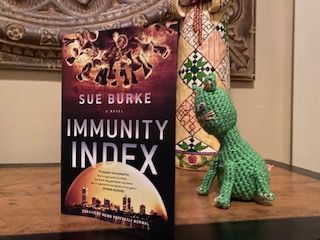
This well-read fippokat recommends…

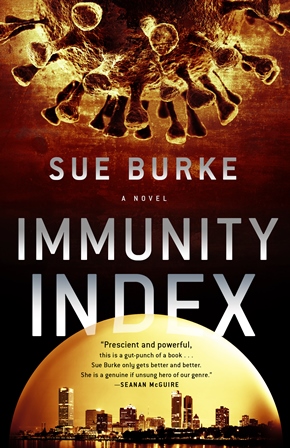
This fippokat has read and enjoyed my most recent novel, Immunity Index. Books make an excellent Christmas gift for others and for yourself!

Categories
Uncategorized

I’ll be at Windycon 47 this weekend

Windycon, Chicagoland’s longest-running science fiction convention, is back in person for 2021! This year’s theme is “Urban Fantastic.”

Windycon 47 will be held from Friday to Sunday, November 12 to 14, at the Westin Lombard Yorktown Center in Lombard, Illinois. At its core, it’s a literary-based convention, but we’ll also enjoy games, costumes, art, filk and other music, science, poetry, anime, a dealer’s room, theater, and miscellaneous fooling around.

Last year’s Windycon was canceled due to covid complications, and this year masks and other restrictions will be required — and for me, welcome. We can see our friends again and be safe doing it.

Due to restrictions, there will be fewer panels this year. I’ll be on this one:

Representation of Space in Science Fiction in Lilac B/D room, Saturday, November 13, at 1 p.m.: Few settings in science fiction have received as much attention or excited the imagination as much as outer space. Our panelists discuss the different ways that space has been portrayed. AJ Rocca (moderator), Toni Lichtenstein Bogolub, Sue Burke, John O’Neill.

Personally, I think the show that gets it the most right is Doctor Who. Don’t start me on Star Wars

I imagine the usually lively evening party scene will be a bit chilled, but I’ll be at the party Friday and Saturday night starting at 9 p.m. in Room 1421, hosted by Capricon, Chicago’s other major convention (February 3 to 6, 2022), and by Chicon 8, the World Science Fiction Convention (September 1 to 5, 2022). Come enjoy some refreshments and chat about the coming year in local and world fandom.

Categories
Uncategorized

Yellow

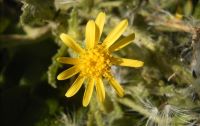
Every flower is unique. And yet, some small yellow flowers have a nickname among botanists: DYCs, Damned Yellow Composites. Those are plants of the Asteraceae family, common worldwide, usually tenacious weeds with small yellow flowers. They may be pretty, but they’re so much alike that they’re hard to tell apart.

Botanists sometimes don’t even try. It may not matter ecologically exactly which species those flowers belong to. Identifying them as DYCs serves for all but the most rigorous scientific purposes.

Every small songbird is also unique but far too many are similar. The ones that are hard to distinguish are sometimes called dickybirds by birdwatchers, and often these birds, especially all those warblers, have a touch of yellow.

There are more galaxies in the sky than grains of sand on Earth’s beaches, so how many stars will be standard M-class yellow star like our own Sol? Too many to count.

Flowers, birds, stars: yellow abounds. So does ambition.

Flowers, birds, and suns all strive for more, and our universe undergoes constant change as a result. Birds compete with song. Stars create more complex matter at every generation. Imagine what a weed will be like as eternity gives it time to perfect its art. The bouquets will astound us with their sheer ambition.

Yellow means aspiration and change — changes too small and slow for us to see, yet we can enjoy their success so far: a field of flowers, a morning filled with birdsong, and a sunny day. Yellow unites them in beauty.

Categories
Uncategorized

Forest to Table

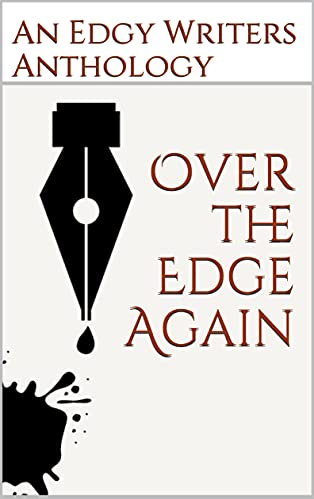
My writers critique group here in Chicago recently released an anthology, Over the Edge Again: An Edgy Writers Anthology.

Samuel Durr, who also edited the anthology, used his experience as a hunter to explore the relationship between two people who didn’t seek each other’s companionship in his story, “Wild Heart.” In this essay, he shares the best part of hunting.

Forest to Table

By Samuel Durr

Scouting, hiking, climbing, freezing, spotting, calling, shooting, tracking, celebrating, gutting, dragging, hoisting, skinning, quartering, grinding, butchering, packaging, and finally, cooking, sharing, and enjoying. Deer hunting is hungry work, but the part that makes me consider buying a lifetime license is the last bit. Preparing meat harvested from the forest takes an enormous amount of time, money, and energy, but is worth the cold toes.

The first time I tried deer meat I was struck by its similarity to beef. Cue the eye rolls, but it’s true. The less desirable cuts on a cow, those which contain connective tissue like the shoulder and neck, are identical to the same cuts on a deer and can be used to substitute any beef recipe traditionally utilizing those cuts. Which is a long way of saying venison is fantastic for jerky, braised dishes like Italian beef, ossobuco, or beef stew. One of the great myths of deer meat is that it’s tough, but it’s only tough if it’s cooked inappropriately.

In truth, the sought-after cuts, those from the back legs, the back straps, and the tender loins, cannot compete. That’s because a cow has a great deal more fat between layers of muscle. That’s not to say these are terrible on a deer. They can be juicy and almost fork tender; wrap them in bacon and grill them if there’s any doubt, but consider that they’ve been taken from a lean athlete who’s been hounded by coyotes, fought for breeding rights, and slept under the stars. Not from a diabetic heifer who’s been so unnaturally bred it chews its own stomach contents like bubble gum.

Another, often-disdained, form of venison is ground venison. Just like the quality cuts on a cow, high quality ground beef is hard to beat, but that’s not to say ground venison doesn’t have a place at the dinner table. This stuff is fantastic and incredibly versatile. On a side note, if an outdoorsman says they have a lot of freezer-burned, six-year-old ground venison, it’s because they don’t cook as much as they should and will probably end up tossing it. I get offended by hunters who don’t cook in the same way that animal rights activists get offended by hunters. Point being, it’s a tragedy because this stuff is great for chili, tacos, and is a crucial ingredient for the best food harvested from these mystical forest creatures: sausage.

Sausage is the ultimate, the apex, the pinnacle. Good sausage is the most impressive stuff a hunter can prepare. If you hand someone a well-made sausage, regardless of whether they hunt or not, they will be impressed if they’re at least a skosh outdoorsy. But sausage also requires the greatest number of tools to get the job done right. A competitive sausager — my fancy, made-up term — may use a grinder, meat thermometer, stuffer, and a smoker just to make one kind of sausage. Last year, I spent close to fifteen hours making breakfast sausage, brats, Italian sausage, summer sausage, snack sticks, and Polish sausage, all from venison. Most of it was good, some of it great, some just so-so, but all worthy as a meal.

I’ve included a recipe for venison Italian beef which highlights the above-mentioned deer and beef similarities. It requires a slow cooker and access to venison, moose, or elk, but that’s it. Easy peasy. If it’s your first time trying wild game, it’s a great introduction to the part of hunting that, for millions of years, has always mattered most: the eating.

Easy Italian Beef (Venison) Recipe

READY: 3 to 5 hours

SERVES: 6 to 12

INGREDIENTS

2-3                   lbs venison roast

3                      beef bouillon cubes

1                      (5/8 oz) packet Italian salad dressing mix

1                      cup water

1                      (18 oz) jar of hot or mild giardiniera

1                      package of French rolls

Directions

  1. Place roast in crock pot.
  • Add Italian salad dressing mix, bouillon cubes and water.
  • Cook on high until tender (3 to 5 hours). Shred with forks. Serve on rolls with giardiniera.
Categories
Uncategorized

What’s for dinner? Time travel

My latest novel, Immunity Index, has a woolly mammoth in it. I don’t think this product, for sale at the Time Travel Mart, is for real, but I would buy a dozen cans if it were.

Categories
Uncategorized

Getting published: an article for Concatenation

SF2 Concatenation, a British on-line magazine, asked me to write an article about “Getting published: From draft manuscript to print.” I wrote about my most recent novel, Immunity Index.

I tell about mistakes I made, misadventures I didn’t expect, and something I decided to never ever do again.

Read the article here: http://www.concatenation.org/articles/burke-sue-getting-published.html

Categories
Uncategorized

Rogue memorial to a tree

“IN MEMORIAL: This plaque commemorates an oak tree that graced this site for forty years. It was felled by the bureaucracy in December 1990 to make space for one more car.”

This is a real plaque at Victoria University of Wellington, New Zealand, located at the carpark  between the Wai-te-ata Apartments and the Boyd Wilson clubrooms. I haven’t been able to learn much more, besides that it was put up anonymously, and that rogue plaques are sort of a thing in New Zealand.

I believe this sort of thing should be encouraged worldwide.

Categories
Uncategorized

Long ago and far away: dinosaurs

Sue the T. Rex at the Field Museum, painting by John Gurche.

Dinosaurs lived on the far side of the galaxy. That is, the Sun orbits around the galaxy’s center, and it’s a long trip, about 250 million years. Dinosaurs — in particular, the big Jurassic critters like tyrannosaurs — lived about 166 to 66 million years ago, so they lived in a different neighborhood of the galaxy.

Here’s the cool part. Because the stars move around in relationship to each other as well as in their orbits, the neighboring stars are different over time. In that way, space travel is possible to distant stars if the travelers are patient and have generation ships (presuming these creatures have generations like human beings). They can hop from star to star, sometimes pausing to rest, and meanwhile the stars will take them to new parts of the galaxy.

So, it just might be vaguely possible that Earth was visited over on the far side of the galaxy by slow travelers, and they took Earth faunae with them as they continued on, bringing them to new homes. Dinosaurs in space! Land of the Lost without a dimensional portal!

Or perhaps they took a different Jurassic lineage, and there’s a Planet of the Turtles out there somewhere.

Categories
Uncategorized

Fippokats in space!

Photo from “A Christmas Fippokat

Kill your darlings, they say. That means you should cut the parts from your book that don’t move the plot forward, even if you love them. So, on the wise advice from my editor, I killed the final section of the novel Interference about some fippokats (well, they were going to die anyway) and write a different ending that was much more dire.

Here’s the original ending for your enjoyment: the alternate epilogue to Interference.

EPILOGUE—KELLY—LATER THAT DAY—IN ORBIT

Oh, this is the strangest place and the most wonderful. It frightened me at first, yes, although the Big Ones are happy, so we are happy, Moss and Emerald and Lime and I am Kelly. We have our sleeping box and we drink water from a tiny pipe next to strange food dishes and it is a game just to eat because the food floats. It all floats, the Big Ones and the food and the toys and us and everything.

But we do more than float, Moss and Emerald and Lime and I. We jump and hop and chase each other, leaping from wall to wall, from floor to ceiling, anyplace to anyplace, and look at this somersault, three in a row! We can fly!

We hop and we glide along the walls and ceilings and floors and tabletops, and it is easy, a twitch of the toes and now a somersault again. Here I come at a Big One, and I spread my legs to steer and slow, and the Big One catches me and says Kelly Kelly Kelly and pets me and we float to the window to look outside, but it is night, so I will stay where it is bright and warm and full of fun.

The Big One helps me spin, whee! and I come to a wall and jump off because Lime is down the hall and we can chase each other through the air. Lime sees me and launches herself at me and we meet in the air and bat at each other’s back feet and we connect and here we go! Back and forth and up and down, wall to floor to ceiling. It is the best game ever.

We can fly! We can fly!