Categories
Uncategorized

Behold the tree!

Because I live in a small apartment crammed with books and plants, I have very little room for holiday decorations, so each year one of the houseplants volunteers to play the role of Christmas tree. This year the Dracaena sanderiana saw it as an opportunity to live out its secret aspiration to be a real tree rather than a lanky distant cousin of asparagus.

Dracaena sanderiana is also known as “lucky bamboo,” although it is in no way related to real bamboo. As houseplants, Dracaena of many species grow well from cuttings of old plants. This particular potted individual has a name, Son of Steve One, which harkens to an honorable pedigree; the original plant came to me years ago as a gift.

It now wears seventy feet of inexpertly draped garland and could not be prouder.

Categories
Uncategorized

I have flowers in December

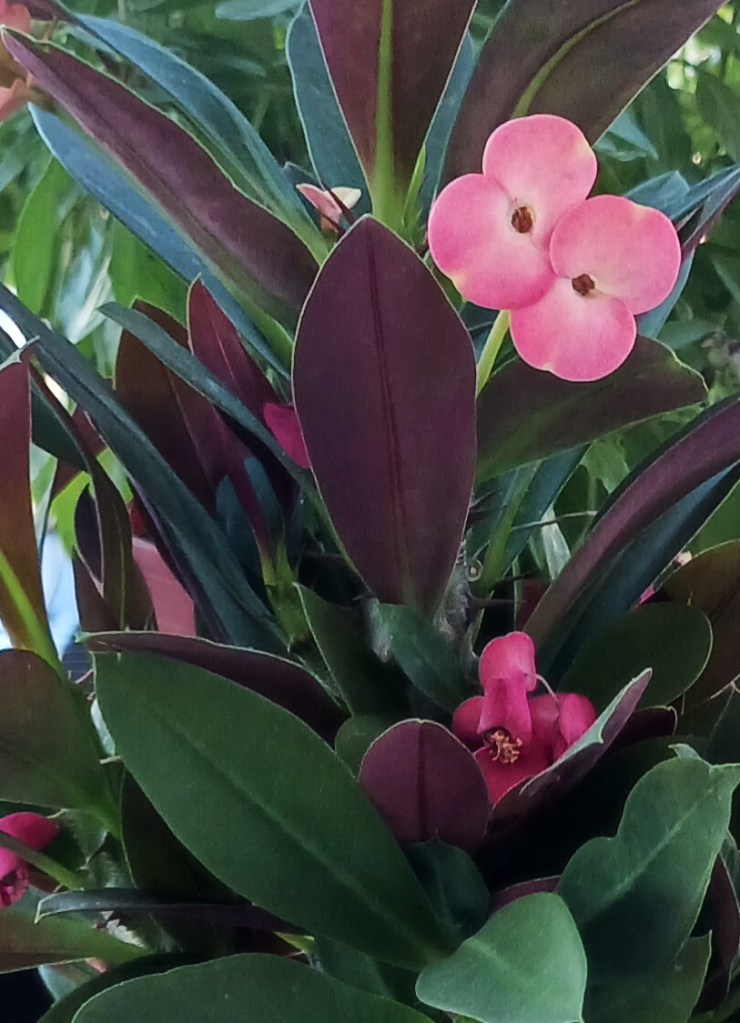
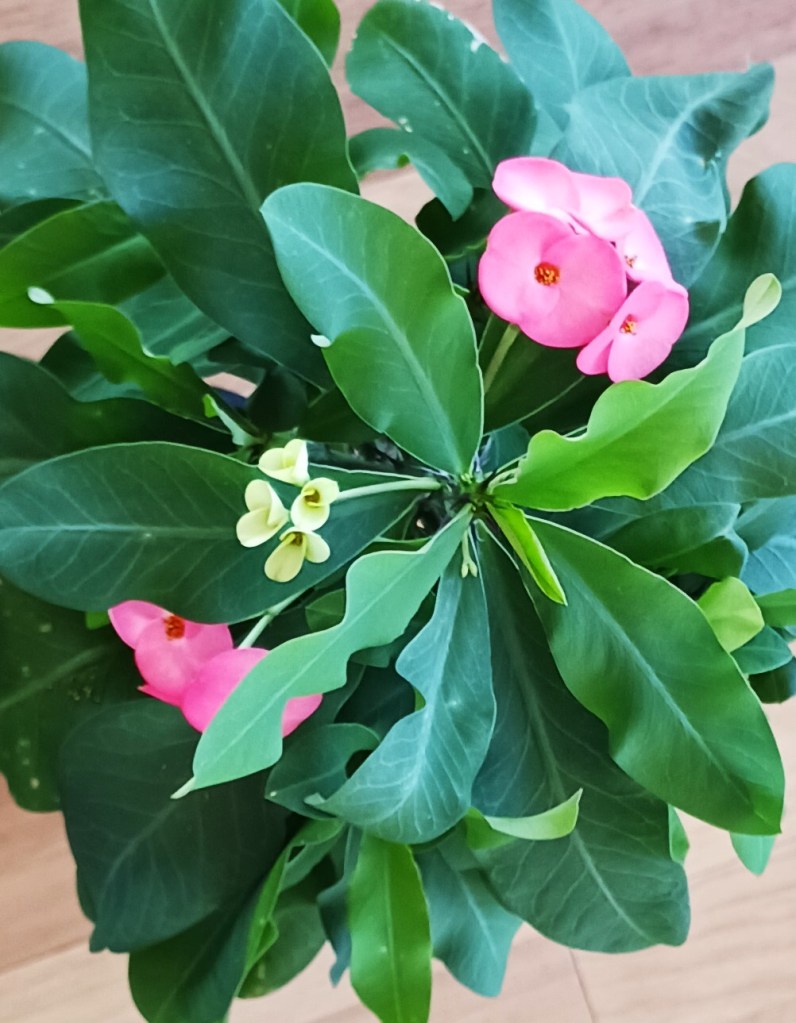
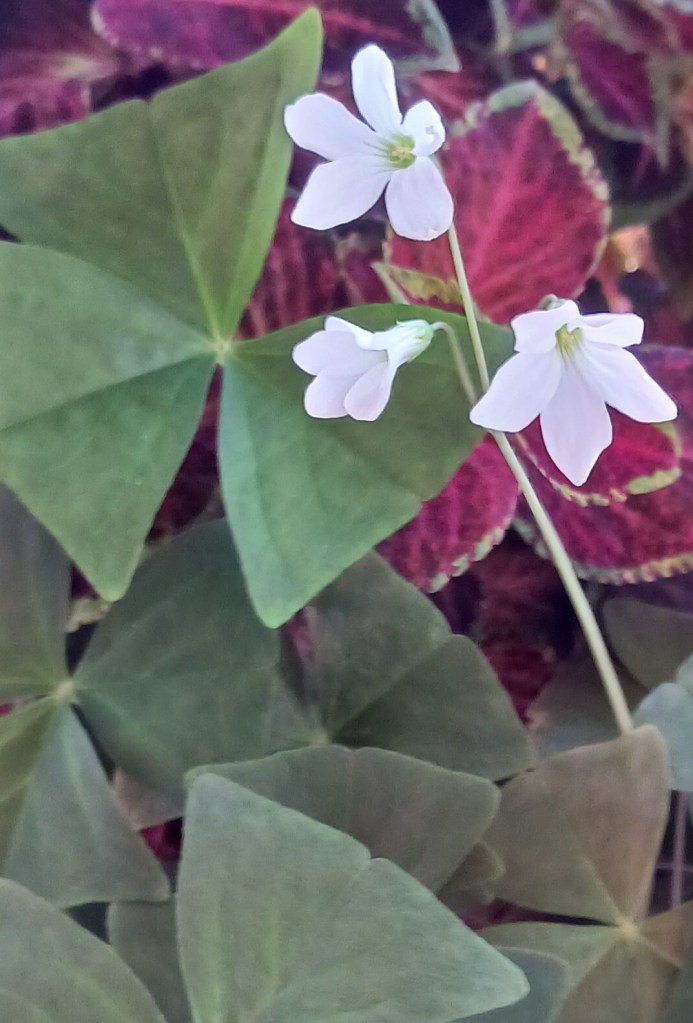
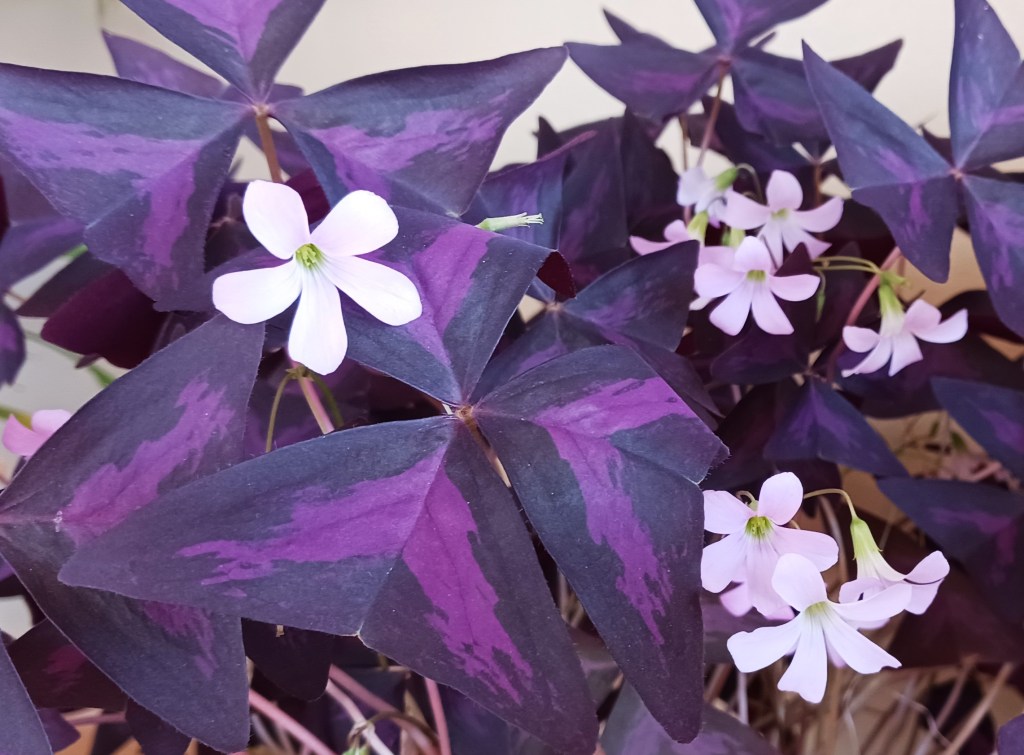
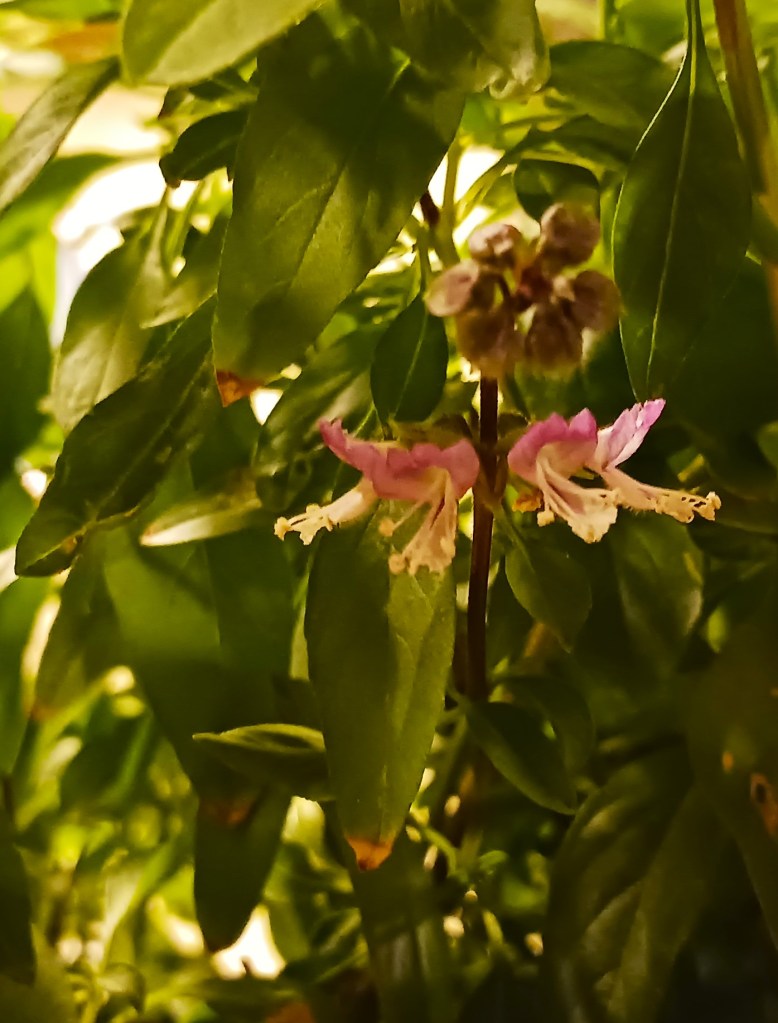
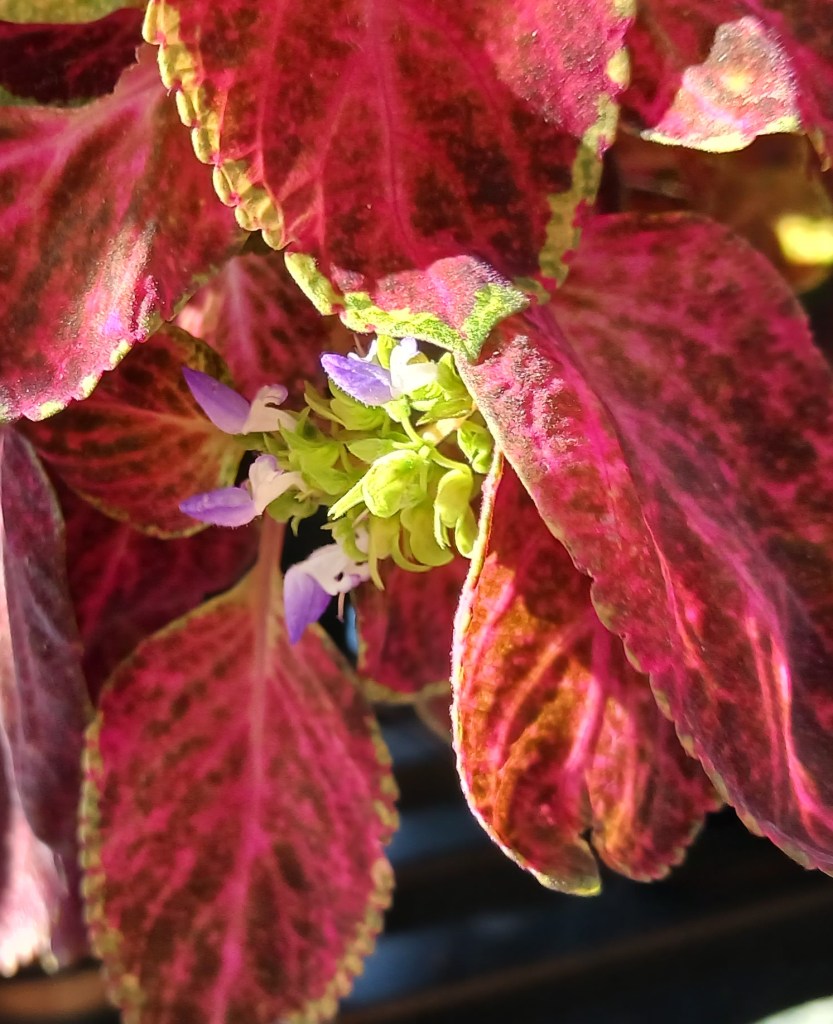
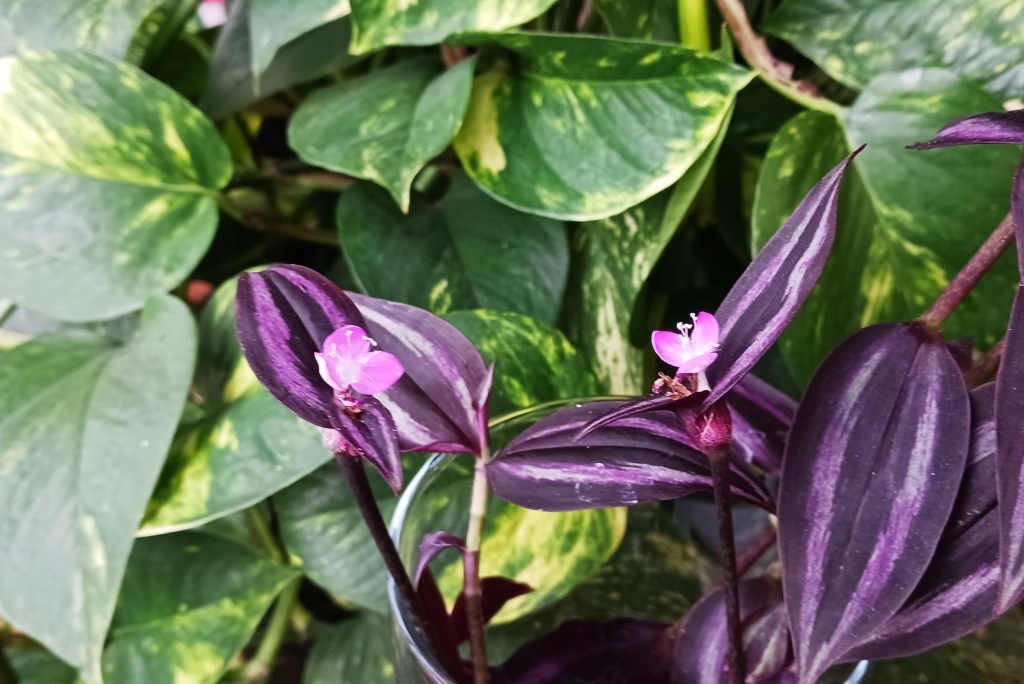
Because they are indoors, some of my houseplants think December is a good time to blossom — even though, on the other side of the windows, local plants have lost their leaves, died back, and hunkered down for a frozen, snowy winter.

Categories
Uncategorized

How to begin a story

If you’re telling a tale — a novel, a movie, or a short story — where do you start? The opening needs to make the reader, viewer, or listener want to keep going.

Often stories start with action or dialogue, especially in movies and television, although written fiction has more options. You can use questions to appeal to curiosity. A character, setting, or problem can introduce and reveal the world.  It’s also possible to cast a spell on the reader, viewer, or listener through intense emotions.

This is the opening paragraph to Prodigies by Angélica Gorodischer, a book that I translated for Small Beer Press. It’s been described as an “enchanting novel of the women whose lives pass through a nineteenth century boarding house. Moving, subtle, and dreamlike.” Its first words set the tone: slow, strange, and compelling.

***

On the day Madame Nashiru arrived at the boarding house on Scheller Street, a brief tremor passed through the house, unnoticed by everyone except Katja. The foundations of the world did not shudder, plagues did not break out, first-born did not die, there were no catastrophes, the waters of the Genil River did not inundate a dozen towns, black death did not arrive at Addis Ababa, the sorcerers of Yauyuos did not dream about dogs with human heads, the walls of Nerja Cave did not crack, ships did not sink in the inlets of Baffin, volcanoes did not erupt, islands did not disappear, orchards did not suffer drought, the lintels of old cathedrals did not become besooted, cemetery guards did not worry needlessly, nor did police officers or transportation inspectors or sergeants or jailors or tax collectors or judges or executioners; but the house shook, and Katja, who was in the courtyard bending over a tin-plate pan, looked at the water and told herself that there are beings with wings and yet they hide them. She did not know what she meant by that, but she was used to those sudden obscure thoughts, so she was not frightened and did not stop what she was doing to stand still and think about what it might be, what it might mean, why she had thought it, if it was a memory, something she had heard in passing, whatever it was. She already knew how, silently and unsurprised, to tell herself things that seemed meant for someone else and perhaps they were, whose meaning escaped her like a fairy, like a fearful little animal that might also have wings, hidden or not, with hardened forewings that enclosed tender, weak hindwings that the wind, even the wind could rip. She let them escape, it’s okay, you can go, I won’t stop you, the afternoon is too beautiful, close your eyes at night and may nothing foul from mirrors or from far away trouble your mind, and don’t think about it in the morning. There are beings who have wings and yet they hide them. In the pan, the water rippled as if from a puff of wind, and Katja waited; waited, rag in hand to clean the windowpanes, until they calmed. I’m not going to put a rag there – she had created and understood that thought. I’m not going to put a rag there into the winged beings between the drops in the water. She waited while Madame Helena welcomed Madame Nashiru, and the house felt suspicious, but only Katja noticed.

Categories
Uncategorized

My Windycon schedule

This weekend I’ll be at Windycon, a science fiction convention in Lombard, Illinois, a suburb of Chicago (hence the name). It’s the Windy City’s longest-running SF con, usually with about 1,000 members. Events are mostly centered around science fiction and fantasy literary themes, but lovers of games, costumes, art, music, and media will find plenty to do. And in the evening, there are parties, with prizes in categories including best alcoholic and non-alcoholic drinks, best food, and best overall party.

I’ll be busy. Here’s my schedule. If you happen to be at Windycon, you know the drill: it’s one big family, so let’s say hi and catch up. Read any good books lately? Let me rave about Babble by R.F. Kuang.

Writers Workshop: Saturday 9:00 to 11:30, pre-registration required.

Common, But Annoying SF Tropes: Saturday 12:00 Junior BC. Science fiction is full of common ideas and repeated concepts that might have been fresh at one time, but now may indicate a laziness on the part of the creator. What are some of the common tropes in science fiction and fantasy that deserve to be mocked and retired? Hear our panelists’ bugbears and share your own. Sue Burke (moderator), Malda Marlys, Justin Matulonis, N. Frances Moritz, David “Ordo” Ordonez.

Fantasy Governments That Aren’t Monarchies: Saturday 15:00 Junior BC. The fallback political system in fantasy is often a monarchy — either a kingdom or an empire. But there are many other types of governments that get mentioned less often. Why aren’t these more democratic types of systems used more often? Do monarchies make for an easy story of saving the world from the Evil Empire or are they just the easiest to write? Why is this so? Geoff Strayer (moderator), A.M. Arktos, Sue Burke, Alexei Collier, Mary Anne Mohanraj.

Creating Rational Characters: Sunday 10:00 Lilac AC. Many SF stories dealing with supposedly advanced civilizations feature characters who act like they have never heard of the scientific methods! Perhaps it’s the fear of creating a Mary Sue; yet, rational characters are not necessarily infallible. Rational characters are interesting to follow — so why don’t we write more of them? Sue Burke (moderator), Mark Huston, Neal Litherland, Charles Ott.

Livable Future or Soft Landings: Sunday 11:00 Junior BC. Negotiating with the future … worldbuilding through the frame of what we imagine good outcomes for the near future to be? Some authors are writing optimistic solarpunk and basically trying to imagine futures that we would all be not only willing but happy to live in … without being too pie in the sky either. A.M. Dellamonica (moderator), Sue Burke, Alexei Collier, Kelly Robson.

Biology of Fantasy Creatures: Sunday 12:00 Junior BC. Panelists discuss how fantasy creatures could develop. It is easy to imagine a minotaur or a selkie, but how do you apply the known theories of biology to make beings in a logical and scientifically consistent way? Should you attempt to understand their biology or just hand wave to allow the reader’s sense of wonder take over? Sue Burke (moderator), Bill Fawcett, Lisa Freitag, Alice Liddell, W.A. Thomasson.

Transitions of Power: Sunday 13:00 Lilac BD. Panelists discuss the transfer of power in modern governments of all types. What are the traditions and what are the modern attitudes? Bill Fawcett (moderator), Sue Burke, Mary Anne Mohanraj, Neil Rest, Mark Roth.

Categories
Uncategorized

Goodreads review: “How to Write a Sentence” by Stanley Fish

How to Write a Sentence: And How to Read One

How to Write a Sentence: And How to Read One by Stanley Fish
My rating: 4 of 5 stars

I’ve been writing professionally for fifty years, so you might think I know how to write a sentence. Yes I do, obviously, but there’s always more to perfect. This book is to writing like practicing scales is to playing the violin.

Stanley Fish starts by explaining how a good sentence depends not on its content but its structure, and how experimenting with structures is a way to explore unexpected meanings within the content of the sentence: form follows function. Then he focuses on a few specific structures.

The subordinating sentence, which is formal in style, places ideas in relationship to each other through causality, time, importance, or some other logical construct, with the aim of creating a complete idea that requires and conveys the assurance of forethought by the author. An additive sentence is no less thoughtful or artistic, but it moves in a straight line and connects ideas one after another, feels spontaneous, and can be especially good for storytelling. A satiric sentence deliberately leads to a twist at the end: We may wish to consider the reasons why Elon Musk’s recent remarks after his purchase of Twitter have filled many of us with doubts, but I believe none of us disputes his claim that he is now the “Top Twit.”

First sentences in novels must hold out a promise, and they can do that, Fish shows, by choosing one of many available sentence structures and strategies. Last sentences need to say “the end” in a way that resonates; again, Fish presents many possibilities for doing that. As a novelist, I found this especially useful.

Fish does, at times, run off the rails because even the best sentence can be over-analyzed. This is a short book, though, so even when he tries too hard, he doesn’t go on forever.

View all my reviews

Categories
Uncategorized

Speculative Fiction: The Future Happens Everywhere

The science fiction and fantasy community made a commitment to be more inclusive of works from around the world, including translations. How is that working out?

I explore the results in an article called “Speculative Fiction: The Future Happens Everywhere,” in the latest issue of Source, the journal of the Literary Division of the American Translators Association, of which I’m a member. You can download a PDF of the journal here.

Categories
Uncategorized

Dump no waste!

This is a storm sewer grate near my home that says:

DUMP NO WASTE! DRAINS TO WATERWAYS

East Jordan Ironworks – Made in USA (It also depicts some trout.)

Everyone has a right to clean water, and in case you need them, here are suggestions about how to protect the water you drink.

Categories
Uncategorized

Points of view and “Immunity Index” – almost too many?

Often novels have one or two point-of-view characters. Point of view (POV) refers to the way a story is told: the perspective of the character or narrator telling the story. Often this is the main character, like Murderbot in the Murderbot Diaries; sometimes it’s the sidekick or observer, like Dr. Watson in Sherlock Holmes stories. Sometimes stories alternate between the hero and villain to heighten the tension. Sometimes a narrator outside of the story is the POV.

How many POVs is the right number?

As with almost everything in life, it depends. Ideally, a novel has the right number of POVs to tell the story well. That is, the number should be an artistic choice. However, I can tell you from having five POVs in my novel Immunity Index, there are practical choices to consider, too. Five was just a whole lot of work. I had to create spreadsheets of plot events occurring day by day, sometimes hour by hour, to interlace the five different storylines, and rewrite again and again to make the timelines seamless. Fewer POVs is easier from a tactical consideration.

There’s another problem. The reader has to know at all times which POV is being used. I did something pretty blatant to avoid confusion, and it seems to have worked because no one has complained about it being insultingly obvious. Four of the POVs are third person (she/her/hers) and only one is first person (I/me/mine). For each of the third-person scenes, I began with the name of the POV. For the first-person scenes, I began with the word “I” until I felt that the reader had become accustomed to the rhythm.

Is this the only possible solution? No, not at all. Writing involves art, judgement, and craft. Imagination is the only limit to solutions.

Another writing challenge is how to introduce each character. Here are the opening paragraphs for each POV in Immunity Index. You can decide for yourself how successfully each introduction draws the reader in.

***

Avril heard chanting ahead, coming from around the corner. “All equal—equal all!” Voices chorused to a drumbeat and echoed off the skyscrapers in downtown Chicago. She hesitated, turned, and began walking the other way. Chanting meant a protest, and she couldn’t risk it, even though she knew exactly what they meant. For a moment—just a moment—she considered joining them.…

Berenike was about to break the law. She passed a man sitting on the downtown sidewalk who was obviously homeless, maybe even a noncitizen. As she did, she caught his eye—just briefly. That would be enough to tip him off. No one looked at the scruffy people sitting on the curb, their faces lined by living outdoors, with a worn, stuffed backpack that probably contained everything they owned.…

Irene stood and watched the woolly mammoth shuffle aimlessly. His yard-long shaggy hair gleamed rust brown in the afternoon light. For all his huge magnificence, Nimkii looked desolate, pitiful, even out of place, although ten thousand years ago his kind had dominated North America’s grasslands. He stopped dead in his bare pen and rocked back and forth, a sign of forlorn boredom if not an aching mental health crisis.…

I, Peng, designer of life and master of its language, began my day tasked with the unsealing of a package of dead chickens. Three chickens, to be precise, sent express from a farm in Iowa to the lab in Chicago where I labored. My life had come to that, and I hoped it would not grow worse. I still had much to lose. Every day I looked death in the eye and quaked.…

Lillian watched Berenike over breakfast. It was like a movie where there was a person who was young in one part of the movie and older in another part. They never appeared in the same scene, though, in a movie. Or maybe it was like a movie with clones, but usually they were both the exact same person, and they were both evil. This was real life, and it was different. For one thing, they weren’t evil. She was pretty sure about that.…

***

You can watch me read the fuller opening scene for Irene at a Strong Women – Strange Worlds quickread held online and recorded earlier this year.

Categories
Uncategorized

Very tall and spicy: a succulent in bloom

Why so much work for a few little flowers? Coins are next to the planter for scale.

Something’s blooming in my home: a Haworthiopsis venosa sp. tessellata. The diminutive green plant is named for the British botanist Haworth; venosa means “having branched veins”; tesselatta means “square mosaic tiles” and refers to the pattern on the leaves. In the wild, this small succulent grows in deserts in South Africa, hiding from the blazing sun in rock-sheltered crevices, waiting for occasional rain.

In my home, it’s growing in a little planter with a Rhipsalis crescula or coral cactus, an Echeveria of some species (there are way too many kinds of Echeveria, and they’re all beautiful), and a Crassula swaziensis veriegata or variegated jade plant.

The native habitat of the Haworthiopsis might explain its odd flowers. My little plant has sent up a stem ten time longer than the height of its rosette of leaves, topped by a few small but aromatic white blossoms with brown stripes. Why would it go to all that trouble? It costs a lot to produce both the towering stem and the intense fragrance, which is a little like a mix of cloves and vanilla.

The plant needs to get its flowers noticed by pollinators. It sends its blossoms to rise above the rocks so they are visible. The strong scent travels far, tempting insects that might be distant. The spindly stem guarantees that only the right kind of insect can alight, small ones specializing in delicate flowers. They would be more likely to visit other Haworthiopsis venosa sp. tessellata.

The extravagant blossom shows that my plant is healthy — so I’m providing proper care, which makes me happy.

Here’s more information about this plant, which is easy to grow and usually easy to find for sale:

Haworthiopsis tessellata (Veined Haworthia) • World of Succulents/

Haworthia venosa var. tessellata

All you wanted to know about Haworthias, Gasterias and Astrolobas: Haworthiopsis tessellata

Categories
Uncategorized

My schedule at Chicon 8: come say hi!

I’ll be at Chicon 8, the 80th World Science Fiction Convention, held September 1 to 5 at the Hyatt Regency Hotel in Chicago. Almost 5,000 people are expected to attend in person with 1,500 attending virtually. Hundreds of activities are planned. It will be a five-day party, and you can still sign up and come.

Here’s what I’m scheduled to do, eight panels and a table talk (locations subject to change):

The Future of Science Fiction Is International – Crystal Ballroom C – Thursday, September 1, 11:30 a.m. CDT

International SFF is flourishing, with new and classic non-English works being translated in unprecedented numbers, and writers and readers from diverse cultural backgrounds interacting in real time. Why is a more global approach to SFF important to the future of the genre as a whole? Who are the authors, translators, and venues to watch, and what are some of the most fascinating trends and works right now? Andy Dudak, moderator; Hildur Knútsdóttir, Leslie, Sue Burke.

Terraforming and Alien Life – Regency Ballroom D – Thursday, September 1, 4:00 p.m. CDT

If we terraform a planet, what happens to the living things that evolved there? Would an “Earth-like” planet have living things we could live alongside? How might Earth life integrate into an alien ecology? This panel will contemplate the ecological impacts of making another planet more Earth-like. Colin Alexander, moderator; Eva L. Elasigue, Kevin Wabaunsee, Sue Burke.

What Books Get Translated? – Michigan 1 – Thursday, September 1, 7:00 p.m. CDT

The world is filled with amazing SFF that isn’t written in English and never gets an English translation. There’s also a lot of English SFF that never gets translated into other languages. Why do some works get translations, while others don’t? Sue Burke, moderator; Andy Dudak, Hildur Knútsdóttir, Yasser Bahjatt.

Table Talk with Sue Burke – Crystal Foyer – Friday, September 2, 1:00 p.m. CDT

Table Talks are informal hour-long discussions with a “host” and up to seven people — similar to the Kaffeeklatsches and Literary Beers hosted by previous Worldcons. As part of Chicon 8’s commitment to its covid-19 policy, there will be no beverages this time, just talk. Come and find out if your houseplants want to kill you.

1940: The First Chicon – Randolph 1 – Friday, September 2, 7:00 p.m. CDT

The second-ever Worldcon — the 1940 convention in Chicago — established traditions that have echoed through many events that havefollowed: the masquerade, the con suite, filking… Explore the full history of this seminal event, including the backstories of its organization and the historical context that informed it. We will also include a recreation of E.E. “Doc” Smith’s Guest of Honor speech. Alex Mui, moderator; David Ritter, John Hertz, Sue Burke.

Readings from Ludlow Charlington’s Doghouse – Roosevelt 1 – Saturday, September 3, 11:30 a.m. CDT

Fetch these delightful doggie stories from Ludlow Charlington’s Doghouse, a fantasy anthology benefiting Friends of Chicago Animal Care & Control. 19 authors, 34 drabbles, stories, poems, plays, and songs. Even a music video! Full of good bois and grrrrrls. Potential readers include Tina Jens, Steven H Silver, Sue Burke, K. M. Herkes, Joe Janes, and Lauren Masterson.

Translation Is Creative Writing – Grand Hall K – Saturday, September 3, 7:00 p.m. CDT

The job of a translator is not merely to pick the matching words in the second language. Done well, translation conveys the tone and flavor of the original text. A character with an ascerbic wit in Chinese should be just as funny in English, for example. Lyrical descriptions of landscapes should be equally poetic. What makes a translation work, and who does it well? Jean Bürlesk, moderator; Andy Dudak, Sue Burke, Su J Sokol, Yasser Bahjatt.

The State of the Translation Market – Randolph 3 – Sunday, September 4, 4:00 p.m. CDT

Translation rights sound both appealing and intimidating to those becoming authors or publishers. How does the process work in 2022? Are there trends in format, genre, or subject matter to imitate or avoid? What markets or languages are underserved and present great artistic and business opportunities? Translators and those with work in translation simplify the subject for those interested in bringing their work to global audiences. Joshua Bilmes, moderator; Hildur Knútsdóttir, Neil Clarke, Sue Burke.

Science: The Core of Science Fiction’s Sense of Wonder – Airmeet 1 (virtual programming) – Monday, September 5, 2022, 11:30 a.m. CDT

SF shows its audience amazing things, but what distinguishes SF stories from other fantastic tales is the assumption that all this might be true, somewhere or someday. That’s one of SF’s key strengths, but it’s one that often gets overlooked. What are some great examples of fiction that uses scientific reality to convey a sense of awe and wonder? Mary Robinette Kowal, moderator; Miguel O. Mitchell, M V Melcer (Mel), Sue Burke.