Categories
Uncategorized

“Spiders”: a short story set between Chapters 3 and 4

Flaurafaunalovecns

When Roland was a boy, his father took him out for a walk. This story was previously published in Asimov’s magazine and Year’s Best SF 14.


by Sue Burke

Just before we went into the forest, I found the sort of thing I wanted to show my son.

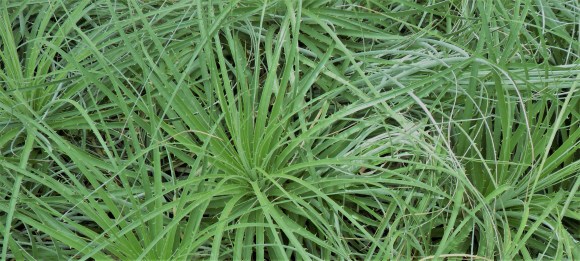
“Roland, look, there’s a leaf lizard nest that just hatched. They look just like little leaves of grass, don’t they?”

Springtime. Everything was coming to life again. And just beyond arm’s reach, I saw what looked like a dried-up fern but probably wasn’t. I kept an eye on it as my boy and I squatted and studied the ground. The lizards were hard to spot at first, but finally he giggled and pointed.

“They’re very little, Daddy.”

“They’ll grow. But now they’re so little that they can’t hurt you. You can let one walk on your hand.”

And so we did, green whips with legs, just half the length of a five-year-old’s finger. I told him how they hide in the grass, head down, waiting for even littler animals to come past, then they jump down and eat them. That was why if we let our hands hang down, the lizards would climb down to the tips of our fingers. Their natural place to be.

That supposed dead fern next to us had a crown of eyes. Sure enough, it was a mountain spider. Second one I’d seen already our little walk. Why so many this spring? Like a lot of things, they had an Earth name because they were sort of like the Earth creature. From what I gathered, spiders on Earth were never bigger than your hand, but ours were bigger than your head. Both had multiple legs and a poisonous bite. Were ours as aggressive as Earth spiders, which often bit people? Were Earth spiders as smart as ours?

“Let’s put the lizards down so they can get about their lives.” I set my hand on the ground and, with a little encouragement, the lizard climbed off. Roland copied me, and we watched them disappear into the grass.

Then he turned to me, eyes worried. “Do we step on them and we don’t know?”

Good question. Maybe he would grow up to feel like I do about the forest.

“I suppose sometimes. We’re big, so we can’t help making mistakes. I think we should never try to hurt things if we don’t have to. I hunt, you know, but I never kill anything except to eat or to protect us.” But I didn’t want to lecture. “Let’s go into the woods now, okay?”

I didn’t point out the spider. His mother would kill me – or make me wish she would, just kill me and stop yelling – if she knew how close we were to spiders. Not only the one next to the path, but all over. Lots at the riverbank, but everyone knew that because they stole fish. They were in the woods. In the farm fields and orchards. I’d even seen one in the city, and I shooed it out. Most people didn’t notice. If you don’t look hard, you don’t see things.

And if you don’t take advantage of your chances, you lose them. I get time with Roland most days, but never enough. Spring only comes once a year, and a boy is five only once in a lifetime. So off we went. I’d just have to be extra careful.

“Are we going hunting?”

“No. I mean, I thought I’d show you things. There’s a lot to see.”

“Deer crab?”

“Oh, sure. And birds and insects and kats all sorts of things. Listen. Hear that?”

“Pii, pii,” he repeated.

“Exactly. That’s a turnstone lizard.”

“More lizards! I can’t remember so many lizards.”

I spotted it near a stump. “I know, it’s hard. There’s lots and lots of kinds. Shh. See it? It’s black and white and brown with big stripes.”

I knelt and helped him spot it.

“Wow. It’s a jewel lizard,” he said.

“Not quite. You wouldn’t want it in your garden. It digs things up. Do you see what’s next to it? That dead bush? It’s getting closer and closer. . .”

The bush, of course, was a stick-feather bird. It suddenly grabbed the lizard, bashed its head against the stump, and began to tear off legs to swallow. Roland jumped to his feet.

“Animals hide in the woods,” he said. “Eagles sometimes. Mommy says the woods are dangerous. That’s why I can’t go there alone.”

Mommy says – of course she does.

“We make sure the eagles stay away,” I said. “There are things to watch out for, but mostly the things that hide want to hide from us, not to get us.” Mostly. I didn’t want him scared, so I’d have to find something non-scary fast. “Let’s keep going.”

He seeming relieved to get away from the bird. We walked a little, then I had an idea. “Can you think of other things that hide?”

“Hide?” He looked around.

“How about kats?” I suggested. “Why is their fur green?”

“Um, they’re green so they can pretend they’re grass lizards. A whole lot of them.” He laughed. A joke, apparently. So I laughed too.

Then I saw a good example.

“How about that, there on the tree trunk? That’s lizard poop for sure, right?”

“No, Daddy. It’s not.” He had me figured out.

“Right.” I reached out and nudged it. It flew away.

He shrieked with delight. “A poop bug!”

“A blue firefly, actually.”

“That’s a firefly? They’re so pretty. Everybody likes to watch them.”

“Their light is pretty. But when they land, they look like poop so that birds and lizards don’t eat them. Most people don’t know that. They just look at the lights that fly around at night and don’t find out about what’s making the light. But now you know.” Our eyes met, sharing a secret.

Just above us on the tree, I realized, there was a spider close enough to reach out and touch my shoulder.

“Let’s keep going and see what else we can find.”

“What if kat poop is really little bugs? I mean, little bugs that looked like kat poop?”

“You really like kats, don’t you?” The city kept a colony of pet kats. “What do you like about them?”

He began to tell me about the dance he and the other children were learning with the kats, and demonstrated the steps. I tried to pay attention, but I kept thinking about the spiders.

Far too many of them. They usually lived in the mountains just below the tree line, rarely in our woods. Maybe they’d had a population explosion. Maybe the weather, cool and dry for springtime, made them feel comfortable lower down. Maybe our colony attracted them. Or maybe something was pushing them down, like predators or hunger.

I spotted something Roland needed to know about, and I hoped it wouldn’t scare him. I’d try to make it sound good.

“I’ll show you something else that’s not what it seems like. See those flowers? Those are irises. See how they sparkle? Very pretty. But don’t touch them. They have tiny pieces of glass on them, and they’ll cut you. Do you know why? Because they like blood. It’s good fertilizer. Now don’t be scared. Just know what they are and don’t touch.”

“They’re very sparkly.”

“Yes, they are.” Not far away, a spider sat in a tree over a patch of moss that was really a kat, flattened to the ground, hiding in plain sight. I took a step to lead Roland away before the spider figured it out, but the boy wouldn’t move.

“They’re like jewel lizards,” he said. “The flowers look like red lizards and yellow lizards.”

“You’re right. I never noticed that, but they do look just like lizards.”

“Maybe the flowers catch things that think they’re going to catch lizards.”

“I bet that’s it. Pretty smart to see that.” Why hadn’t I before? I complain that people don’t look, and I don’t look myself sometimes.

“They can’t catch me,” Roland said, “because I’m smarter than they are!”

“Exactly. Let’s go. You know, when we have our hunters’ meeting, you should come and tell us about that, about the flowers. We’re always trying to figure things out. Well, that’s something that you figured out about irises.”

“Me? I can talk at the hunters’ meeting? Really, Daddy?”

“Yes, you can. The discoverer gets the honors.” I’d watch him talk and feel proud of my boy.

We were desperate to know more about the spiders. Their venom could kill a kat or other fair-sized animal. No one knew what it could do to a human and no one volunteered to find out. They never attacked us, either, though if you got too close to a nest, they’d gibber and wave their legs and snap their jaws to drive you away. They’d steal, too. Fishing crews had to watch out. They moved too fast for us to catch them and dodged arrows like it was a game. In fact, they had figured out the range of our arrows and knew to stay just beyond it.

We often met and talked about spiders, everyone together: hunters, farmers, fishers, even the kitchen crew, because our kitchen garbage might attract them so it couldn’t be dumped just anywhere. We never could dump it anywhere, actually, but spiders had people scared. Tiffany, for example, Roland’s mother, who for one brief time made herself seem like the perfect woman for me – but that’s another story – was preaching extermination. I worried that if we started a fight, the spiders might keep it going. As the lead hunter, I needed to offer a plan of my own.

Honestly, I didn’t know enough about spiders to know what to do.

“What’s that?” Roland said, grabbing my leg and hiding behind it. Something was crashing through the underbrush toward us. I knew right away.

“Over there?” It was moving fast and barking loud.

“It’s big, Daddy.”

I picked him up. “No, it actually isn’t, and it won’t hurt us. It’s just birds, a lot of them. Bluebirds. See?” He hung on tight but leaned to get a better look. “Bluebirds. Hear them bark? There’s lots of barks, so you know it’s not one big animal, it’s a lot of little animals. They like to run around and make a lot of noise so they can scare up things to eat. All in a line, zig-zag. Look, they’re stopping. Maybe they found something. Let’s see what.”

I walked toward them slowly. “Usually they let you get close. When you get too close, they tell you.” I was almost five steps away when the alpha bird turned, barked at me and glared. I took a step back. It went back to eating.

“That’s as close as we can get. They don’t want trouble, so they warn you. They don’t attack if they don’t have to. What do you think they’re eating?”

He leaned out bravely. I leaned with him. The bird turned and barked, casually, just a reminder. I knew what they were eating from the way they were arranged around it, but I waited for Roland.

“It’s purple! Is it a slug?”

“Yes, they like to eat slugs. That’s why you should never hurt a bluebird reef. We want them to live around us, so we respect their homes.”

Slugs. Chunks of mobile slime that dissolve flesh. If there was something to exterminate, those would be it. But we could never get them all.

Where there’s one, there’s more. I heard a sudden hum too close to the left . . . something moved fast. I stepped back. It was a spider wrestling a slug, brown legs wrapped around a purple glob. A brief squirm, then the fight was over. The spider picked it up with four legs and hurried away on the other four, not as fast or graceful as usual but gibbering in a way that I swear sounded proud.

So they caught slugs, and were happy to do it. Efficient, too. News to me, and worth knowing. Just a few animals could do that. Maybe a chemical protected them, or extra-tough skin. It would be more than handy to have another slug-eating animal around. Especially if they turned out to be no more scary than bluebirds. But would Tiffany believe that?

Roland was still watching the birds. Good. The spider fighting the slug might have scared him, and his mother wanted him scared of the forest. I did not. Yet another difference between her and me. She liked safe things, and I liked living things.

Every night I dreamed of the forest, and every day I woke eager to go there. Not everyone did, of course. They liked making things with their hands or coaxing crops to grow. They were satisfied, and who could blame them? But the forest – you’re there, but you don’t make it and you can’t coax it. It’s not even an it. It’s a you, I mean, the forest is alive and does things, reacts, watches, even attacks. Full of tricks and beauty. I hoped I’d showed some of that to Roland. But he was getting fidgety in my arms.

“Time to go home?”

“Okay, Daddy.”

Something in his voice troubled me, and I tried to figure it out as I headed down a trail that led out of the woods. He seemed unhappy. With me? With the forest? Was he bored? Or worse, scared? Good thing I hadn’t pointed out the spiders. Who knows what Tiffany had told him?

We kept talking on our way out. He asked “What’s that?” “What’s that?” about trees, lizard hoots, but more like a game than curiosity. A couple of times I saw him looking in one direction while he asked about something the other way. Young children had short attention spans. We probably had been there too long.

I set him down when we reached the fields, and he pointed at a lentil tree, its purple leaves contrasting with the greening fields around it.

“Mommy says you have to grow them far apart so if one gets scorpions, they doesn’t get all the trees,” he said.

I knew that, but didn’t want to disappoint him. “Is that why? So there’s a tree here, and there, and way over there.”

“And you have to prune them. Every spring.”

“Carefully, I bet.”

“Very carefully. And you can’t plant snow vines next to each other. They fight.”

“Like this?” I raised my fists.

“No. With roots and, um, with just their roots. It’s very challenging to maintain an orchard.”

Those were Tiffany’s words exactly, right down to her intonation. Of course, she spent more time with the boy, so she had a bigger influence, and maybe he’d grow up to tend orchards or crops instead of hunt in the forest. Perfectly acceptable.

The city rose across the fields, surrounded by a brick wall. Two hundred people. After four generations, we finally had enough to eat, even a surplus. We had domesticated several plants and animals, and were still learning about others. Every year we discovered new surprises about the planet. And every kind of work was needed. Maybe Roland would become a carpenter, a medic, or a cook. All perfectly respectable.

“You know,” he said, “we don’t hide. I wonder what animals think? They see us and we don’t care if they do.” He sounded like a little adult. Who was he copying now? “They think we aren’t scared. If we’re not scared of them, should they be scared of us?”

“That’s a good question.”

“That’s a good question,” he repeated.

Well, maybe I had helped him see that the world could be bigger than you are, and that was okay. Even if you didn’t understand everything in it.

“We have to take care of our trees,” Roland said, sounding like himself again. “If they’re really happy, maybe they can dance.” He looked up. “Are trees happy in the forest?”

“I think so. That’s where they live. Did you like the forest?”

He spent a long moment thinking. “Yes. I saw lots of things.” He looked up with a sly smile. “Daddy, you didn’t see. There were spiders everywhere, and they were looking at us.”

Categories
Uncategorized

If I were a plant

cocktail-nuts

Suppose my skin were impregnated with chlorophyll and I could practice photosynthesis. That’s what plants do to turn sunshine into energy. If I spent a full day laying naked in the sun, I would produce the energy equivalent of one cocktail peanut.

This illustrates the two main differences between plants and animals.

The average woman needs to ingest the caloric equivalent of 333 cocktail peanuts per day. Animals burn a lot of energy, but, then again, we do a lot in a day. Plants lead slower lives.

We humans are also fairly small, measured in surface area. On average we have about one square meter of skin. Plants have leaves, which are designed to maximize surface area. A mature, healthy tree has very roughly about 200,000 leaves and a photosynthesizing surface area of around 500 square meters. On a sunny day, a mature tree produces enough energy to fuel a big, active man.

To put another way: an oak could feed a Marine. And unlike Marines, trees make their own MREs.

But instead of waging war on us, they make our food. Animals eat plants. That makes us the top of the food chain, right?

I’m not so sure. Consider the apple. The apple tree makes apples to seduce us into taking the fruit, eating it (acquiring the energy equivalent of a mere 7 cocktail peanuts), and depositing the core elsewhere, which may be a good place for the seeds to grow. Apple trees have convinced us not merely to distribute their seeds but to care for them. We have allowed the trees to take over 200,000 acres of Washington State in exchange for giving us 10 billion apples per year, and we think it’s a bargain.

Wheat controls America’s Great Plains. Corn runs rampant in Iowa. Olive trees have conquered southern Spain. Rice rules Japan. The lack of potatoes almost destroyed Ireland, proving that we need them more than they need us.

We’re not the only animal that does plants’ bidding. Grass wants to be eaten (or mowed). It grows from beneath the soil with only the leaves above ground. Grazing animals, like buffalo in the prairies, eat the leaves, which grass can easily replace. But the animals also eat weeds in their entirety, which kills them. This is why a healthy, regularly mowed lawn remains weed-free. (We humans are weekend substitute buffalo.) Grass has found the perfect ecosystem in suburban environments. In some places, grass is even mandated by law.

So much for being in charge. Plants have already co-opted our common councils. In any case, we’re hopelessly outgunned.

On Earth, measured by mass, there is 100 times more plant life than animal life. We worry about the consequences of global warming, and it would be hard on plants, but in the long run, human beings are one species, and there are about 350,000 species of plants. They are as varied as algae, moss, roses, maples, grapes, and cacti. They will endure, though our orchards and gardens might miss us.

However, scientists are searching for ways to persuade plants to photosynthesize faster, since photosynthesis takes carbon dioxide from the air. Plants might save us from ourselves. We speak of our hopes as “green.” Yes, exactly.

That’s why, if I were a plant, I would rule this planet, and you would work for me – for peanuts.

Categories
Uncategorized

When Plants Kill (the article that gave birth to this novel)

This article appeared in the Spring 1997 issue of Terra Incognita magazine. It was inspired by my own houseplants, which had attacked each other in my living room. As I researched the article, I realized that we live in the midst of a photosynthetic war. And I began to wonder: what if…

Imagine alien beings totally dependent on light for nourishment. Could such beings live peaceably together? No. Sooner or later, they would compete mercilessly for light. They would kill for light – starving, maiming, poisoning, strangling, crushing, and burning any rival.

Here on Earth, we call these vicious beings “plants.”

In 1820, botanist and taxonomy pioneer Augustine Pyrame de Candolle said, “All plants of a given place are in a state of war with respect to each other.” If we humans moved slower, we’d notice the carnage in our ecosystem’s green kingdom – and we’d be in peril ourselves.

It’s a jungle out there, so let’s visit one. In a tropical rain forest, the darkness may surprise you, so let your eyes adjust a moment. Now look up. You can see a green ceiling, the forest canopy. That’s why it’s so dark. The leaves up there hog all the sunlight.

Look down. On the forest floor, you can see a few ferns, struggling saplings, gaunt seedlings, some moss, and a lot of roots. Nothing else.

Look around. The space between the floor and canopy is filled with tree trunks covered by clambering vines, sapling stalks, and 60-foot-long roots lunging from the canopy so taut we can pluck them like guitar strings – in all, an impenetrable tangle between the floor and the canopy. But few leaves grow beneath the canopy. It’s too dark. Everything aims for the canopy to grab the sunlight.

Trees use brute force, investing in thick trunks to carry their branches upward. Saplings stand here and there in the jungle, but young trees flourish only after an old tree crashes down, ripping a hole in the ceiling. Light pours onto a waiting sapling that will rise like a titan.

Trees joust with each other. Softwood trees grow faster and outrace the hardwoods to reach the top first for their day in the sun. Hardwoods follow, slowly sawing their way up: hardwood branches, stirred by winds, grind against softwood branches and carve through, amputating softwood branches one by one.

Photo: https://commons.wikimedia.org/wiki/File:Lianas.jpg by Mark Marathon

On many trees you can see thick, woody vine-like stems, called lianas, climbing up the trunk. Climbing pays off, Charles Darwin said in 1893, because climbers can reach the sun “with wonderfully little expenditure of organized matter, in comparison with trees, which have to support a load of heavy branches with a massive trunk.” A climber three inches in diameter may have as many leaves as a tree with a trunk two feet across.

Lianas weigh down trees and spread their leaves over their hosts, stealing the light. Trees starve. Saplings snap under the sheer weight.

But trees fight back. They try to grow faster than lianas, or shed bark to make them fall, or grow large shady leaves to starve them, or sway in the wind to knock off their attackers.

Lianas and vines continue up, twining around stems, impaling trunks with thorns and hooks, pushing roots and twigs into cracks, even gluing roots onto smooth bark. If a liana falls, or when the poor tree finally dies and collapses, the liana just starts climbing again.

One huge vine with yard-wide leaves is an ordinary philodendron, like the one you might have in your living room, but mature. Even the baby in your own home could attack another plant – a would-be murderer might be perched on your bookcase. Watch out.

In the jungle, watch out for the rattan, a palm used in wicker furniture. It climbs, and to do that, it grows spines on long, whiplike extensions of its leaf stalks: claws to stab into anything that can offer support. The spines hang like in the jungle loose barbed wire and can slash through your skin. Roses have thorns to climb the same way.

Many climbers send out tendrils to grasp for handholds. Darwin wrote, “It has often been vaguely asserted that plants are distinguished from animals by not having the power of movement. It should rather be said that plants acquire and display this power only when it is of some advantage to them.”

A passionflower has its tendrils ready for action, poised, according to Darwin, “as a polypus places its tentacula.” Slowly across the days, the tendrils will revolve like the feeler of a monster, searching for a victim.

Touching something, in 30 seconds the tendril will start to coil around it. Within hours, the tentacle will firmly clutch its new brace in a life-or-death race to the forest top.

One member of the Pea family can grow a vine with a two-foot trunk. With tiny leaflets, it can drown an acre of the canopy – 64 unlucky trees.

In the jungle, on some trees, you can see roots thick as branches clamped all around a trunk. They come from another tree, a strangler fig, growing on its host tree from a crotch of a branch about halfway up. As a seed, the fig germinated there, getting its water from the rain as it sent down its roots.

You can see the victim tree’s trunk bulging out between the roots of the strangler fig. The host is being strangled. Its trunk can’t grow wider and add a ring of new channels to carry water and nutrients to the leaves. It will eventually choke, die, and rot away, leaving the fig standing alone as a mature tree. The fig’s trunk will resemble a long, deadly cage.

Some plants employ an even more cunning scheme to live. They become parasites. Mistletoe sinks its roots into the living flesh of the tree to find water. As tropical mistletoe grows, it can drain its host dry.

Parasites can grow without bounds since they don’t have to work to support themselves. No surprise, then, that the Earth’s largest flower is the Rafflesia, a parasite of lianas in Southeast Asian jungles. Its brown and purple 3-foot flowers can weigh 15 pounds. They are called “stinking corpse lilies” for their stench, which attracts hundreds of flies to pollinate them. Let’s not look for one.

Outside the steamy jungle, it’s still a dog-eat-dog world in the plant kingdom.

Dodder, also called “devil’s sewing thread,” is an orange, creeping parasite of temperate zones. Within hours of germination, it reaches out with a tendril-like stem that circles until it touches a victim. Dodder attacks, wrapping around its host and sinking roots into its host’s stalk. Dodder forms dense mats of stems and flowers up to a mile long around its victim, sucking out every drop of sap.

Plants also poison each other. In 1832, de Candolle suspected plants release toxic materials into the soil to weaken the growth of competitors, but he couldn’t prove it. He was right.

Walnut trees leaves excrete a poison from their leaves that is washed by rainfall into the soil. Barley releases water-borne toxins to destroy weeds. The rubber-producing guayule of the American Southwest excretes toxic cinnamic acid from its roots. Cattails even poison their own young. Their seeds won’t germinate in water contaminated by cattail leaves.

Photo: US National Park Service

Fire is the weapon of mass destruction in the vegetable kingdom. Some plants can survive fire more successfully than others, and they use that ability to their advantage.

Ponderosa pines in the western United States drop flammable dead needles. When lightning or humans spark a fire, it blazes through the dead needles, incinerating less fire-resistant species. Until human intervention, such fires were common, giving Western forests a different look in the past.

In the hills around Los Angeles, certain shrubs such as chamiso do the same by dropping oily leaves as tinder – and humans pay the price.

Plants will even sneak up on each other. Fields of British heath can be invaded by the roots of bracken ferns. The roots will send up leaves that shade and ultimately kill the heath.

Plants need light to live. They also need carbon dioxide, water, and certain minerals. Our atmosphere contains only about three-hundredths of a percent of carbon dioxide, which limits most plants. Given more CO2, plants will grow faster until they hit the next limit, which is usually light.

In perfect conditions, we could have a photosynthetic riot.

So watch where your shadow falls. You could annoy a heartless killer whose long, green tentacles would wrap themselves around your body. Slowly, unceasingly, those tentacles would tighten with unexpected strength until you slump dead to the floor.

Your potted philodendron might want you out of the way. Beware.

Categories
Uncategorized

Dominant plants? Really?

please-also-have-lives

Years ago, one of my houseplants killed another plant. At first, I thought it was my fault because I should have been more attentive, like a proper indoor gardener. Then a few months later, now vigilant, I caught a philodendron about to attack another plant.

So I did some research and learned that plants are vicious and murderous to each other. When it comes to animals, they’re coldly manipulative. They abuse and kill insects and small animals, and they really do consider us service animals. Think about apples and Washington State. Apple trees have taken the place over, with us pleased to be doing their bidding.

Vicious, murderous, and manipulative – on Earth. What would happen on a different planet with a little more time to evolve?

I still have houseplants, by the way, but I don’t trust them.