Categories
Uncategorized

Trees of Knowledge

Slate artI have an article in Slate Magazine today: “Trees are smarter than we give them credit for, but they may not be smart enough for we’ve got coming next.”

Trees — and plants in general — can adapt to changes in amazing ways, but the weather might be changing too fast.

Read the article here.

Categories
Uncategorized

Baucus and Philemon, or two trees in love

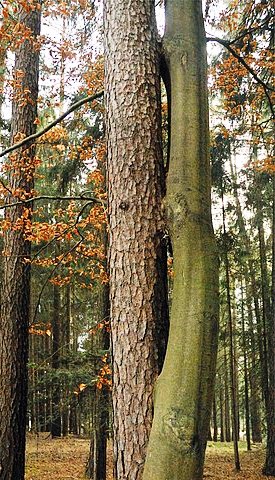
Entwined treesOne of Ancient Rome’s greatest poets, Ovid, wrote this fable, the story of two honored trees:

Baucus and Philemon, an elderly couple in Greece, had little to share, but when two weary travelers sought a place to sleep for the night, they welcomed them into their hovel. This couple was pious, and hospitality was a joyful duty. The town’s other residents, all wealthy and wicked, would share nothing with those strangers, mere peasants.

The couple provided the two strangers with all the comforts they had, and with food and drink, though their best was poor and meager. Their guests soon admired their deep love for each other. Baucus and Philemon noticed that their guests’ wine cups were refilling themselves magically, and they realized that these were no peasants — they were gods in disguise.

They apologized for their humble offerings, but the gods, Zeus and Hermes, assured them they were content. However, they had deep wrath for the other people of the town. They sent Baucus and Philemon to higher ground and destroyed the town with a flood.

When he was done, Zeus turned their hovel into a grand, beautiful temple, and, to honor their love for each other, he bade them to ask for their dearest wish. They asked to be able to serve in the temple and worship him, and that when the time came, for them to die together, so neither would grieve alone.

Zeus granted that and more. When the hour of human death arrived, they sprouted leaves and roots, and they had time to say goodbye and kiss before they became trees and spent several more centuries in companionship with each other.

Those trees, Ovid wrote, grew together and were celebrated by their new neighbors, who recognized their sacredness. Their branches were hung with garlands, and prayers and vows were made beneath their shelter.

In our day, we know through scientific observation that trees care for each other, something the ancients could easily imagine.

Photo by Hermann Hammer.

Categories
Uncategorized

“Tongues in trees, and good in everything”

640px-Charles_Warren_Eaton,_Woods_in_Winter,_1886,_NGA_205411
“Woods in Winter” by Charles Warren Eaton, 1886, at the National Gallery of Art

In Shakespeare’s play As You Like It, a character called Duke Senior has been exiled by his younger brother to the Forest of Arden. As befits a gentle comedy, he finds the woods a fine place, and he has “merry men with him; and there they live like the old Robin Hood of England: they say many young gentlemen flock to him every day, and fleet the time carelessly, as they did in the golden world.” (From Act I, Scene I)

What place could be better than a woods, even in winter? In the opening of Act II, Duke Senior speaks of the wonders of nature. May it inspire all of us to take a walk in the woods as the days grow short, and may we enjoy the good in everything we find.

… … …

Now, my co-mates and brothers in exile,
Hath not old custom made this life more sweet
Than that of painted pomp? Are not these woods
More free from peril than the envious court?
Here feel we not the penalty of Adam,
The seasons’ difference, as the icy fang
And churlish chiding of the winter’s wind,
Which when it bites and blows upon my body
Even till I shrink with cold, I smile, and say
“This is no flattery. These are counselors
That feelingly persuade me what I am.”
Sweet are the uses of adversity
Which, like the toad, ugly and venomous,
Wears yet a precious jewel in his head;
And this our life, exempt from public haunt,
Finds tongues in trees, books in the running brooks,
Sermons in stones, and good in everything.

— from As You Like It by William Shakespeare, Act II Scene I, lines1–17

Categories
Uncategorized

Fippokats in space!

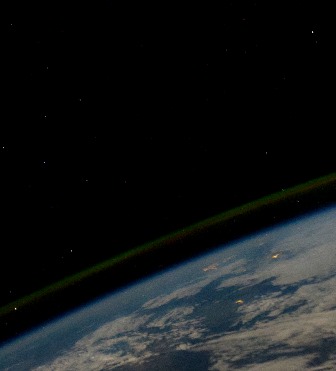
View from spaceKill your darlings, they say. Cut the parts from your book that don’t move the plot forward, even if you love them. So, on the wise advice from my editor, I killed the final section of the novel Interference about some fippokats (well, they were going to die anyway) and write a different ending that was much more dire.

Here’s that darling for you: the alternate epilogue to Interference.

EPILOGUE—KELLY—LATER THAT DAY—IN ORBIT

Oh, this is the strangest place and the most wonderful. It frightened me at first, yes, although the Big Ones are happy, so we are happy, Moss and Emerald and Lime and I am Kelly. We have our sleeping box and we drink water from a tiny pipe next to strange food dishes and it is a game just to eat because the food floats. It all floats, the Big Ones and the food and the toys and us and everything.

But we do more than float, Moss and Emerald and Lime and I. We jump and hop and chase each other, leaping from wall to wall, from floor to ceiling, anyplace to anyplace, and look at this somersault, three in a row! We can fly!

We hop and we glide along the walls and ceilings and floors and tabletops, and it is easy, a twitch of the toes and now a somersault again. Here I come at a Big One, and I spread my legs to steer and slow, and the Big One catches me and says Kelly Kelly Kelly and pets me and we float to the window to look outside, but it is night, so I will stay where it is bright and warm and full of fun.

The Big One helps me spin, whee! and I come to a wall and jump off because Lime is down the hall and we can chase each other through the air. Lime sees me and launches herself at me and we meet in the air and bat at each other’s back feet and we connect and here we go! Back and forth and up and down, wall to floor to ceiling. It is the best game ever.

We can fly! We can fly!

Categories
Uncategorized

My new favorite plant: a progress report

On Mother’s Day this year, I wrote about my new favorite plant, this Rhipsalis creuscula or coral cactus.

My brother had mailed me some cuttings from his plant, which my mother had given him about thirty years ago. She died in 1994.

Although the cuttings had arrived a bit battered from the trip, the “before” picture is what they looked like after a month of tender loving care. My brother said that they would recover quickly and become a beautiful houseplant.

Now, eight months later, they’re doing great, as you can see. My mother would be delighted that the plant she loved is still very much loved — and still lovely.

Categories
Uncategorized

Giveaway reminder and updates for ‘Interference’

InterferenceCover_SmallReminder: Goodreads is hosting a giveaway of 20 copies of Interference. Enter here before November 14.

Not sure if you’ll like the book? You can read the first chapter here. You can hear a preview of the audiobook here. You can also read a few reviews at Goodreads.

Ready to buy? Links to online and bookstore outlets for the hardcover, ebook, and digital audio are here.

Want to meet me? I’ll be at Windycon, a Chicago science fiction convention, on November 15, 16, and 17, at the Westin Lombard Yorktown Center, 70 Yorktown Center, Lombard, IL. On Saturday, I’ll be participating in the Writer’s Workshop in the morning; at a reading at noon; on the panel “Talking to Little Green Men (Alien Languages)” at 1 p.m.; and autographing at 2 p.m. The rest of the weekend I’ll be wandering around more or less aimlessly. Come say hi.

I’ll be at Magers & Quinn Booksellers, 3038 Hennepin Ave., Minneapolis, MN, on Thursday, November 21, at 7:00 p.m. It will be Sci-Fi Night with Naomi Kritzer and Marissa Lingen. Naomi’s YA technothriller novel, Catfishing on CatNet debuts on November 19.

Not sure if you’ll like me? You can read interviews at PaulSemel.com and the Verge.

Warmth and food!

Categories
Uncategorized

Excerpt from ‘Interference’: the opening of Chapter 6, by Stevland

InterferenceCover_SmallA spark of ethylene freezes a few of my rootlets as the auxins are inhibited. The main locustwood speaker wants my attention and strikes where a patch of our roots overlap. It is odd that he should greet me in an almost non-destructive fashion. He is the new speaker for his grove of trees but already behaves typically for his species, with aggression. The biggest and most belligerent tree in the local grove becomes not merely the spokesman but the only breeding male, so the entire species aims for size and hostility.

No doubt he wishes to ask about my service animals. The recent arrivals from Earth have created a noticeable change, to understate the situation absurdly.

“We have a question,” he says.

No demands? No bluster? He must be distressed. “Yes,” I answer. “A migratory group has arrived for a visit.”

“We do not understand.”

“The service animals. No doubt you have observed a change, but it is temporary.”

“We are concerned about the fires.”

“The fire tonight is for a celebration and will be strictly controlled.” I add, “As it is every year.” He ought to remember that.

“These fires have already occurred. They were along the border with the Coral Plains.”

Fires at the plains? I know nothing about that. But I keep my response calm, if only because an excited locustwood is a dangerous locustwood, and they get excited easily. “Tell me more.”

“Our southern groves saw small fires over the past two nights. They started in the Coral Plains and did not spread into our forest, but five fires are too many. Our other groves can show you where. Your service animals must investigate.”

“They will do so. Thank you for the notice.” Five. Fire is our greatest danger, although locustwoods tend to overreact. Swamp fires are not forest fires. Methane is the likely cause, since it can ignite spontaneously and at a low temperature, thus harmlessly, if that is what happened, yet such fires are uncommon. Five may be far too many.

“But,” the locustwood continues, “about your animals, we have heard of odd movements and some new strange members. They can fly, for example, and they are not bats or cactuses.”

“The visitors will eventually fly away, and the city will remain the same.”

“And we wish to have the trunk of the previous speaker harvested.”

I did not expect that. When the old speaker died, his death hastened by this rival’s quest to achieve speakerhood, we had agreed to leave the dead tree stand in honor of his service. “Why do you wish it removed?”

“It lies in the way of new growth. Have your animals cut it down promptly. They will appreciate the wood.”

Perhaps, for the speaker, it is a reminder of his dishonorable deeds to displace the incumbent. Or the dead tree may genuinely be in the way of new growth, new female trees for the speaker to add to his grove. But in any case, the wood has a remarkable pattern, called “checkerboard” by the Humans and “plaid” by the Glassmakers, and it can be used for items of beautiful utility and decoration, so this is good news for the city.

I must not sound too agreeable, however, or the locustwood might interpret that as weakness. “I shall order it done. And we must set the quota for this year’s harvest. Perhaps, given your success, it can be expanded. Your wood is very useful.”

“Provided it is only used for durable purposes. We do not wish to be burned any more than you.”

“We will discuss this further.”

“In the summer. Meanwhile, keep the fire tonight under control.”

“We have sufficient experience.”

“And keep your animals under control.”

“Of course I will. I also have long experience with these species.”

My deepest roots remind me that I have not always had successful experiences with these species, both with individuals and with groups. While I have extended my understanding in many ways over the years, this wisdom does not always serve in new situations, and every day is a new day with new problems.

Categories
Uncategorized

“Interference” book launch – with free plants!

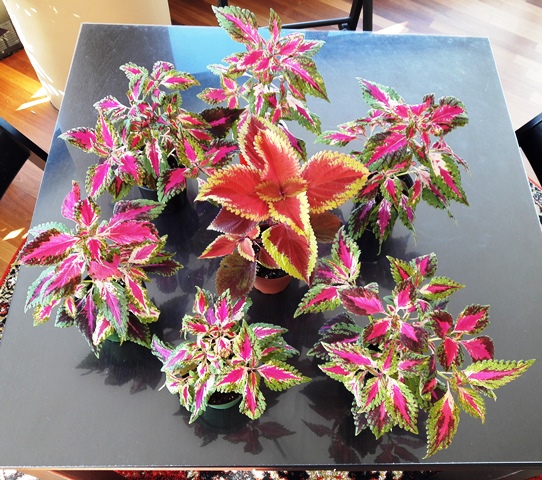
Coleus to give away
These coleus plants come direct from my living room: happy, healthy, colorful, accustomed to human interaction, and mostly harmless.*

The book launch for Interference will be at 7 p.m. Thursday, October 24, at Volumes Bookcafe, 1474 N. Milwaukee Avenue, Chicago.

The novel goes on sale October 22.

On the 24th, I’ll be reading from the novel, answering questions — and giving away the plants in the photo made from cuttings from one of my own houseplants.

The idea behind the novel Semiosis and its sequel Interference started when some of my houseplants tried to kill other plants. So far, these coleus seem enthusiastic but not aggressive.

*No guarantees. As it says on the cover of Interference, “Sentience craves sovereignty.” Who knows what these plants are thinking?

Categories
Uncategorized

Giveaway of “Interference” at Goodreads!

InterferenceCover_SmallTor Publishing is giving away 20 copies of Interference at Goodreads.

If you’re a member of Goodreads, click here to enter! (Limited to Goodreads members in the US and Canada, sorry.)

The novel goes on sale in a week, and if you’re not feeling lucky, you can pre-order it now.

Categories
Uncategorized

Science fiction vs. literary fiction: Losing control

DeepDish03oct19.In case you couldn’t attend the Speculative Literature Foundation’s Deep Dish reading October 3 at Volumes Bookcafe in Chicago, here’s the essay I read. It appeared in a longer form at From Earth to the Stars, the blog of Asimov’s Science Fiction Magazine.

Tonight I want to talk about a big difference between science fiction and literary fiction. The difference starts with the idea that we all need to achieve self-realization. We’ve been told this by Sigmund Freud and Carl Jung, among others, because if we understand ourselves deeply, we’ll awaken our highest potential and find inner peace.

On the other hand, Martians could suddenly land and blast all of humanity into ashes. Knowing our true selves won’t save us from that.

This way of thinking about things — that external events matter more than individual self-realization — might account for the difficulty some people have with science fiction. Its stories tell an uncomfortable truth, according to Barry N. Malzberg, an author known for his dark humor.

In 1980, Malzberg tried to define science fiction. He said it “holds that the encroachment of technological change will make the future different and that it will feel different to those within it.… Lasting, significant change … is uncontrollable and coming in uncontrollably. Regardless of what we think or how we feel, we have lost control of our lives.” This is “inimical to the middle class (which has been taught that increased self-realization is increased control). It will be these changes — those imposed extrinsically and by force — which really matter.”

He wrote this in 1980. How much has changed since then, and how much control have we lost?

Cyberpunk appeared in the 1980s, and it criticized electronic society and the way it might control us. If cyberpunk dystopias haven’t become real, these warnings weren’t in vain because the future isn’t over yet.

So far, we’ve lost anonymity, for one thing. Now anyone can be famous whether they want to be or not. You can, deservedly or by accident, get mobbed on Twitter, sometimes including credible death threats. You can’t hide, and nothing is forgotten. We can never be anonymous again.

Another thing we’re losing is truth. In the 1980s, unofficial lies had a hard time spreading. Now, the barriers to retelling lies have fallen to zero, and “truth” has become weaponized.

What can we do about the loss of anonymity or truth? Not much. Even if you don’t use the internet, the internet will use you.

Technology also effects the climate, weaponry, medicine, legal and illegal drugs — and the economy, including our ability to earn a living wage. Our world is changing, and we have problems.

Yet we keep on telling science fiction stories in the face of knowing that our lives and the lives of our characters are in many ways beyond our control. Despite that, we do something puzzling: Some of our stories don’t spiral down into despair.

I suggest that’s because deep down we understand that self-realization won’t save us, but something else might. If we understand our world and universe, we can fight despair and even dabble in optimism.

I may know my true self perfectly, but that won’t stop the Martians. If I have a phaser and set it on stun, I can hope to slow down the Martians long enough for peace talks.

Now, of course, you should try to know yourself. It will bring you benefits like increased self-control, which we all need. But that wisdom alone won’t save us from external out-of-control change. Our understanding of science and technology might. We can imagine how to respond effectively. That kind of knowledge is power, and it’s what fuels our genre.