Categories
Uncategorized

How to get published, or, are you smiling when you write?

Sour Face Sue
Photo taken when I was not writing.

I first got paid to write when I was in high school as a columnist for the local newspaper. It was fun, and how many jobs are fun?

By fun I mean it was creative and difficult enough to keep me from getting bored, since you could never fully master the art of writing. It involved variety, since you couldn’t write the exact same piece again and again like making widgets in a factory. By definition, it was interesting, since the final product was supposed to be interesting and sometimes even entertaining for the reader.

I also physically enjoyed the act of writing itself, of arranging and rearranging words in search of perfection, the way some people like to play basketball or guitar.

Besides all that, writing produced a tangible product. I could point to a published article and say, “I did this.”

I spent decades working as a journalist. Someone (exactly who isn’t certain) said you have to write a million words before you get good. Well, I wrote that many – and added to those are the countless additional words that ran past me as an editor.

So for me writing should be easy. Yes … and no, not at all.

Journalism has taught me invaluable lessons: to write to length, on deadline, on almost any topic, clearly, succinctly, engagingly, with the reader in mind. In addition, it taught me to write with proper punctuation and formatting, which always endears you to editors.

But when I decided to branch out into fiction, only some of what I’d learned did me any good. Journalism had taught me to write with dispassion and leave out emotion. Wrong, wrong, wrong – for fiction.

Fiction requires emotion. That’s what readers want most of all: a story to tug at their hearts, to excite them with ideas, to fill them with anticipation. I had to learn how to do it.

So I began writing stories fully aware of how much more I had to master. You can learn from workshops, from books about writing, and from careful reading, and I did all that, but writing is a practice discipline, like playing basketball or guitar. You learn by doing. So I began writing stories, expecting success to take time.

It did. A long time. I got rejections. Lots and lots and lots of rejections. Those early stories boasted of proper punctuation and formatting, maybe even a good idea, but they lacked so much else.

A few times, magazines decided to buy my stories, then folded up shop before they could get them into print or pixels and pay me. Once, a publisher bought a novel and dropped the ball. I might sound dispassionate about these things now, but they hurt. If you were around me at the time, thank you for your sympathy. If you’re hurting about the same sort of thing now, you can cry on my shoulder. I’ll understand.

But I’ve kept going. Why? Because writing is still fun: creative, full of variety, interesting – and I have yet to fully master the art. If I won the lottery, I’d keep on writing.

It’s fun like playing basketball or guitar. Look at how many people are smiling on the court or the stage. Are you smiling when you write?

I think that’s the secret to getting published. Everyone will tell you to be persistent and work on your craft, and you do have to do that, absolutely. But volunteer for each part of the job just like you’d fight and yearn every step of the way to get to play the big game or the big gig. Love every minute of it.

If you don’t enjoy writing, you might not be doing it right – by which I mean doing it the way that will sustain you through all the trials you face. Have fun! (Readers can tell.) The rest will come.
Categories
Uncategorized

A few links about plant science, human sex, and what we can learn from trees

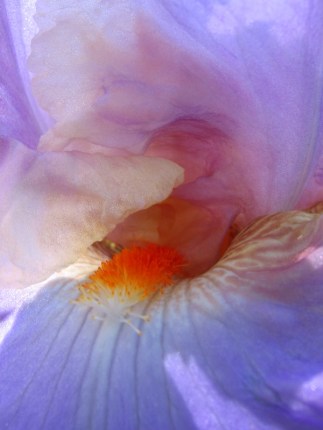
Iris CloseupLet’s Talk about Plant Sex
In this podcast from the Newberry Library, Katie Sagal tells how women writers in the 18th century engaged with botany, which was considered both an activity for cultivating feminine virtue and a weedy thicket overrun by the perils of intellectual rigor and plant sexual reproduction.

Ten Plants Used to Spice up Sex
Speaking of sex, Botany One lists ten possible human aphrodisiacs. Many things seem to work on rats, but we know less about their effect on humans. And then there’s the bonus eleventh plant that might work for you — but only as a gambit.

Learning to Speak Shrub
Plants do talk about sex, but as this article in Nautilus says, more often they use molecular codes to cry for help, ward off bugs, and save each other.

The World’s Shiniest Fruit
Just for fun, here’s a couple of photos of the fruit of the African plant Pollia condensata and an explanation about why it’s so shiny.

Hermann Hesse on What Trees Teach Us About Belonging and Life
This beautifully poetic passage speaks about trust and happiness. “So the tree rustles in the evening, when we stand uneasy before our own childish thoughts: Trees have long thoughts, long-breathing and restful, just as they have longer lives than ours.”

An Enduring Literary Classic
Finally, this Wondermark cartoon jokes about how slowly plants grow. Slow plants is one of the reasons why the novel Semiosis is structured in chapters that sometimes jump a generation ahead. I tweaked the vegetation on Pax as much as I felt I reasonably could to speed it up, but plants are naturally slow beings. They needed time to react to the new arrivals, and I had to think of a way to build that time into the narrative. I decided to skip ahead a couple of decades between chapters and try to tell compelling stories within that framework.

Categories
Uncategorized

My post at Asimov’s blog

My essay “We Lost Control a Long Time Ago” is available for your reading pleasure at From Earth to the Stars, Asimov’s Science Fiction Magazine’s blog for authors and editors.

In my post, I discuss Barry N. Malzberg’s sometimes uncomfortable idea about what sets science fiction apart from “literary” fiction: external events matter more than individual self-realization. Literary fiction tends to focus on one kind of change, increased self-understanding and self-control, as a means to gain control of your life. Science fiction says that you might achieve self-realization, but technological change is and always has been out of control, and that change and our inability to control it matters more to our lives.

This is what makes science fiction a dangerous and plot-oriented kind of literature.

Categories
Uncategorized

I’ll be at WisCon this weekend

I’ll be attending WisCon, a feminist science fiction and fantasy convention in Madison, Wisconsin, from May 25 to 28. I’ve been attending off and on since the 1990s, and it’s always a fun, exciting weekend.

On Friday at 2:30 p.m., I’ll be on a panel for Speculative Fiction in Translation with Rachel S. Cordasco, Arrate Hidalgo, Crystal Huff, and S. Qiouyi Lu. Find out about the obstacles and joys of translation, the effect of the internet, and anecdotes about what’s hard to translate. We’ll also give out chocolate and M&Ms, translated books, and a catalog listing recently translated works.

On Sunday at 4 p.m, I’ll be at the Science Fiction and Fantasy Poetry Association 40th anniversary round robin reading.

On Monday at 11:30 a.m., I’ll be taking part in The SignOut, a autograph/chat session. Come say hello if you haven’t already. Wind down after the fun-filled long weekend. On Tuesday, we have to go back to work — fully charged with WisCon energy.

Categories
Uncategorized

“Semiosis” will have a sequel!

The contracts have been signed, the manuscript has been accepted, and Semiosis will have a sequel. In it, Earth sends a mission to the planet Pax, and — no surprise — things don’t go well, for a variety of reasons. Stevland is forced to act.

I’ve begun revisions with my editor at Tor, Jen Gunnels, who is a delight to work with. The novel should come out in 2019, and the title has yet to be decided. It’s been referred to as Semiosis: Pax, but in my computer, it’s just “Pax II.”

In addition, Tor wants to buy a third, unrelated book, and I’ve begun work on that. It will be about perfect human clones and their struggle to fit into an imperfect world. At this stage in the process, which is still the zero draft (not even close to a first draft yet), it’s hard to say more because I’m still exploring the story. It should be published around 2020.

I want to thank my agent, Jennie Goloboy at Donald Maass Literary Agency, for all her work to make this happen.

Categories
Uncategorized

I’ll be in St. Louis on Thursday for a #FearlessWomen event

Left Bank Books and Archon will present a SciFi STL and Tor #FearlessWomen event at 7 p.m. Thursday, May 10, at the St. Louis Public Library – Schlafly Branch, 225 N. Euclid Ave.

I’ll be there with Tessa Gratton, author of an epic fantasy about deposed kings and betrayed queens called The Queens of Innis Lear, and with K. Arenault Rivera, whose historical fantasy series The Tiger’s Daughter features an infamous warrior, a spoiled empress, and encroaching demons.

You can learn more about the event here. Free and open to the public, followed by a book signing. If you can come, I’ll be glad to meet you.

Categories
Uncategorized

“Life From the Sky” in the May/June issue of Asimov’s magazine

My novelette “Life From the Sky” appears in the May/June 2018 issue of Asimov’s Science Fiction magazine. I’m excited to be there along with some of my favorite authors.

You can subscribe to print and electronic editions at the Asimov’s website and at Amazon. Individual copies are on sale now at fine bookstores and are available at some public libraries.

The story is set in the here and now. What if alien life forms landed on Earth? What would we do?

Here are the opening paragraphs:

LifeFromTheSky opening paragraphs.jpg

Asimovs_MayJun2018.jpg

Categories
Uncategorized

A deleted bit of a scene

This disgression should appear on Page 324 of the hardcover version of Semiosis. It illustrates an ongoing difficulty on Pax and the rights its Constitution grants children. This little bit (in blue) about them from the final chapter about Bartholomew was cut because the book was getting too long, but I enjoyed writing it, and it might amuse you. A team including Bartholomew is deciding how to cut down the orange trees.

OrangeTree

“Fire,” Erasmus said. “Not a bad idea, and I like the sentiment. The thing is, the fire would hurt other trees, like that ponytail over there next to the oranges, those pines, even these friendly little palms. No, wouldn’t be right. Good thinking, though.”

People nodded. It wouldn’t be the Pax way.

Piotr stood next to me. The downy hairs on his upper lip had darkened in the last year. He had loved Lucille and he would have been blind not to, the only grown woman in Generation 7. She had been his future, and she died before his eyes, and his heart broke. Could it heal, or could he replace it? If I talked about Bess, would he understand?

“Did you paint your face green to be like Lucille’s?” I asked.

He looked away, fumbling with something in his pockets. “No.” Then, “Yes,” in a louder but not stronger voice on the edge of a squeak.

“That’s a nice gesture,” I said. He nodded and tried to smile and failed utterly.

Maybe we could have saved Lucille. Did he need to know that? Cedar had refused to act, but then Pacifists arrived, fought and almost won. Almost. If the fighting had started a minute earlier, maybe. . . . No. The orphans already had the acetone, they already had a plan to burn the women to distract us.

But Cedar hadn’t known that. Could I forgive her? Would that be good for Pax? Would that be just?

Piotr was suddenly hugging me. “Take care of yourself,” he said, as if I were the one needing care. He turned and left down a path, whistling in something like Glassmade, and two Glassmade majors followed him.

Six of Lucille’s students were coming toward us down another path, the six most boisterous children in all Pax, painted and ready to get in the way.

Erasmus started muttering, and when they got closer, he said, “Listen, kids, this isn’t a good place for you. Cutting down trees is dangerous work.”

“They’re bad trees,” said a little boy with a face painted with blue stripes.

“Exactly.”

“But you’re a 4. We’re 7s. You can’t tell us what to do.”

The old lumberjack looked at me. Age didn’t matter, according to the Constitution, a flawed document, so what could we do? The Parents who wrote it on Earth never thought about four-year-olds who would want to wield axes.

“But he’s the team leader,” I said. Erasmus smiled at me, then at the children.

The boy lost his bravado. “Can we be on the team?”

“Yes, and it’s like this.” Erasmus dropped to one knee to talk face-to-painted-face. “There’s some saplings near the dominant locustwood. You know which one that is, right kids? Really big and tall, off that way. It told its saplings to help us out. If we plant them where the orange trees were, the little locustwoods will be sure the oranges don’t grow back in case we miss some roots. All right, what we need are people to go dig up the saplings. Piotr’s already going with the Glassmakers and he needs some helpers. How about it, kids? You and the Glassmakers. You’re great at digging, aren’t you? A pack of birds, that’s what you are. Owls, real owls.”

The proposal interested them. Flattered them. They began barking. “I’m not a owl, I’m a eagle.” “I’m a tree. Trees are better. They can do more.” Boisterous, they followed Piotr and the majors.

We adults fetched ladders and got to work, one tree at a time. I held the ladder for Fabio’s father, trying to hold it steady, but he chopped wildly, long swings with more force than precision, almost knocking himself off the ladder, though he didn’t seem to notice. He couldn’t notice. He was attacking in his own private battle, and how could I not sympathize for the loss of a son? Tears or sweat filled the fine lines around his eyes. I kept my feet planted firm, my eyes on his swinging arm to know when to tense, listening to the rhythm of seven other axes and the crunch and crackle of live wood yielding to steady assault, and to sniffs and sobs and relentless progress, making way for good trees.

Categories
Uncategorized

A corpse flower is about to bloom in Chicago

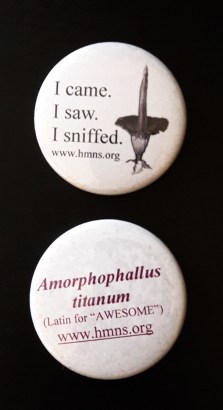
TitanArumButtons
I bought these buttons at the Houston Museum of Natural Science.

If you’re around Chicago, any day now you can witness a corpse flower in bloom, a rare event. A titan arum named Spike is getting ready at the Chicago Botanic Garden.


Read all about it at the garden’s special Spike 2.0 web page.

I saw a titan arum at the Houston Museum of Natural Science in 2010. These huge flowers famously smell horrible, like a rotting corpse — or if you’ve never experienced that, like very old garbage. That’s how it attracts carrion beatles and flesh flies to pollinate the flower.

If you can’t make it, there’s a live webcam on the web page, also here at YouTube.

Enjoy your visit, and hold your nose.

Categories
Uncategorized

The Writing Process: Minimalist Plotting

UserPic1
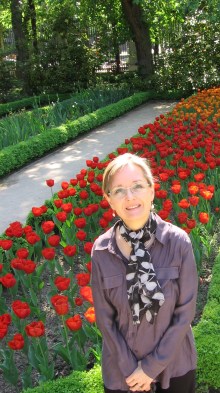
I enjoy spring a few years back in the Royal Botanical Garden in Madrid, Spain, where I used to live.

How do you write a novel? That’s a hard question, and I wish I knew the definitive answer — because I’m writing a novel right now. (I’m always writing a novel, in fact. Writing a novel is fun.)

But there’s no definitive answer. Generally, though, writers use one of two approaches: plotter or pantser, sometimes called architect or gardener. Some writers plan and outline their writing projects, while others just start writing and see what grows.

I began my writing career as a newspaper reporter. In that job, being a plotter/architect made sense. You’d gather up all there was to know for your article, or at least everything you could learn before deadline, and then try to force that information into some sort of logical sequence. You needed an explicit plan before you started writing.

I used to create fiction the same way, but now I’m not sure that process works, at least for me. I don’t seem to know everything I need to know before I start writing. At the same time, I’ve become convinced that if you don’t have a goal in mind when you start to write, you might arrive at a place not worth the trip.

So I’ve changed the way I write fiction in two ways. First, I’ve adopted the “zero draft” strategy: the initial version doesn’t even count as a first draft. It’s all an experiment. I view it as a way to collect the kind of facts and quotes I would have on hand to write a newspaper article. It’s where I do the research. The result doesn’t even have to be particularly coherent. That will come later in the rewriting.

Second, I have a minimalist plot. I know vaguely what happens and how it all ends (presuming I don’t get a better idea along the way). When I was writing the novel Semiosis, my outline was a sentence or two for each chapter.

For example, Chapter 5: “The colonists in the city find a way to meet the other aliens, and it goes badly.” Chapter 6: “The other aliens come to the city. It goes very, very badly.”

What did I mean by that? Well, I had to figure it out. Or rather, as I wrote Chapters 1 to 4, I knew I had to set up the situation in which the meeting and return visit would happen. At some point, the colonists needed to know where to find those other aliens, and the aliens needed to want to come to the city. I needed to set traps that could be sprung to make things go badly — very, very badly.

(I think I’m a reasonably nice person, but when I start typing, somehow I wind up killing people. Sometimes a lot of people. If you value your life, stay out of my imagination.)

I seem to have found the best of both worlds: when I start to write, I do have a plot of sorts. Like a gardener, I can see what blooms and pull up the weeds that sprout in the process. Like an architect, I can test-model a concept before I begin final construction. Along the way, I can design a beautiful city and plant seeds that will grow into murderous flowers.

… … …

This article originally appeared at the Red Sofa Literary Agency 2017 blog series for National Novel Writing Month (NaNoWriMo).