Categories
Uncategorized

Mediate like the stars

Andromeda GalaxyHow do you meditate? Sitting still, eyes closed? That’s one way to do it: We can imagine ourselves serene like the stars overhead, moving in stately, measured rhythms. We breathe in and out, and they rise and set.

Or we could meditate like the stars as seen from another point of reference, dashing to and fro frenetically. Our Sun moves at 43,000 miles per hour. Nearby Barnard’s star is moving away from us at 200,000 miles per hour, while a star called Ross 128 is moving toward us at 69,000 miles per hour. Stars race through the sky, and they outnumber the grains of sand on all our beaches. Their heavenly haste creates the galaxies that fly like hurricanes across the cosmos.

You can sit still to meditate. Or you can emulate a star and race like a cannonball from place to place, tugged throughout your journey by bodies as small as a planet or as large as the black hole at the center of a galaxy. Your course will be constantly modified by outside forces as you careen past them.

Movement is beauty. Speed is ecstasy. Stars never travel alone and never make the same journey as their neighbors — and here on Earth, their every moment is tracked with scientific awe.

You can be like them. Savor tomorrow morning’s mad rush. Imagine yourself as a star as you move fast and phrenetic, your destination subject to constant influence and change.

Meditate on your blazing, ecstatic celerity toward parts unknown. You will be heavenly.

Categories
Uncategorized

Authors and astronomers at the Adler Planetarium Book Club

On Saturday, December 1, from 1 to 3:30 p.m., three Chicago authors will be talking with astronomers at the Adler Planetarium about our inspiration from the stars. I’m one of the authors.

I’ll be discussing life on other planets and how huge the universe is with Mark SubbaRao, president-elect of the International Planetarium Society and director of Adler’s Space Visualization Program. Asteroid 170009 Subbarao is named after him for his work on the Sloan Digital Sky Survey.

Astronomer Mark Hammergren will talk with Michael Moreci, author of the science fiction novel Black Star Renegades. Astronomer Maria Weber will talk with Lori Rader-Day, author of the murder mystery Under a Dark Sky.

Admission to the book club talk is free with general admission, and if you’re an Illinois resident, you get free admission to the entire planetarium on Saturday with a valid Illinois ID as part of Illinois Resident Discount Day.

Books will be available for purchase, and we’ll be signing books and chatting with the audience after the talk. You can get full information about the event and books here.

Science informs fiction! Come find out how.

Categories
Uncategorized

Plants in print: Books about botany

There’s always more to learn and say about the vegetable kingdom. Here are some recent worthwhile books:

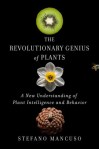
The Revolutionary Genius of Plants: A New Understanding of Plant Intelligence and Behavior by Stefano Mancuso
Plants can learn, remember, and innovate, Mancuso says. Unlike animals, who often try to avoid problems, plants are rooted in place and must solve them. He suggests that one key to their problem-solving ability is decentralization: plants respond to their environments with their whole bodies. In fact, he says, some of their solutions could help us solve our own problems.

Sex on the Kitchen Table: The Romance of Plants and Your Food by Norman C. Ellstrand
Plants have sex in a lot of ways, some of them complex. Ellstrand tells his tale with five foods: tomato, the plant sex manual; banana, a life without sex; avocado, timing is everything; beet, philander and philanderer; and squash and more, sex without reproduction. Each chapter is followed by a recipe.

Flora Unveiled: The Discovery and Denial of Sex in Plants by Lincoln Taiz and Lee Taiz
We now know that plants have sex, but it took a long time to figure it out. The authors document that discovery from the Paleolithic Age to the 19th century, covering fields as diverse as history, archaeology, linguistics, and comparative religion. The idea of plant sex was finally put forward in the late 17th century, and then ridiculed for 150 more years. Why was it so hard? Plants were all considered female.

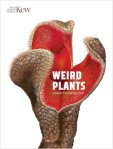
Weird Plants by Chris Thorogood
In their relationships with animals, plants will eat us, trick us, kill us, kidnap us, or hold us subservient. Plants can be mean to each other, too — and do unexpected things, such as serving willingly as a toilet. Consider this: there’s a plant named “devil’s guts,” a tough name to acquire. Tales of plant oddities are accompanied by the author’s oil portraits of the weirdness in question.

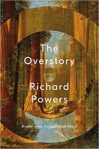
The Overstory by Richard Powers
This novel, which has won accolades and prize nominations, examines relationships and conflicts between humans and trees. The first nine chapters capture an event in which trees changed the life of a person in different places and times. The second half of the book tells how those people fight to save trees. “If the trees of this earth could speak, what would they tell us?”

The War Between Trees and Grasses by Howard Thomas
Over time, trees, grasses, and humans have evolved together, but not always in harmony. The creature most changed has been ourselves. An appendix summarizes the geological timelines of the millions of years that have brought us timber and food — and famines of both. We humans have a dog in this fight, but we might not know when and if we’ve won.

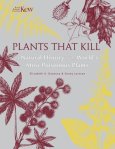
Plants That Kill: A Natural History of the World’s Most Poisonous Plants by Elizabeth A. Dauncey and Sonny Larsson
Lots of colorful illustrations introduce us to the murderers of the vegetable kingdom: rincin, henbane, and aconite, among many others. But as the refrain says, the poison is in the dose. Many of these poisons can also cure us: colchicine for cancer, galantamine for Parkinson’s disease, and curare to relax muscles for surgery. Plants’ defenses can turn them into our allies.

The Songs of Trees: Stories from Nature’s Great Connectorsby David George Haskell
With lyrical prose and almost spiritual reverence, the author visits a dozen different trees around the world to capture their ecological aesthetics not as individuals but as part of the same web of life we humans belong to.

Categories
Uncategorized

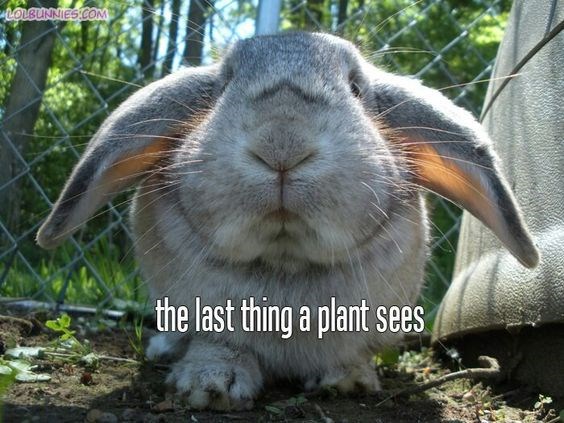
The last thing a plant sees

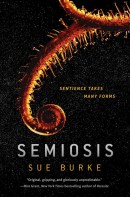
SEMIOSIS_421x421

Categories
Uncategorized

Where to find me at Windycon

From November 9 to 11, I’ll be attending Windycon 45, Chicago’s oldest science fiction convention. It’s a literary-based event (the guests of honor are authors, filk musicians, artists, cosplayers, and fans), with children’s programming, games, anime, panels on all sorts of topics during the day, and parties at night. Usually more than a thousand people attend.

My schedule:

Friday, 10 to 11 p.m. panel. Science in the Kitchen: How science is changing the way we eat.

Saturday, 9 a.m. to noon, Writers Workshop. We’ll critique short stories and chapters of novels. Preregistration required.

Saturday, 4 to 5 p.m. panel. ¿Como Estás? Translation Challenges: What are the challenges in translating your work to other languages?

Saturday, 8 to 9 p.m. panel. Animal Typecasting: Hollywood and authors typecast all the time. Why are reptiles almost always the villain? A discussion about different animals and how they are typecast.

Sunday, 1 to 2 p.m. panel. Autonomous Cars: More and more, our cars are becoming automated. Is this new technology awesome or awful?

If you’re there, say hi!

— Sue Burke

Categories
Uncategorized

The words to Higgins’ song, “Grief Evergreen”

GriefEvergreen

Chapter 3 ends with Higgins saying: “I would go out to share some truffle with Pitman soon, and I would sing him a sad song about fear and hope, failure and healing, about sweet and fresh sap in leaves evergreen with grief. Maybe I could teach the pack to coo along. Music the Pax way. Cross-species communication. They never did that on Earth. Singing fippolions. Dancing fippokats. Helpful, talkative plants with a sophisticated appreciation of abstract ideas. Good times. They can happen. Wait and see.”

Here are the words to that song. Feel free to set them to music.

Grief Evergreen (Higgins’s Song)

People will die, and I knew that yesterday.
People will cry, and I know that now today.
I would have been fine just knowing that yesterday.
I didn’t want to learn I was right today.

(Chorus)
Fresh sap in the leaves evergreen,
clean and new every season,
grief evergreen.

The ache of a soul that lived a night too long,
the one that brought sorrow and failure and wrong,
the one I saw coming. I knew all along
I couldn’t stop it. I wish I were that strong.

(Repeat chorus)

Life is a song, and time never stops breathing.
I can’t be quiet, I can’t refuse to sing.
I can’t stop sunrise, and I can’t stop the spring.
It hurts more to keep silent. I have to sing.

(Repeat chorus)


Categories
Uncategorized

“Live like a tree…”

TreeJardinBotanico
A 150-year-old Mediterranean hackberry (Celtis australis), one of the prized, singular trees at the Real Jardín Botánico de Madrid. Photo by Sue Burke.

Trees — and other plants — can serve as an inspiration and guide. Here are a few quotes to ponder:

“A single act of kindness throws out roots in all directions, and the roots spring up and make new trees.” — Amelia Earhart, aviation pioneer (1897–1937)

“Our lives are like islands in the sea, or like trees in the forest. The maple and the pine may whisper to each other with their leaves … But the trees also commingle their roots in the darkness underground, and the islands also hang together through the ocean’s bottom.” — William James, psychologist and philosopher (1842–1910)

“Live like a tree, giving, forgiving, and free.” — Debasish Mridha, physician and author

“Knowing trees, I understand the meaning of patience. Knowing grass, I can appreciate persistence.” — Hal Borland, journalist and naturalist (1900–1978)

“I believe a leaf of grass is no less than the journey-work of the stars.” — Walt Whitman,

Categories
Uncategorized

Exactly where is the Planet Pax?

CapturaPaxStar

In Semiosis, our colonists wake up in orbit around a planet at star HIP 30815. Where is that? In the constellation Gemini. But let’s get more precise.

The above photo, which pinpoints the location, comes from In-the-sky.org, which offers guides to the night sky specific to your location. The site can be set to “night mode” so you can use it as you stargaze.

The “HIP” in the name refers to the Hipparcos Catalog, one of a great many lists of stars. The Hipparcos catalog was compiled from the data gathered by the European Space Agency’s astrometric satellite Hipparcos.

The number basically follows the order of the object’s right ascension, that is, its east-west coordinate starting at the March equinox. This is the celestial equivalent of terrestrial longitude, so the number is merely the star’s place in an ordered list.

The “f” designates the planet. By convention, planets are given letters in the order they are discovered. That means there are five other planets at star HIP 30815 (according to the novel, not current science, which hasn’t identified any so far).

You can get much more detailed scientific information about the star at Universeguide.com.

Sky-map.org offers photos and additional technical details, such as the variety of names the star has: HD 1989, HD 45506, TYCHO-2 2000, TYC 1328-38-1, USNO-A2 1050-03646671, BSC 1991, HR 2340, and HIP 30815.

Finally, here’s the passage from Chapter 1 of the novel that specifies the star:

We awakened, cold and dizzy, with our muscles, hearts, and digestive systems atrophied from the 158-year hibernation on a tiny spaceship. The computer had brought us into orbit, sent a message to Earth, then administered intravenous drugs.

Two hours later I was in the cramped cabin trying to sip an electrolyte drink when Vera, our astronomer, came flying in from the control module, her tightly-curled hair trailing like a black cloud.

“We’re at the wrong star!”

I felt a wave of nausea and despair.

Paula was spoon-feeding Bryan, who was too weak to eat, and she seemed calm, but her hand trembled. “The computer could pick another one if it was better,” she said.

“It did!” Vera said. “It is. Lots of oxygen and water. And lots of life. It’s alive and waiting for us. We’re home!”

We were at star HIP 30815f instead of HIP 30756, at a planet with a well-evolved ecology, and, I noted, abundant chlorophyll. The carbon dioxide level was slightly higher than Earth but not dangerous. Seen from Earth, both stars were pinpricks in the Gemini constellation near Castor’s left shin. As planned, we named the planet Pax, since we had come to live in peace.

Categories
Uncategorized

Fall is here, and trees will demonstrate their power

Autumn officially began on September 22. For some plants, the angle of the sun tells them what season it is. Others rely on the temperature. In any case, at this time of year, deciduous trees drop their leaves to prepare for winter.

The 2018 Fall Foliage Prediction Map at Smokymountains.com has a week-by-week interactive map showing regional peak colors for the United States. (See photo above, which is for October 8.) The web page also explains the science behind falling leaves and has downloadable coloring sheets for children.

When the time comes, trees cut off the flow of nutrients to leaves, which lose their chlorophyll, and beautiful underlying colors are revealed. (This season is typically called “fall” in the United States versus “autumn” in Britain for historical reasons.)

Years ago, I witnessed something that showed me the power of trees — not their strength but their autonomy.

The air could not have been more still that autumn morning, yet a tree near my back door was losing its leaves. One by one, they fell of their own weight as the tree let go. Leaves dropped steadily and eerily through the becalmed air.

Usually we think the wind sweeps the autumn leaves from the trees, and maybe it provides an extra tug. But trees decide to shed their leaves at the moment they deem best. Though they seem almost inert, buffeted by wind, soaked by rain, baked by sunshine, and parched by drought, they control their fates as much as any of us. We, too, can be uprooted by disasters, attacked by illness, cut down by predators, and suffer wilting thirst. Being mobile does not make us less vulnerable. Or more willful.

So on that cool morning, I watched a tree prove that it was the master of its destiny. One by one, it clipped its bonds to its leaves, and they dropped off. The tree was taking action, and no one and nothing could stop it.

Categories
Uncategorized

Reading recommendation: “Nine Last Days on Planet Earth” by Daryl Gregory

I just read the novelette “Nine Last Days on Planet Earth” by Daryl Gregory, and I loved it. If you liked my novel Semiosis, you might like this story, too.

You can read it for free at the Tor.com site, or buy it for your e-reader for only 99¢. Purchase links are at the end of the story.

It tells what happens to a boy when seeds from outer space land on Earth. Are the seeds a disaster? How do they change people’s lives? How do they change the Earth? Why were they sent? None of the answers come easy for the boy in the story, and some of the answers might surprise you, especially in the last few paragraphs when he finally understands.