Categories
Uncategorized

For Christmas: a fippokat

As you may know, the novels Semiosis and Interference are set on a distant planet and feature a small animal called a fippokat. The fippokat is based on my sister-in-law’s imaginary childhood animal.

This year, for Christmas, I commissioned a friend who is a fiber artist to create a fippokat for her as a gift. The artist did a fine job. Fippokats are cute, cute, cute.

My sister-in-law was delighted — especially by the curly tail, which is canon. The little stuffed animal was like imagination come to life, she said.

Happy holidays. May your best-imagined hopes for 2021 find a way into the real world.

Categories
Uncategorized

It’s winter, dammit!

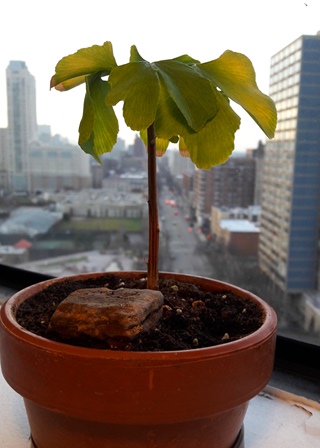
I’m trying to convince my tiny tree, a Gingko biloba, that winter has come, and I’m not having much success.

I grew this sapling from a seed I gathered in the fall of 2019 from a tree in the park next to my home. I kept the seed refrigerated over the winter and planted it in the spring, hoping to create a bonsai. (This might not be realistic.)

Gingko are temperate-climate trees that can grow as far south in the United States as Zone 8, which includes Austin, Texas, where I used to live, and as far north as Zone 3, which is the border between Minnesota and Canada. I currently live in Chicago, Zone 5. Summers here can be hot, although not as hot as Austin, and winters can be colder than a Texan wants to imagine.

Gingkos are also deciduous trees, which means they lose their leaves in fall. Trees do this, among other reasons, to protect themselves from winter storms. If leaves get coated with ice, the weight can pull down a branch in a high wind, which can be a fatal injury. Bare branches are safer.

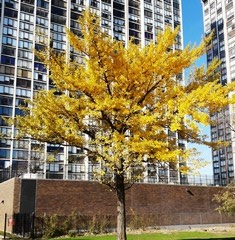
The tree’s “mother,” which I can see from my window, turned a lovely shade of golden yellow, typical of the species, in early November. By then it had endured chilly nights, even some frost, and a few nasty storms. Soon after I took the photo, another howling storm tore all the autumn leaves from all the trees in the neighborhood.

My little tree, however, is in front of a big window in my living room, where the living is easy: no storms and constant comfortable temperatures. The edges of its leaves grew brown at the same time as the leaves on the gingkos outside, probably in response to the shorter days. But the leaves on my tree have remained mostly green.

I’ve been trying to convince my tree that winter is coming. Because I don’t have a porch or balcony to let it experience real weather, I’ve been putting the tree in the refrigerator at night and watering it with ice cubes; roots are very sensitive. The tree has noticed the cold, but hasn’t been eager to react.

According to this scientific article, gingkos grow best with warm temperatures and good soil moisture. Maybe my living room and its eternal, moist summer isn’t such a bad habitat. Maybe not losing its leaves means the tree knows it will be safe.

I hope so. A gingko can live for 3000 years.

Categories
Uncategorized

Goodreads review: “Elements of Eloquence”

The Elements of Eloquence: How to Turn the Perfect English PhraseThe Elements of Eloquence: How to Turn the Perfect English Phrase by Mark Forsyth
My rating: 5 of 5 stars

Although I’ve been writing professionally for 48 years, there’s always more to learn about writing. That’s why I read this book: to learn the “secrets of the perfect turn of phrase.”

Author Mark Forsyth opens the preface by saying, “Shakespeare was not a genius.” Instead, he says, Shakespeare learned how to write well, and we can see his growth in writing skills between his early and his later plays. In particular, Shakespeare learned to use figures of rhetoric. The Bard of Avon isn’t the only one who has been using turns of phrase to good advantage, either. Other authors, songwriters of all kinds, and speech writers use the same techniques.

Forsyth goes on to explain 39 different figures of speech. I already knew some of them, like alliteration and personification. Some of the others, like epistrophe and chiasmus, I recognized the moment I saw them, but I’ve never thought deeply about them and how to use them well.

Although Forsyth’s writing is full of jokes and fun, I read the book in one brief chapter per day. Lessons, like strong spirits, are best drunk in sips. I’ll keep the book for reference, too. Most of all, I hope to write a little better — with a little more intentional rhetorical flourish. If it worked for Shakespeare, it might work for me.

View all my reviews
Categories
Uncategorized

Poop moss. Yes, that’s a thing

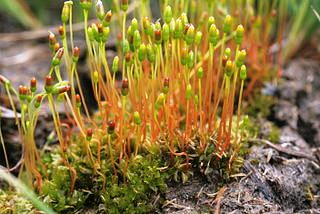
Pinkstink dung moss

On the imaginary planet of Pax, there’s a plant that disguises itself as poop. On Earth, plants do that too, as I mentioned in an earlier blog post.

Earth also has poop moss. It looks like moss. It gets its name because it grows on poop. Specifically, it grows on dung in damp places, especially fens. Its varied species can be found in northern North America, Europe, and Asia.

In the United States, one species, Splachnum sphaericum, is known as pinkstink dung moss because of its color and because, like others of its kind, its spores are distributed by flies that feed on dung. The moss produces the odor of dung to attract the flies. When they land on the moss, the spores, which are borne on long stalks, rub onto the flies’ bodies and are carried away to new places to grow as the flies land on real dung to feed.

It’s a tough life, and since humans seem to like draining swamps and fens, these rare mosses are getting rarer. One kind of dung moss grows only on white-tailed deer droppings which have lain on the peat for four weeks in July. Others prefer fox or moose dung.

The rarest place of all for these humble mosses has been found in pitcher plants, the Nepenthes. Most pitcher plants eat bugs. Some eat poop — that is, they have found a way to encourage tree shrews to poop into them as if they were toilets. Like all toilets, they can get messy, and the moss grows on the poop stuck to the sides of the pitchers.

Animal poop is a treasured gift to the plant world, and plants put its natural wealth to creative uses. We are careless with it, which reflects poorly on our character as a species.

On a slightly related subject, moss also grows in the icy cold. Sometimes, moss forms into rolling balls on glaciers known as glacier mice.

Earth’s wonders never cease.

Categories
Uncategorized

What you don’t remember can kill you

A Memory Called Empire (Teixcalaan #1)A Memory Called Empire by Arkady Martine
My rating: 4 of 5 stars

This novel won the Hugo, and it involved space opera and poetry, so I thought I’d like it. I did.

The novels starts a little slow – though not boring – and builds up to a fine climax. The main character arrives as an ambassador at a planet she admires and has studied in depth, and bit by bit she discovers how little she actually understands. She knows the Teixcalaanli Empire has aspects that are problematic, but in fact, something very wrong and dangerous is going on, and it involves her, and she has to find out exactly what it is.

She’s also an outsider and, as an ambassador, she must act within a defined role. She’s alone and soon becomes even more alone, intensely aware of all her anxieties and doubts.

The plot is occasionally hamstrung by her status. The story is compelling in its complexity, but rarely heart-stopping in its action. The “opera” of this space opera is more like ominous background music. She goes to a lot of meetings and talks and listens a lot. That’s what diplomats do: they interface and cope with bureaucracies. But soon her life is on the line, then the stakes get even higher. Can diplomacy save the day? Because that’s all she has.

It’s tricky to tell a story like this where the agency of the main character faces so many external limits. That’s the real story: how to take control of a situation you cannot manage. At every moment, it’s believable. Her predicaments and their resolutions are satisfying.


View all my reviews
Categories
Uncategorized

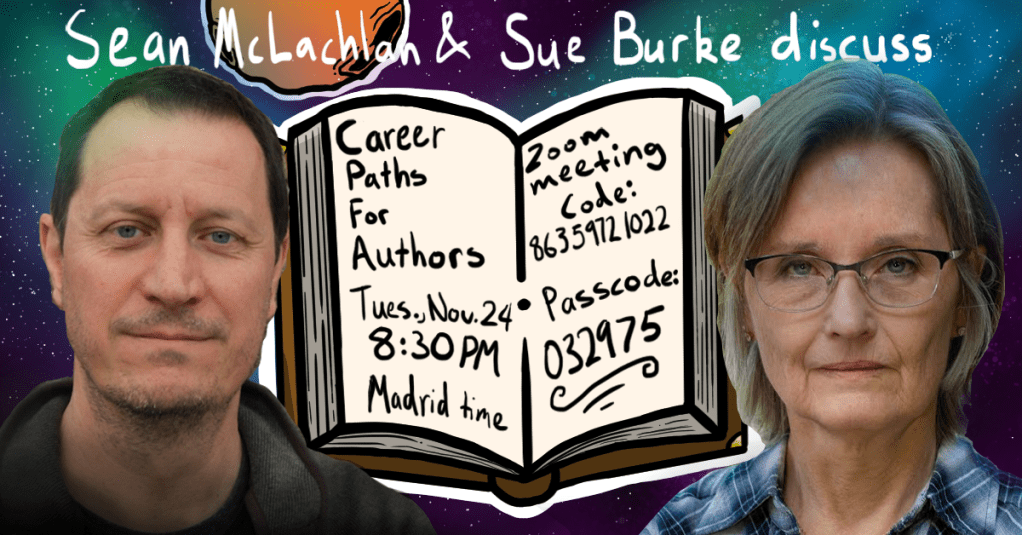
You’re invited

I’ll be chatting with members of the Madrid Writer’s Club. I was a member when I lived in Spain. You’re welcome to join us!

Categories
Uncategorized

Leaves fall down

The time had come. Photo by Sue Burke

For some plants, the angle of the sun tells them what season it is. Others rely on the temperature. In any case, in autumn, deciduous trees drop their leaves to prepare for winter.

When the time comes, trees cut off the flow of nutrients to their leaves, which lose their chlorophyll, and beautiful underlying colors are revealed. (This season is typically called fall in the United States versus autumn in Britain for historical reasons.)

Years ago, I witnessed something that showed me the power of trees — not their strength but their autonomy.

The air could not have been more still that fall morning, yet a tree near my back door was losing its leaves. One by one, they fell of their own weight as the tree let go. Leaves dropped steadily and eerily through the becalmed air.

Usually we think the wind sweeps the autumn leaves from the trees, and it can provide an extra tug. But trees decide to shed their leaves at the moment they deem best. Though they seem almost inert — buffeted by wind, soaked by rain, baked by sunshine, and parched by drought — they control their fates as much as any of us. Humans, too, can be uprooted by disasters, attacked by illness, cut down by predators, and suffer wilting thirst. Being mobile does not make us less vulnerable or more willful.

So on that cool morning, I watched a tree prove that it commanded its own destiny. One by one, it clipped its bonds to its leaves, and they dropped off. The tree was taking action, and no one and nothing could stop it.

Categories
Uncategorized

“It had mean eyes!”

Some animals — in particular certain butterflies, moths, and caterpillars — have big fake eye spots. Their purpose is to scare off predators.

Do they work? I can speak from personal experience.

I was about four years old, playing in a neighbor’s yard, when a caterpillar fell out of a tree and onto my hand. It was green and terrifying. I shook it off my hand and ran home screaming.

My mother tried to assure me that it was just a little caterpillar and wouldn’t hurt me.

“But it had mean eyes!” I insisted.

I suffered no lasting psychic harm from the event and never developed a fear of bugs. I hope the caterpillar was okay, too. Objectively, though, it did have mean, scary eyes — and they worked.

Categories
Uncategorized

Blank paper

“A blank piece of paper is God’s way of telling us how hard it is to be God.” ― Sidney Sheldon

Categories
Uncategorized

Novel news!

Interference: The sequel to Semiosis is now available as a trade paperback, available through all major outlets and local bookstores. Links here. It’s still available as an audiobook, ebook, and hardcover.

Semiosis: The French translation is now available as an audiobook.

Immunity Index: My next novel will be released on May 4, 2021. You can learn more and pre-order it through links here.

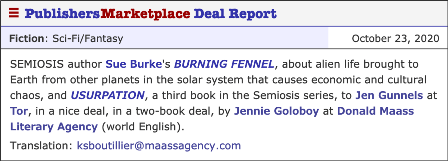
Burning Fennel and Usurpation: I’ve just signed a contract with Tor for two more books. That’s the good news. However, the pandemic has affected publishing, including the ability to print books, so these won’t hit the bookstore shelves for a while — but they’re on their way.