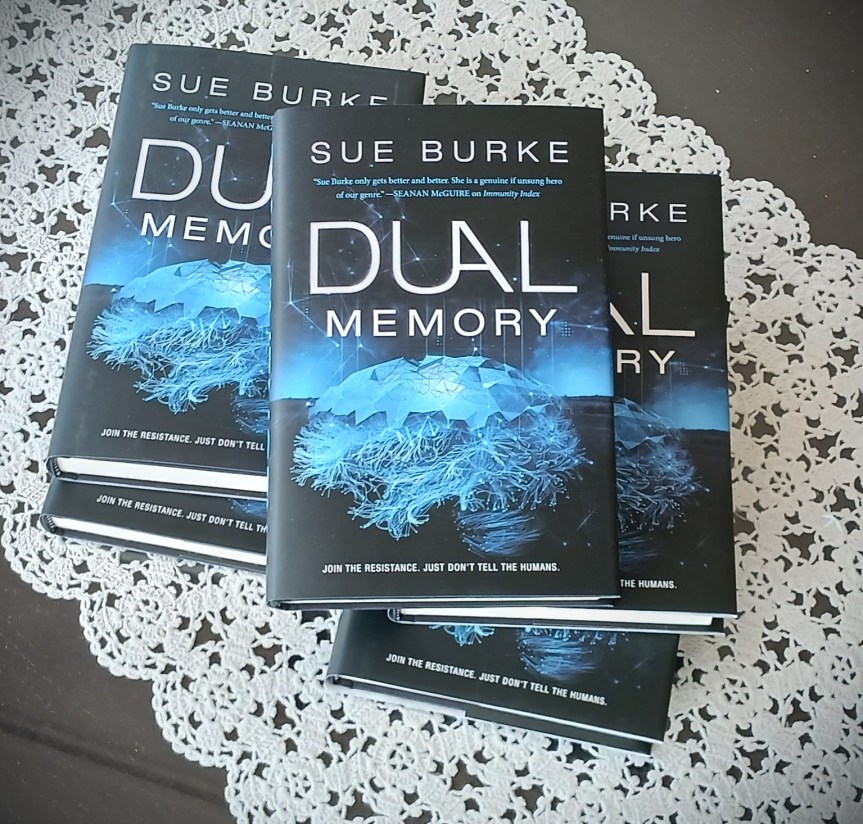
If you’ve read the novel Dual Memory, you know how it ends — and then what happens? For fun, I wrote what might be the next scene. You can read it here.
If there’s a next scene, is there a next book? Honestly, that depends on sales of the first book, and bigger sales are always more encouraging when it comes time to make a hard business calculation. If you enjoyed the novel and want a sequel, recommend Dual Memory to your friends and leave a review wherever you can.
The best sales technique is word of mouth: person-to-person buzz. You can accomplish what no one else can.
My latest novel, Dual Memory, drew very vague inspiration from the Dutch tulip bubble in the 1630s (the real tulipmania, not the hysterical pseudo-history). Because naming characters is hard (as Rebecca Makkai explains here), I decided to name as many people, places, and things as I could after tulips.
The available choices seemed close to infinite. One of the sources I used was the US National Gardening Association listing. Some of the names are unexpected because whoever develops or finds a cultivar of a plant gets to name it, and people can be moved by whimsy.
As you know, Stevland is a character in the novel Semiosis, specifically a bamboo tree. The bamboo was named after a colonist who died on the way to the planet Pax, and that colonist was named after the musician and singer known as Stevie Wonder. Stevie Wonder’s real name is Stevland Hardaway Morris. But how do you pronounce “Stevland”?
Now we know for sure. In this clip from a television special in about 1970, Diana Ross introduces him with a breathy “Hello, Stevland.” She says “STEEV-land.”
You can see the greeting in the opening minute at https://youtu.be/mxs2nRekH2w. But listen to the whole thing as Stevie Wonder and Diana Ross sing “I’m Gonna Make You Love Me.” Stevland (the namesake on Pax) loves music, too.
My novel Semiosisis set on a distant planet called Pax where iron is a scarce element in the planetary crust. But plants need iron, so some of the plants on that planet find ways to hunt and kill animals, which are a rich source of iron. This becomes a problem for the humans who arrive to colonize Pax.
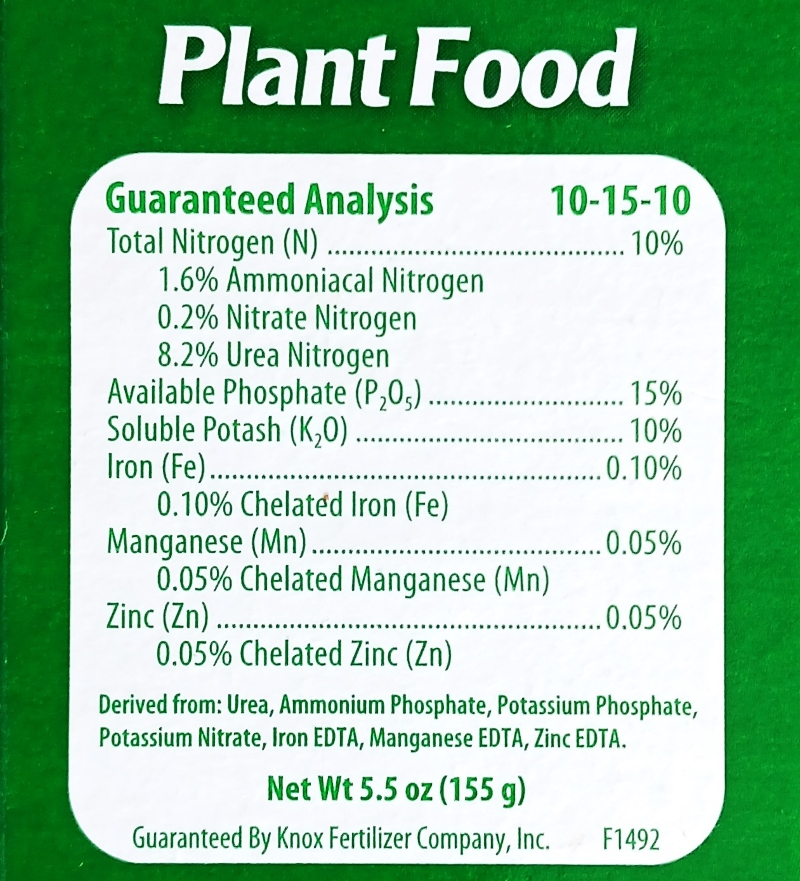
Here on Earth, iron is a common element in the surface in most places — but the soil in flowerpots can become depleted. I’m taking no chances. This is the label of the plant food I give to my houseplants. They get all the iron they need, and I can sleep soundly.
This is a coleus in my living room. I think it’s gorgeous, and I use this photo as wallpaper on my phone.
Photos are an art form. I spend most of my time writing, which is also an art form. And one of my hobbies is houseplants — which is to say indoor gardening. It’s occurred to me that gardening, too, is an art form.
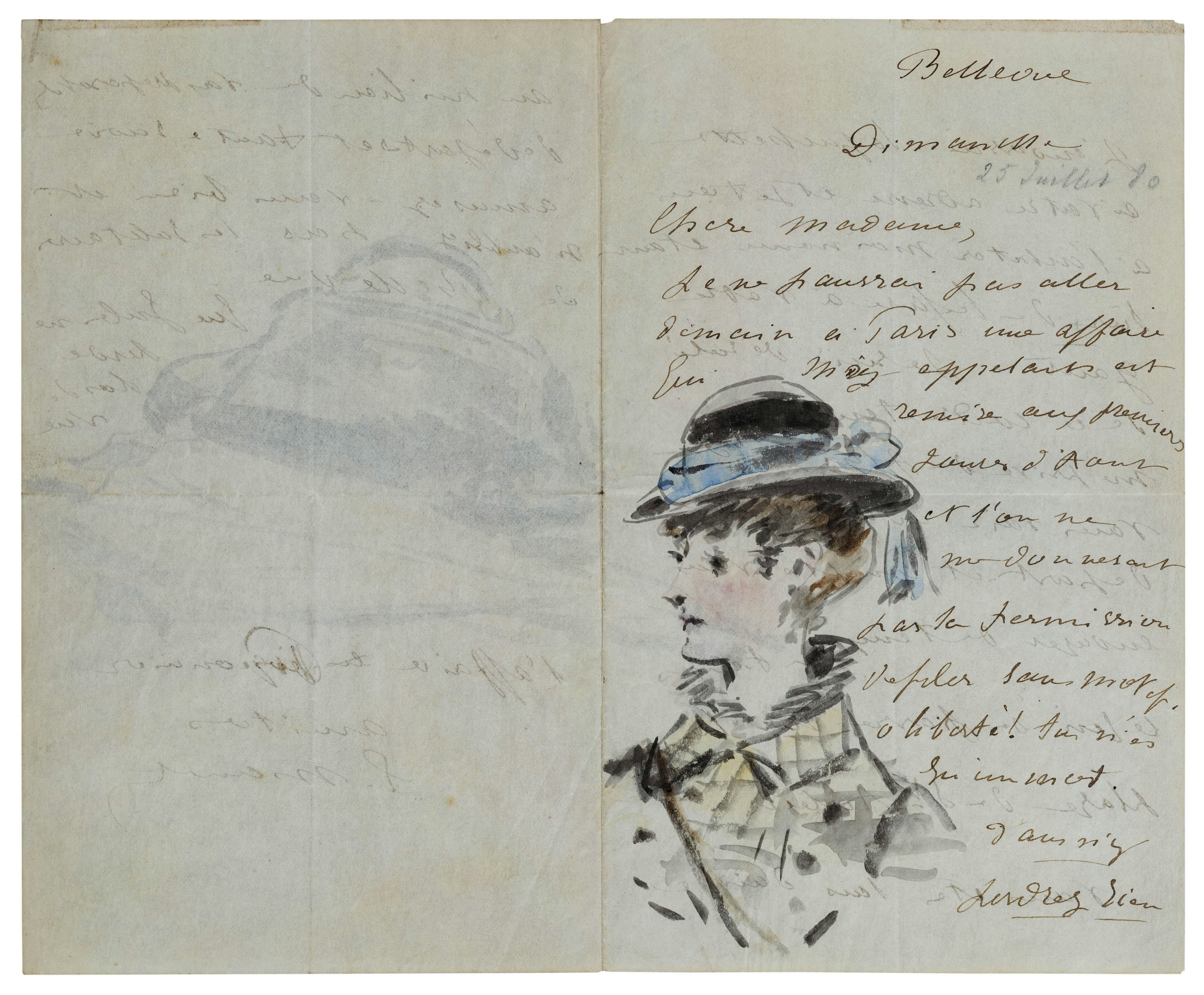
I’m hardly the first to have this thought, nor am I the first to believe that we can all make art, many kinds of art. Art and creativity get defined too narrowly, limiting “artist” to someone like Picasso, not the person who doodles in the margins of a letter. (But Édouard Manetdoodled in his letters, and he’s a “real” artist, so logically, marginal art is “real” art.)
I make art with water, dirt, time, sunshine and a collaborating plant.
My new novel, Dual Memory, has now spent two weeks out in the wild world! Thank you to Volumes Bookcafé for hosting the launch, to Richard Chwedyk for leading a conversation with me at the launch, and to my husband, Jerry Finn, for all his support. And thanks to everyone who has bought it, and especially those who have reviewed it. Reader reviews at places like Amazon, Goodreads, and LibraryThing, as well as word of mouth, are the only sure ways to sell books.
Paul Semel interviewed me for his site about Dual Memory, and among his other questions: What inspired the novel? How did Par Augustus get its name? Would the story make a good game? (As a game, I think it would ruin friendships.)
During the discussion at Volumes, I remembered that one of the novel’s characters, so to speak, the Marathon Building, was inspired by an incident that stuck with me from another science fiction work, 17776: What Football Will Look Like in the Future. This is a serialized multimedia narrative by Jon Bois. In Chapter 19, the machines in the story share a eulogy for “our dearest ancestor.” But read the entire story! It’s free online. 17776 is a daring experiment in storytelling, and you don’t need to like football to enjoy its wild inventiveness.
***
By the way, if you’re at Goodreads and you haven’t read Semiosis yet, here’s your chance to get the book for free. Five copies are up for grabs. Giveaway closes June 6. Limited to United States. Sign up here.
Is anyone out there? Of course we want the answer to be yes. We want to believe we’re not alone in the universe. Jamie Green has hopes, too, and she’s a smart and experienced science writer, so she knows how to look for answers.
She takes us on an investigation. She talks to a lot of scientists, discusses a lot of science fiction, and answers a lot of questions. Would an alien have an anus? (Maybe, maybe not.) How weird could alien life be? The question, she says, “challenges us to imagine something beyond what we know” — but what exactly do we know? What would alien life be like? How about intelligent alien life? Would it even be understandable? Why or why not? What are some examples from science fiction?
If you’re interested in science and science fiction, you’ll learn something from this book and have a good time learning it. If you write science fiction, you’ll come away with good ideas — maybe even inspiration.
If you’re at Goodreads and you haven’t read Semiosis yet, here’s your chance to get the book for free. Five copies are up for grabs. Giveaway closes June 6. Limited to United States. Sign up here.
Semiosis is included in the article “The Best Science Fiction Books About Aliens” by Jamie Green posted this month at Five Books.
Meanwhile, my latest book, Dual Memory, goes on sale today! Available in hardcover, ebook, and audiobook at all major retailers, and if you buy the hardcover book from Volumes Bookcafé, I can autograph it for you.
If you’re in Chicago, I can autograph it in person for you tonight, 6:30 p.m., at Volumes Bookstore Café, 1373 N. Milwaukee Ave., in the Wicker Park neighborhood. I’ll be chatting with Richard Chwedyk, another science fiction author and an entertaining raconteur. It will be fun.
I don’t know if I’m a master at revision and rewriting, but I hate writing first drafts. I have to bribe myself to get through them. Once I have something to work with, though, I love to edit, revise, and rewrite. I think it’s where the magic happens.
Adrian M. Gibson and M.J. Kuhn, co-hosts of the SFF Addicts Podcast, and I talk about techniques I’ve learned over 50 years of professional writing (I started very young) that might help you with your writing. Every project is different, so the more techniques you know, the better.
Available today, May 9, in audio and video. Watch/stream/download it: