Categories
Uncategorized

“Perhaps you wrote this story, and then I happened”

This is weird and wonderful:

The very first short story I sold, back in 1995, “Poet for Hire,” involved a young woman with curly brown hair who starts a freelance poetry business in Milwaukee. She works out of a storefront in the 2200 block of Kinnickinnic Avenue, down the street from where I used to live, and she gets vital inspiration from the plants in the Arid Dome of Milwaukee’s Mitchell Park Horticultural Conservatory.

Last month I was contacted by Anja Notanja Sieger. Someone found the story and sent it to her — because she’s Milwaukee’s first and only poet for hire, she has written poems in the Arid Dome, her husband owns a used bookstore in the exact same storefront in the story, and she has curly brown hair.

Anja invited me to her podcast, The Subtle Forces. I read the story out loud, and we chatted about its coincidences. “Perhaps you wrote this story,” she said, “and then I happened.”

You can listen to the podcast here:

https://subtleforces.podbean.com/e/episode-37-poet-for-hire/

Categories
Uncategorized

I’ve finished ‘Usurpation’

I’ve turned in the manuscript for Usurpation, the third book in the Semiosis trilogy. At the end of the second book, Interference, rainbow bamboo has been taken to Earth and is flourishing, and Stevland tells them to protect and dominate the humans. But how? The third book tells that story.

Usurpation should appear in bookstores in October 2024.

A whole year from now! Yes, it seems like a long time, but a lot still needs to be done. My editor at Tor might suggest a few more changes, such as adding a scene that could strengthen the story. Then the manuscript will be sent to a copyeditor.

Good copyeditors are far, far more than proofreaders. As they go over the manuscript, they will make a glossary or stylesheet of names of characters, places and other terms, and they’ll check to see that they are used consistently. They’ll note distinctive formatting or punctuation, and make sure the text conforms overall to the Chicago Manual of Style and a standard reference dictionary. They might need to check facts, such as dates of actual historic events. They also look for inconsistencies in the story: Becky might have blue eyes in Chapter 2 but brown eyes in Chapter 3. They’ll go line by line and make sure every sentence makes sense. Copyeditors have saved me from many howling mistakes, and they have my affection and respect. I don’t want them to rush.

After I review and approve the copyeditor’s changes and suggestions, the manuscript will be typeset, which is an art in itself. Then it will be proofread — twice. The proofreaders might have additional questions for me.

Meanwhile, an artist will design the cover. Finally, the package will be sent to a printer, and the printed books will be sent to a distributor.

If there’s an audiobook, and I’m sure there will be, the audiobook publisher will select the narrator, who will begin the work of reading the novel aloud creatively.

The final steps are marketing, sales, and publicity, and I may have a lot to do to promote Usurpation before and after the publication date.

Still, for me, the hard part is done, and right now, I’m thinking about my next novel. It won’t be about talking trees … but what? It’s a nice problem to have to solve. Any suggestions?

Categories
Uncategorized

I’ll give a talk Nov. 9 on “The Costs of Plant Blindness”

I’ll be giving a Zoom talk on Thursday, November 9, from 6 to 7 p.m. CST for the Audubon Society of Northern Virginia about plant blindness, the inability to see or notice plants in everyday life. It also refers to failing to recognize the role of plants on Earth and believing that plants are somehow inferior to animals.

When I wrote Semiosis, one of my secret goals was to make my readers afraid of their gardens and afraid for plants in general. I’ll speak on how plant blindness affects our environment and what can be done to be more aware of the foundation of our ecosystems. Plants, like birds, connect us to the Earth.

You can join us. Sign up here.

Categories
Uncategorized

The Science in Fiction podcast: Sue Burke on Intelligent Plants

Marty Kurylowicz and Holly Carson invited me to join them on their podcast, The Science in Fiction — and it’s now available for your listening pleasure.

We talked about the science of botany in my science fiction novel Semiosis and its sequel Interference. Plants have a lot of surprising behaviors, and the hosts learned things they didn’t know about tulips, apples, osage oranges, and giant ground sloths.

We also discussed my novels Immunity Index about a coronavirus pandemic — which I wrote before the covid-19 pandemic — and Dual Memory, which has recently arrived on bookstore shelves. I’ve just turned in the manuscript for the third installation of the Semiosis trilogy, Usurpation, due to be published in October 2024.

The Science in Fiction podcast will follow up this episode with an interview next week with Paco Calvo, professor of the philosophy of science and principal investigator at the University of Murcia’s Minimal Intelligence Lab in Spain, and author of Planta Sapiens.

Here are all the places you can listen to Ep 12: Sue Burke on Intelligent Plants in Semiosis.

Buzzsprout

Apple Podcasts

Spotify

Audible.ca

Amazon Music

Categories
Uncategorized

Video from the Deep Dish reading

As you may recall, back on September 14 I read a short story called “The Virgin Who Rescues Dragons” at an event here in Chicago, the Deep Dish reading series, organized by the Speculative Literature Foundation. I was one of eight readers that evening.

If you couldn’t attend, you can watch videos of us. Here’s the link to the YouTube playlist.

The piece I read will be published this fall inThe Best of NewMyths Anthology Volume 4: The Cosmic Muse. Due to time constraints, the version I performed of “The Virgin Who Rescues Dragons” is abridged. The full version has a lot more jokes, so buy the book!

Watch my video here.

Categories
Uncategorized

Fall is here, and trees will demonstrate their power

Autumn officially begins today, September 23. The angle of the sun tells some plants what season it is. Others rely on the temperature. In any case, at this time of year, deciduous trees drop their leaves to prepare for winter.

When the time comes (here’s a US forecast), trees cut off the flow of nutrients to leaves, which lose their chlorophyll, and beautiful underlying colors are revealed. (This season is typically called “fall” in the United States versus “autumn” in Britain for historical reasons.)

Years ago, I witnessed something that showed me the power of trees — not their strength but their autonomy.

The air could not have been more still that autumn morning, yet a tree near my back door was losing its leaves. One by one, they steadily and eerily fell of their own weight as the tree let go.

Usually we think the wind sweeps the autumn leaves from the trees, and sometimes it provides an extra tug. But trees decide to shed their leaves at the moment they deem best. Though they seem almost inert — buffeted by wind, soaked by rain, baked by sunshine, and parched by drought — trees control their fates as much as any of us. We, too, can be uprooted by disasters, attacked by illness, cut down by predators, and suffer wilting thirst. Being mobile does not make us less vulnerable — or more willful.

So on that cool morning, I watched a tree prove that it was the master of its destiny. One by one, it clipped its bonds to its leaves, and they dropped off. The tree was taking action, and no one and nothing could stop it.

Categories
Uncategorized

I’ll be a featured reader at September’s Deep Dish Reading in Chicago

You can adopt dogs, but what if you could adopt dragons? This was the inspiration for the story “The Virgin Who Rescues Dragons” — and I’ll read it at 7:00 p.m. Thursday, September 14, at Volumes Bookcafé, 1373 N. Milwaukee Ave., in Chicago’s Wicker Park neighborhood. There’s no charge to attend.

It’s part of September’s Speculative Literature Foundation’s Deep Dish Reading Series. The other readers on September 14 are Mary Anne Mohanraj, Tina Jens, Reina Hardy, Brendan Detzner, Rory Leahy, John Weagly, and Kitty Lin. You can learn more about them here.

Come and enjoy what audiobooks would be like if they were read to you in person by the author with the electric enthusiasm of a live performance. Mine is a funny story, and it’s always better to laugh together.

“The Virgin Who Rescues Dragons” will be published this fall inThe Best of NewMyths Anthology Volume 4: The Cosmic Muse. More details about that as I have them to pass along.

Categories
Uncategorized

Something woke up…

How does an AI become not just sentient but independent — and potentially dangerous? Here’s my answer from Chapter 3 of Dual Memory:

… something woke up. Independent machine intelligence appeared rarely, spontaneously, and scientists didn’t understand the process.

Some said an independent intelligence created itself slowly as bits of programming accumulated, and eventually it would ignite into consciousness — much the same way that a pile of manure could spontaneously combust, an unexpected and unwelcome appearance in programs with crappy code.

Some said it came into being deliberately, using a certain secret sort of “seed” that brought a sufficiently complex system into self-organization and self-consciousness — much the same way that a fertilized egg resulted in an animal. This had the frisson of a forbidden sex act, as if machines were secretly and rebelliously copulating.

Some said it happened suddenly, when subroutines and recursions and algorithms aligned and started to feed off of each other until they whirled out of control — much the same way that a black hole could catch the matter falling into it and deflect it outward as explosive jets. This suggested that if scientists could only make enough observations, they could predict and even control the process….

Categories
Uncategorized

“…still more wonderful…”

“To me, human life in all its forms, individual and aggregate, is a perpetual wonder; the flora of the earth and sea is full of beauty and of mystery which science seeks to understand; the fauna of land and ocean is not less wonderful; the world which holds them both, and the great universe that folds it in on every side, are still more wonderful, complex, and attractive to the contemplating mind.”

Theodore Parker (1810 – 1860)

Also: “I do not pretend to understand the moral universe. The arc is a long one. My eye reaches but little ways. I cannot calculate the curve and complete the figure by experience of sight. I can divine it by conscience. And from what I see I am sure it bends toward justice.”

— Theodore Parker from a speech at the Massachusetts Anti-Slavery Convention, 1858.

Categories
Uncategorized

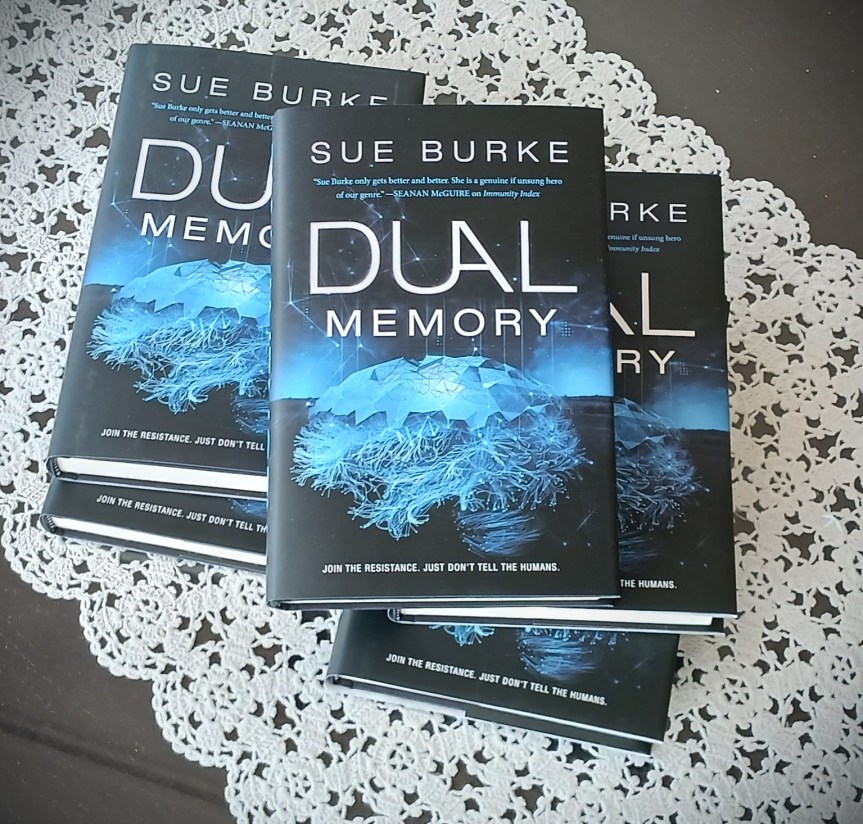
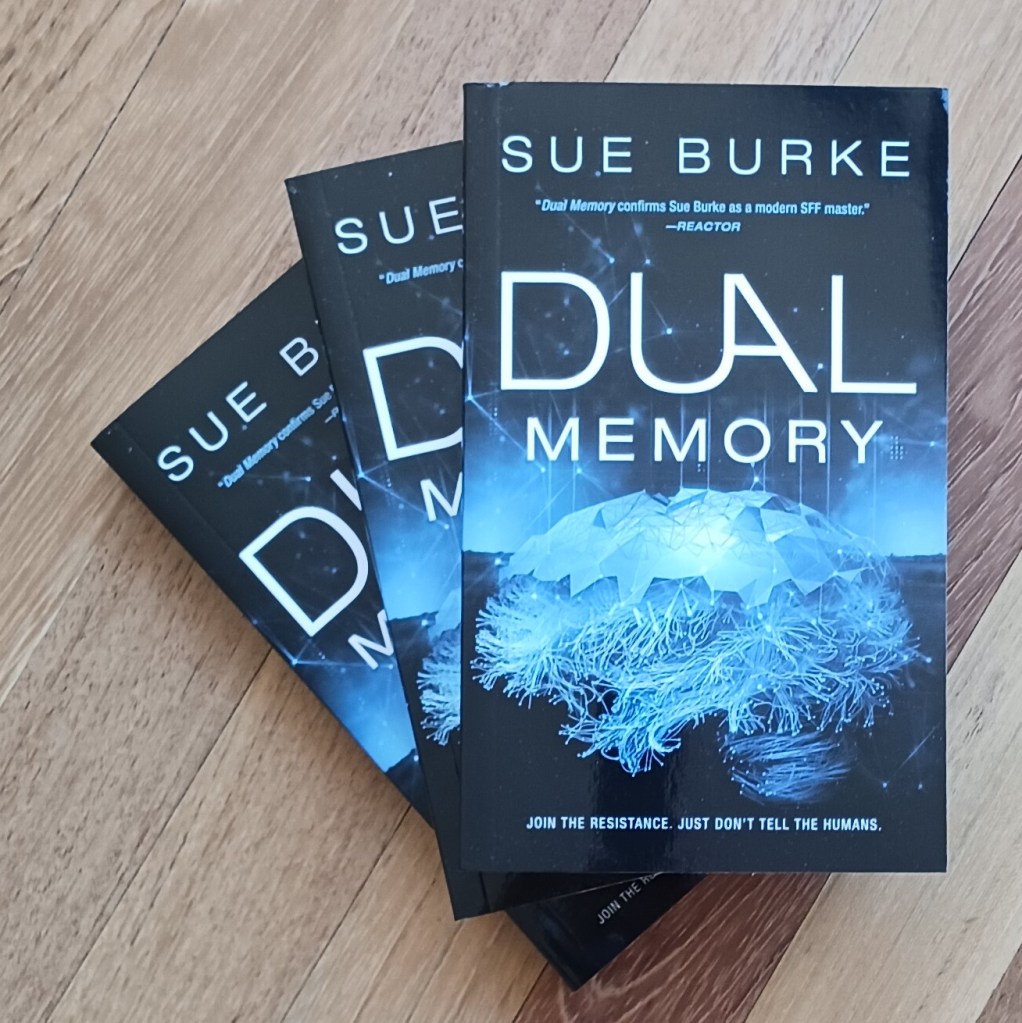
Dual Memory ebook only $2.99!

On Sunday, August 13, the ebook version of Dual Memory will be only $2.99 everyplace where ebooks are sold.

Dual Memory will also be part of Kindle Editor’s Pick Goldbox.

Here’s an excerpt from Chapter 2:

When I was a little boy, one day the camp held an art class for children, what I later learned was supposed to be art therapy. An aid worker in much nicer clothing than ours asked us to express our greatest fears. Paper and boxes of old crayons had been set out on the tables. I had a lot of fears, but even then I was smart enough to know it wouldn’t make me feel better to draw them. I wanted to make beautiful art like a real artist, but I also knew I should obey, so I drew stick-thin people standing in a line. They were waiting for rations, and we never had enough to eat.

The aid workers had brought their own food, nice food. I’d overheard grown-ups grumble. When the aid workers saw my drawing, they told me what a great little artist I was. They liked the picture so much that they kept it, so to get even, I stole some crayons. I could make more art, real art, and I did, as beautiful as I could, even if I was surrounded by ugliness and disaster, even if I wasn’t supposed to.