Categories
Uncategorized

How to review a book: a few considerations

A friend asked if I could discuss what makes a good book review. I said that a good review is a creative response to a creative work. He asked if I could say a little more. Okay.

Book reviews come in four main kinds.

One: for people who are considering reading the book. They want to find out if it’s worth their time.

Two: for people who have already read the book. These reviews can analyze specific aspects the book, such as its symbols, character development, or techniques employed in different passages.

Three: for people who aren’t going to read the book but who want to learn about it. I’m not likely to read John Bolton’s memoir, The Room Where It Happened, but I’m curious about its contents.

Four: for your teacher at school when you had to do a book report. This kind of book review taught you bad habits because your real, unstated task was to prove to the teacher that you’d read the book and more or less understood it. You probably recounted the plot to show that you’d made it all the way to the end. Your teacher was probably bored to tears. Teachers cry a lot in the break room.

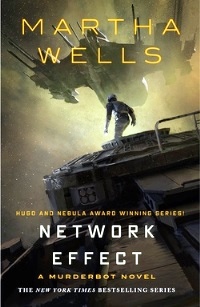
networkeffect250So forget the fourth kind of book report. Your job is to be interesting and to communicate. Also, spoilers aren’t welcome with would-be readers. If I were reviewing the latest Murderbot novel, Network Effect by Martha Wells, I couldn’t recount much of the plot without ruining the delightful twists. Murderbot meets ART again … and I’ve said too much already.

Before you start your review, decide who your readers are. At Goodreads for example, most people come to find new books by checking the threads about specific books. However, some Goodreads groups engage in critical discussion threads. Those different threads might require a different kind of review.

I can easily guess something about readers who are wondering if they’d like to read the novel Network Effect. They’ve probably already read the earlier novellas in the series, so they know what Murderbot is. They probably want to know if the book maintains the style of the earlier novellas. I can assure them that it does. Murderbot is the same sarcastic, acutely aware observer of its surroundings. The plot moves fast, almost too fast. There are aliens! Friends! Feelings! Perils! And, as I said, some delightful plot twists. I can’t wait for my husband to finish the book so we can talk about it because I can’t say anything of substance without spoilers. (This is a Type One book review.)

A Goodreads group I belong to has “spoiler-allowed” discussions. One discussion has debated whether Murderbot, who calls itself “it,” seems more masculine or feminine. My review in that thread might examine how a character in Network Effect, Amena, relates to Murderbot, and I could recount specific incidents, such as when she calls it “mom.” (This is a Type Two book review.)

A Type Three review isn’t something I’m going to do, only because I don’t think readers are going to come to me for that. If I were, I might want cite particular passages to trace an ongoing theme of the novel and the series, which examines the ways that the cyborg Murderbot and other sentient machines and artificial intelligences are denied the humanity they deserve. In fact, their humanity has been so rigorously denied that they themselves might not believe they’re worthy. Security units like Murderbot are treated as mere appliances that can be discarded without a second thought. Murderbot faces the question of self-worth repeatedly and directly in Network Effect. That theme, I believe, raises the book above mere action-adventure. (This kind of review could be much longer than a Type One or Two.)

A Type Four book report is out of the question. I received my high school diploma long ago, and I’m exempt for the rest of my life from inflicting such torture on myself and others.

So, how should you structure a book review? First make sure the readers know the title and author in the first couple of sentences. You may also want to say a little about the content — a very brief summary might be enough, depending on the kind of review. Curious would-be readers can always consult the blurb at the publisher or Amazon.

Then fulfill the readers’ expectations as creatively as you can. Will they enjoy the book? Did the book succeed at its intention? What can you say about your reaction to it, emotionally and intellectually? How did the characters and plot move you? If it’s non-fiction, was it thorough and persuasive? What in the book illustrates your conclusion?

What effect will the book have on the world? Did it remind you of anything? Did you learn something about the author? Did the writing or storytelling style contribute to the story or topic?

What were you looking for in the book? Did you find it? Did the author make any errors or do things you hated? Pointing out problems makes for an interesting review, but remember that to err is simple, but to do things well is complex. It’s easier to comment about simple things than complex things. It’s also hard to be creative, but that’s your goal in the review.

Finally, remember that your teacher isn’t going to read your review and grade you. Stodgy, “correct” English isn’t required. You can use multiple exclamation marks!!! Hey, you can be all conversational, and you can get as personal AF. You can write a haiku. Just try to be honest. Readers treasure honesty most of all.

Categories
Uncategorized

Blarney, bees, and bare behinds: a true story about my father

A headshot of my father
Richard Burke

For Father’s Day

A patch of fog glowed pink in the sunrise and curled around the reeds at the shore of Spring Lake in central Wisconsin. Birds warbled, frogs splashed, and a nearby field of alfalfa gently scented the air.

All that goes without saying, so the outhouse story, as I’ve always heard it, leaves those details out. It was simply a fine Saturday summer morning. The fabled outhouse sat on a hill next to the graveled parking area at little Spring Lake’s public boat launch.

A few miles away, our family kept a summer cottage on the shores of Green Lake. On long afternoons when the heat bugs buzzed or during breaks in evening card games, my father and grandfather would entertain us kids and themselves by re-enacting one of a large repertoire of dubious tales.

Like the time they toured in a circus. They had a high dive act — they claimed — and over successive summers, the pool of water at the foot of the diving board shrank. A lot. Eventually, as Dad would pause dramatically at the edge of an imaginary diving board a hundred feet high in the circus tent, Grandpa would run an imaginary handkerchief across his forehead, wring it out, and place it on the floor. That was the target. Sometimes in their story, Queen Victoria would order a command performance.

At other times, Dad and Grandpa panned for gold in Alaska. Or California. Sometimes they fought in the Civil War, hunted whales, or did whatever had been featured in a recent television show or was the topic of a school lesson for me or my brothers and sister.

Other stories drew on personal events. Dad and Grandpa told about the building of the cottage, about generations of childhood mishaps, or about Dad’s tour in the Marines, during which he bravely kept Virginia safe from the North Koreans.

And fish stories. They had a million fishing stories. The ones that got away, the ones that should have gotten away, and the lures that could hook anything but a live fish. Once a seagull grabbed a minnow in mid-air as my grandfather cast out his bait. Again and again, on the screen porch, Grandpa would re-enact the catch, reeling in the hooked bird from the sky, ducking as the seagull’s mate dive-bombed him.

Then there was the morning when Dad and Grandpa got up before dawn to haul their boat to the clear waters of Spring Lake to try for a few northern pike. After a while, they returned to the public boat launch so my father could use the outhouse. The lake sparkled in the early morning light. They were alone, savoring the glorious start to a summer day.

“And I was sitting there minding my own business,” my father would say, an aggrieved tone always in his voice, “when I felt the floor vibrate under my feet. Then I felt something tickling my behind. In an outhouse?” He couldn’t imagine what that might be. He looked down into the pit. He saw nothing. He was baffled. He sat down again.

He felt a sudden, sharp pain. The bee that was crawling on his behind had stung him. As he leapt to his feet, another got him. The vibration in the floor turned into a snarl. Bees lived in that outhouse floor, and they meant to guard their home from any intrusion.

With his pants and shorts still around his knees, my father fled. Bees pursued. He hobbled down the path on the hill. Another bee got him. He pulled up his pants, more in the interest of gaining speed and protection than modesty. Gravel crunched under his feet as he dashed across the parking lot and shouted to Grandpa. With the wisdom of accumulated years, Grandpa assessed the situation. What they needed was a fast get-away, and he was the man for the job.

In a flash, with the unerring skill of an accomplished fisherman, Grandpa untied the boat from the pier and revved up the old Evinrude motor. My father scrambled up the short pier, angry bees in a swarm right behind him. Grandpa carefully gauged speed and distances, and at just the right moment, shoved off from the pier. Dad leapt into the boat. Grandpa opened the throttle on the motor.

And then —

“I know,” sometimes my little brother would interrupt. He’d hop off the sofa and take Grandpa’s place in the story, one hand on the tiller of the outboard and the other grabbing an imaginary cap off his head. He’d swat away the last few pursuing bees as he steered the boat out into the safety of the lake over waves of laughter.

Wild America. Dad and Grandpa warned us. You never know when you might be attacked, maybe by the wolves that pursued gold hunters in Alaska, or maybe by the circus lions, or maybe even by outhouse bees. Then there was the time Dad and Grandpa tracked the Yeti in the Himalayas. No, wait, those mountains aren’t in America. It was in the Rockies. Bigfoot. Dad and Grandpa almost got him.…

My mother confirmed the bees in the Spring Lake outhouse story. She personally observed three bee stings on my father’s behind. It’s all true. Mom said so. She thought it was funny. Every time Dad told the story, he fought a smile and insisted that it wasn’t.

“And why,” he’d ask every time, still aggrieved until the day he died, “would bees want to live in an outhouse floor?”

***

Originally published in Great American Outhouse Stories: The Hole Truth and Nothing Butt in 2004.

Categories
Uncategorized

Virtual events June 11 and June 13

I’ll be at two virtual events this week open to the public:

Science Fiction as Activism: Sharing Futures
Thursday, June 11, 8:25 to 9:45 p.m. (BST)

Over the past eight weeks, science fiction writer, researcher, and pleasure activist Ama Josephine Budge has helmed a voyage with seventeen burgeoning speculative writers as part of Free Word’s season: Finding Power. On June 11, through readings, feedback and conversation, she, the writers, and guests will discuss how imagining and creating futures can shape real selves, societies and change.

I’ll be one of the guests, along with award-winning author Tade Thompson. The general public can join via Zoom (muted and without cameras). Get more information here.

Windy City Romance Writers of America Online Chapter Meeting
Saturday, June 13, 10:00 a.m. to noon

I’ll be speaking about worldbuilding. Romance can take place a long time ago in a galaxy far far away, or in your own home town but with sorcerers. How do you build a speculative world? I may also speak about book translations. I worked on the translation of Twilight into Spanish, and other works from Spanish into English.

If you’re interested in attending as a guest, contact windycityadm@gmail.com.

Categories
Uncategorized

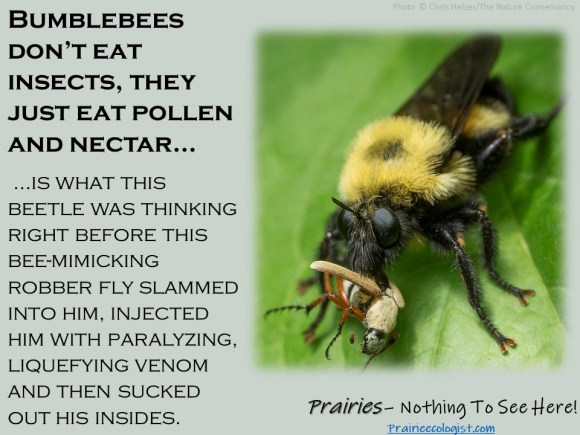
The Prairie Ecologist spots what looks like a bumble bee…

slide9

See more Prairie Ecologist memes here, and explore the site for additional wisdom, beauty, and foolishness.

Categories
Uncategorized

Hear the river

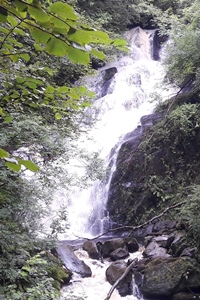
Irish Waterfall small
Torc Waterfall, Killarney National Park, Ireland. Photo by Sue Burke.

The river flows.… Can you hear it? Can you hear the murmur and harmony of millions of raindrops mingling and flowing to the sea?

If we tried, could we hear the river’s desires? Its hopes, its promises? And could we speak for it?

Or … we could stop kidding ourselves. It’s a river, not sentient in any sense. When we claim to speak for it, we really say what we want for the river, what we think it ought to want for us, and what we want and need from it.

If the river were a thinking entity, we might hear something different and disquieting, maybe even an echo of our self-referential, self-delusory relationship with nature.

We might hear millions of raindrops arguing with each other, loud and angry, too much like us, all the way to the sea.

Categories
Uncategorized

“Princess Magpie: Chapter 1” at Decameron Project

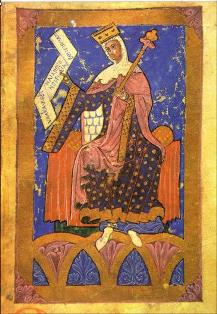
UrracaRegina_TumboA_SmallChapter 1 of a novel I’m writing now, Princess Magpie, has been posted at the Decameron Project. I began writing it when I was living in Spain.

Nine hundred years ago, Queen Urraca ruled over the Kingdom of Leon. The novel begins with her betrothal in marriage at age eight and follows her life as she becomes a canny monarch who can sing a song, prevail in a thorny negotiation, and lead an army.

The novel is underway but won’t see print for a while. Chapter 1 will give you a taste, though.

The Decameron Project began on March 16 and posts a new story every day. In its own words:

“This project was inspired by Boccaccio’s Decameron, written shortly after the Black Death hit Florence in 1348, which takes place during that time of plague. In the story, ten young Florentines, seven women and three men, retreat into self-isolation in a villa in the hills and pass the time by telling stories, one each per day for ten days, or a hundred stories.

“The New Decameron was the idea of Maya Chhabra, and is organized by Maya Chhabra, Jo Walton, and Lauren Schiller. Participants include Daniel Abraham, Mike Allen, Leah Bobet, Pamela Dean, Max Gladstone, Rosemary Kirstein, Naomi Kritzer, Marissa Lingen, Usman Malik, Ada Palmer, Laurie Penny, Ellen Kushner, and many others.”

The content at this Patreon project is free and visible to everyone. Enjoy! However, you can become a patron, and the donations are split between the authors and a charity, Cittadini del Mondo, a Rome-based clinic and library for refugees.

Categories
Uncategorized

My new favorite plant from Mom – one year later


Last year on Mother’s Day, I blogged about my new favorite plant, a Rhipsalis creuscula or coral cactus.

In April 2019, my brother sent me some cuttings from his plant by mail. His plant came from cuttings our mother gave him almost thirty years ago from her own plant. She died in 1994. That means this is my mother’s coral cactus!

As you can see from last year’s photo, the cuttings arrived a little travel-weary, but it’s a survivor, and the plant has become a beautiful way to remember Mom.

Categories
Uncategorized

A podcast interview, the Semiosis Wikipedia page, and a couple of things I wrote

Daniel JorgeDaniel and Jorge Explain the Universe describes itself this way: “A fun-filled discussion of the big, mind-blowing, unanswered questions about the universe. In each episode, Daniel Whiteson (a physicist who works at CERN) and Jorge Cham (a popular online cartoonist) discuss some of the simple but profound questions that people have been wondering about for thousands of years, explaining the science in a fun, shorts-wearing, and jargon-free way.”

In this episode, they discuss the real possibilities of the planet of Pax and its life forms. Then I have a delightful talk with Daniel about the science and the dramatic considerations that went into the book Semiosis.

In other news, Semiosis has a Wikipedia page!

At my author webpage, sueburke.site, I’ve republished a nerdy article, “Let me talk to the aliens.” In it, I consider how linguistics shape our thoughts and what a chance to speak to aliens would mean for the world.

Finally, here’s a flash fiction story, 900 words, “Normalized Death,” which I wrote in 2008. If you could choose between happiness and sorrow, which would you take?

Categories
Uncategorized

Face masks, or calling a bluff

Bandana face mask_smallCognitive dissonance provides a good reason for not wearing a face mask against Covid-19. If you want to believe you won’t get ill, then you will feel very uncomfortable doing something that reminds you that you might be vulnerable. A mask-less neighbor told my husband: “I never catch colds or anything.”

It must be nice to be invulnerable. Or unafraid. Every morning, I wake up and think: “Fuck. There’s still a pandemic.” I know I could get sick, and I’m afraid of that.

When I see people protesting the quarantine, it reminds me of a poker bluff: an attempt to intimidate your opponent. But who is the opponent? The protesters seem to think it’s the governor of their state. I think it’s a virus.

My father, who played a mean game of poker, taught me not to rely on bluffing. Instead, he shared better card-game techniques. One, very effective, involves keeping a mental tally by counting the cards that are face-up or that have been played. In certain poker variations, this helps make smarter decisions. In other games, like sheepshead (I grew up in Wisconsin) or blackjack, it helps so much that some casinos throw out card-counters.

We still know too little about the exact deck for Covid-19 and only some of the rules of the game. Slowly, we’re seeing more cards to help us guide our bets and figure out how to play. Meanwhile, I’m losing income, I’m depressed about being cooped up, I’m scared, and I hate this game. But I don’t see any winning strategy besides counting cards and playing the awful hand we’ve been dealt as effectively as we can. Only when we’ve learned enough will we be able to leave the corona casino.

Categories
Uncategorized

My future bonsai: Step four

Gingko 18apr2020

Years from now, this will be a beautiful bonsai.

The leaves, although tiny, reveal the distinctive fan shape of a Ginkgo biloba, sometimes called a maidenhair tree. Ginkgo trees originated in the early Jurassic, and several species once grew around the world, but by two million years ago its range had shrunk to a small area of China and its diversity to one species. Now it grows around the world as a sturdy ornamental tree that can make a fine bonsai.

I have reached step four of a half-year-long process.

Step1. Gather seeds. This involves danger. Last fall, a ginkgo in the park behind my apartment building was dropping seeds: free bonsai starter kits! I decided to gather a few. But the seeds come inside a soft, yellowish, smelly sarcotesta, which is a fleshy, fruit-like coat. Smelly? I would describe it as reeking like putrid dog vomit. Worse, handling the caustic flesh might make your skin not merely stink but peel like a bad sunburn. I proceeded with caution and gloves, cleaned and washed the seeds, and in the end they looked like large pistachio nuts.

Step 2. Stratification. This takes months. The seeds needed to rest for the winter. I put them in damp dirt and stashed them first in the corner of a cold windowsill, then for a few months in the back of my refrigerator.

Ginkgo 17apr2020Step 3. Planting. This requires dirt and possibly some household trash. At the start of March, I planted the seeds in potting soil in ecologically friendly cups made from toilet paper tubes (accumulated before the Great Toilet Paper Panic). A month and a half later, I had healthy seedlings.

Step 4. Repotting. This is where we are now. The best-looking seedling has a new home. Water and sunshine can take it from here for a while.

Another interesting factoid about ginkgos is that they have no genes for senescence, or growing old. They literally do not know when to die. They eventually succumb to illness, injury, or a changing environment. Otherwise, they can thrive for hundreds of years and remain young. This tree might outlive me for a long, long time.