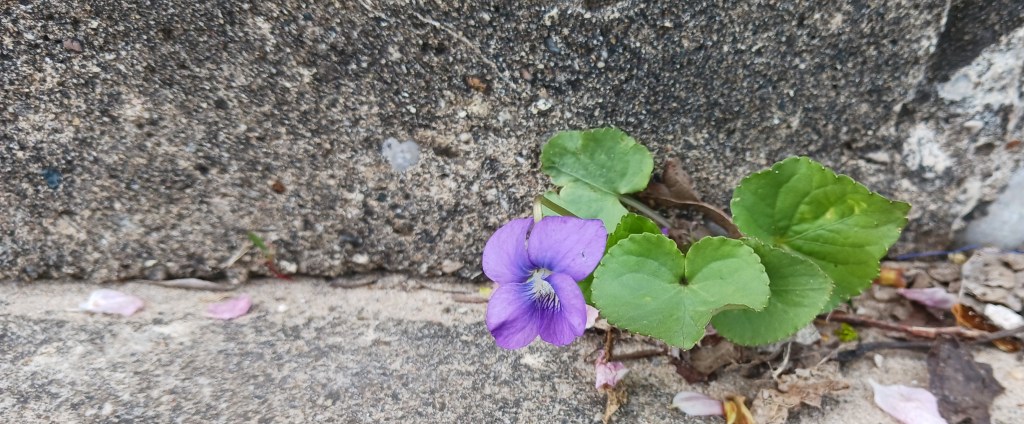
I live in Illinois, and like other US states, it has many state symbols. These include: flower, violet; fossil, Tully monster; fungus, giant puffball; insect, monarch butterfly; exercise, cycling; animal, white-tailed deer; dance, square dance; and microbe, Penicillium rubens.
Some of these are projects initiated by school children, but that microbe comes with some serious history.
In 1928, Alexander Fleming showed that Penicillium rubens had antibacterial properties, but penicillin was difficult to produce. Meanwhile, by the 1940s, World War II was underway, and the Allied troops needed a lot of antibiotics.
The US National Center for Agricultural Utilization Research got to work in Peoria, Illinois, searching for the right strain of the fungus to use for mass production. That strain was found in 1943 in a moldy cantaloupe from a local grocery store. Soon, millions of doses of the antibiotic were ready for the invasion of Normandy. As the result of government support for scientific research, the world was made safe for democracy again.
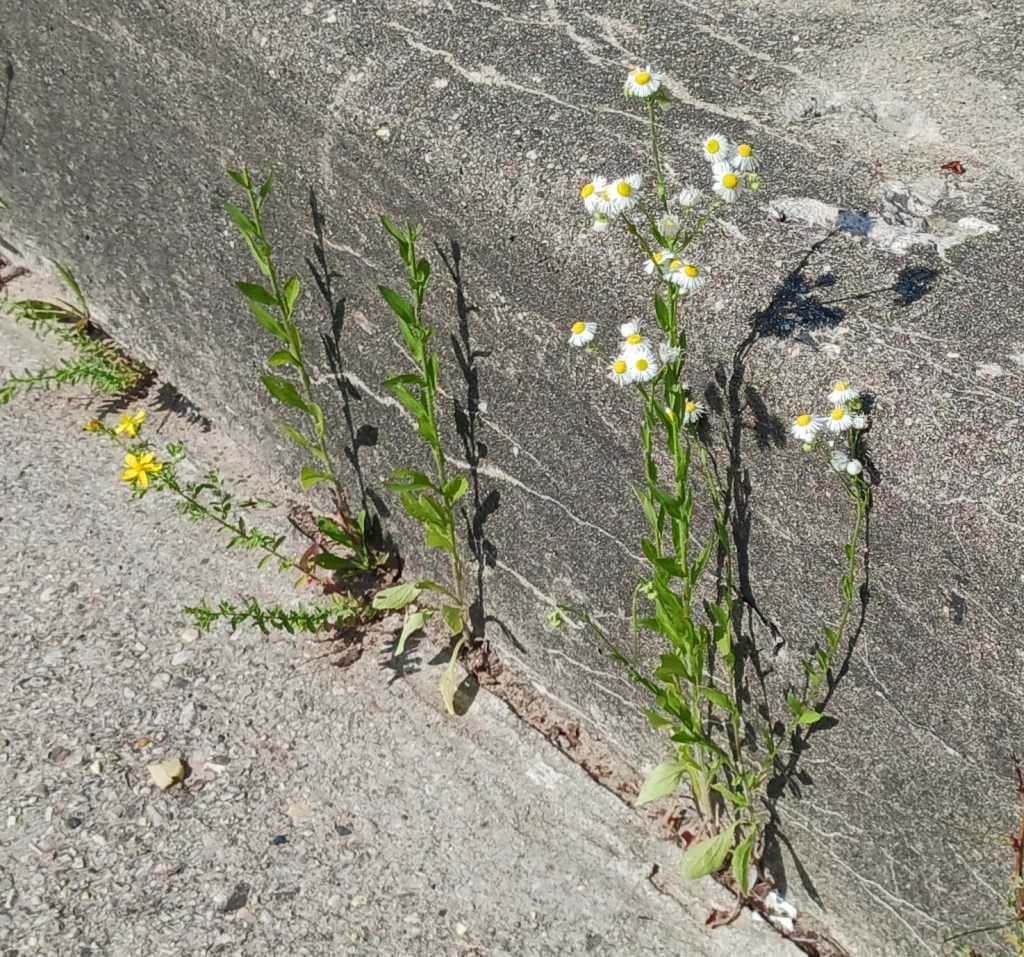
A weed, according to the Penguin Dictionary of Plant Sciences and the Wordsworth Dictionary of Botany, is a “plant growing where it is not wanted.” Merriam-Webster goes further: “a plant that is not valued where it is growing and is usually of vigorous growth; especially: one that tends to overgrow or choke out more desirable plants.”
“All the word ‘weed’ meant was that the plant wasn’t wanted; it wasn’t intentionally planted. It wasn’t ‘subordinate.’ It grew where it was able within the general monstrosity that is most human development.[…]
“My technical term for ‘weeds’ became ‘anthrophytes’ — plants that have adapted to the human setting, defined as it is by concrete, gravel, railroad ballast, chain-link fences, brick, and asphalt. Though far from ideal subjects for studying ecosystem dynamics because most were aggressive invasive species, these anthrophytes were a form of ‘nature’ moving back in, reclaiming the space humans had taken from them. […] I realized this was a whole realm of plant ecology virtually nobody was keeping track of or studying: ‘concrete botany,’ figuratively speaking.”
Full disclosure: I met the author, talked with him about his book, and asked for a copy to blurb if I liked it, and I did. My blurb:
An addictive read. Story by story, a fascinating world is revealed, at times heartbreaking, comic, or terrifying, but always compassionate and original. A fantasy has never felt so real, its people so true.
After a massacre, a soldier must return the bodies of the dead members of his company to their families. As he does, Álbaro Ceynos struggles to understand his own guilt and innocence in the massacre, as well as what came before and after it. He does so with utter candor as he tries to empathize with the families’ varied reactions. He also gains a deeper understanding of his world as he encounters its poverty, wealth, politics, faith, and folly.
Some books tell the story of changes to the characters in it. This book manages to change the reader a little, too. Álbaro is a soul laid bare, and while he never asks, the reader may wonder: Who am I to judge — not only him but everyone who must face loss, falsehood, and truth?
This novella is the polar opposite of the movie KPop Demon Hunters. The movie is heavy on fantasy and set in Korea; this book is a little bit science fictional and set in Japan. The movie offers fun and infectious music (I danced); this book is a relentlessly realistic look at the grinding self-destructive effort behind being a pop idol.
In the book, a very young woman named Rei is controlled at every moment by her manager to turn her into the perfect idol, slim to the point of malnourishment, always beautiful, always smiling, girlish but sexy, and constantly rehearsing and racing to keep up with the demands of a fickle public.
She’s desperately alone and lonely. Her best friend was banished for contract-breaking behavior (finding a boyfriend), and her manager is manipulative and unstable, but this is what she wanted, right? To be a famous pop idol? But as it turns out, the job doesn’t even pay well. So much for glamor. And eventually, she realizes how easily she could be replaced.
It’s a grim story, unlike the movie. Like the movie, though, the ending is uplifting, but in a completely different way: no more pretend happiness.
I’ve been asked if there’s anything new coming out. I have some short stories looking for a home, and if they’re published, I’ll announce it here.
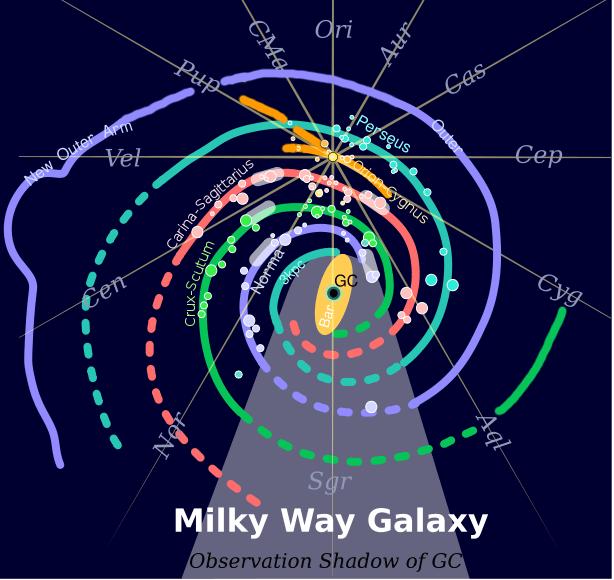
As for another novel, I’m almost done with the very shitty first draft tentatively titled A Nice Galaxy. It tries to deal seriously with the size of the Milky Way, which is almost unimaginably vast. Suppose we humans have settled the galaxy. How can humanity remain united when even something as basic as a radio transmission becomes too attenuated to decipher less than a quarter of the way across the galaxy, not to mention the thousands of light-years it would take to arrive?
Imagine no handwavium shortcuts like faster-than-light travel. Then imagine humanity’s many self-destructive foibles and the problems of survival in a galaxy mostly hostile to human life. That is, imagine trying to carry out the impossible task of keeping humanity connected.
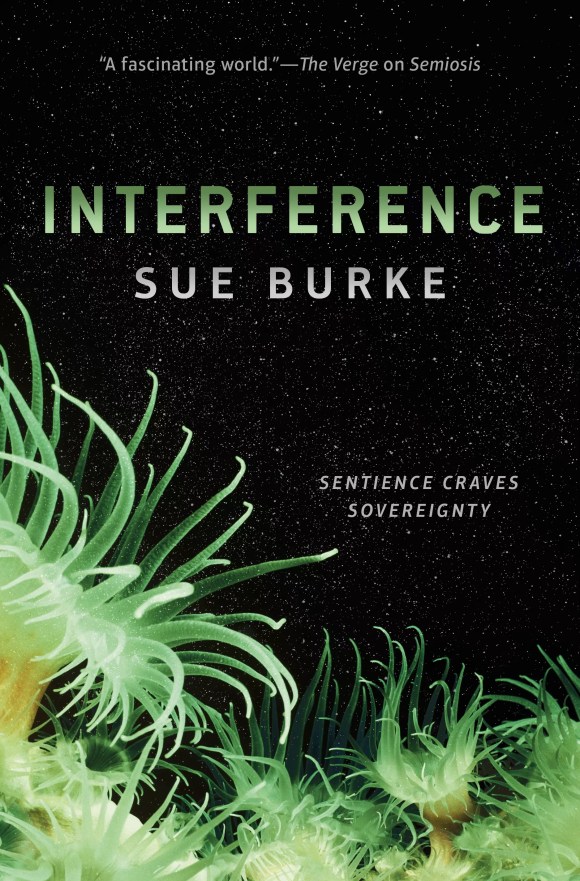
As part of an Audible sale, my novel Interference will be available for $6.99 from June 4 to June 26! This sale is only offered to Prime membership subscribers in the US. This is also a cash sale, meaning it will not affect those using an Audible credit to purchase.
Interference is the second novel in the Semiosis trilogy. More than two hundred years after the first colonists landed on Pax, a new set of explorers arrives from Earth on what they claim is a temporary scientific mission. But the Earthlings misunderstand the nature of the Pax settlement and its real leader. Even as Stevland attempts to protect his humans, a more insidious enemy than the Earthlings makes itself known.
“Narrators Caitlin Davies and Daniel Thomas May reprise their roles, and between them, they’ve once more captured the essence behind the voices of multiple characters, and even more impressively, this time there are non-humans thrown into the mix.” — Bibliosanctum Book Blog.
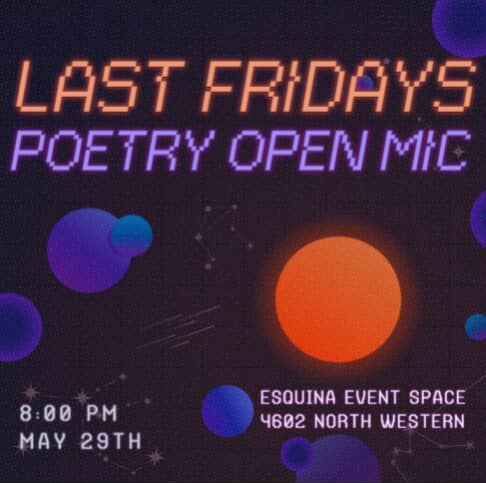
I’ll be reading at the Last Fridays Poetry open mic on Friday, May 29, 8 p.m., at Esquinaevent space, 4602 N. Western Ave., Chicago. It’s a supportive environment, and all are welcome. This time, I won’t be reading poetry, I’ll be talking about poetry, specifically about translating poetry. Here’s what I plan to say:
***
Today, I won’t be reading poetry, I’ll be talking about poetry, specifically about translating poetry. I’ve lived in Spain and the United States, and sometimes I write poetry in English and Spanish, and there can be problems with translation.
For example, the Spanish language doesn’t have a verb equivalent to “finesse.” You can express the idea, of course. “She finessed her way into the party,” can be said in Spanish: Se las ingenió para entrar en la fiesta. “She used ingenuity on things to get into the party.” Not quite the same, but close.
That technique, using “ingenuity” to approximate “finesse,” is called compensation. Here’s another example. My English-language haiku:
nodding heads —
lavender flowers
weighted by bees
My translation into Spanish:
abejas
meciendo las flores
de lavanda
In Spanish, you nod by asentir con la cabeza or “to agree with the head.” A literal translation would not work. The closest word, mecer, means “to rock,” as in “the hand that rocks the cradle.” So I wrote a Spanish version that means, literally, “bees / rocking the flowers / of lavender.” It supplies the same physical picture, but the implied meaning is different.
You can also paraphrase, which may or may not get you what you need. In Spain, the famous festival in July in Pamplona, known for its running of the bulls, honors St. Fermin, so the fiesta and by extension the run are known as los sanfermines. The Spanish haiku:
sanfermines
el semáforo parpadea
amarillo
Literal translation:
the running of the bulls in Pamplona
a stoplight blinking
yellow
It still needs a little work.
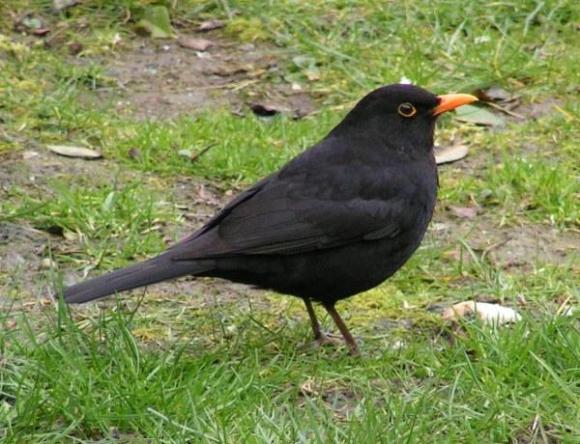
Another problem is cultural, which can be solved with adaptations. In Europe, the bird called a blackbird is the Turdus merula, basically an all-black version of the American robin, Turdus migratorius. (The European robin is a flycatcher, Erithacus rubecula. New World blackbirds don’t exist in Europe. Yes, it’s confusing.) For both these Turdus birds, their beautiful song is a harbinger of spring, so if I’m writing for an American audience, I might adapt the name of the bird to avoid confusion.
Eurasian blackbird
But the following haiku has another problem that also requires a compensation. In Spanish, the adverb ya emphasizes the time of the event. What time? Now, then, soon, already, immediately, finally, never … you know from the context, and there’s no exact English equivalent. Consider this haiku:
el mirlo canta
cigüeñas rumbo al norte
¿ya? ¿cómo que ya?
The Spanish version, translated over-literally, is “the blackbird sings / storks in direction to the north / ~time? how that ~time?
My translation:
the robin sings
storks headed north
now? so soon?
A particular problem is wordplay and puns. In this example, Spanish words often distinguish gender, although English words can’t. The translation of this poem is exact, but the humor doesn’t quite come through.
lectores – lectoras
los servicios de
la Feria del Libro
In English:
male readers – female readers
the rest rooms
at the Book Fair
Of course, poems can also employ rhyme, rhythm, assonance, figures of speech, and all the other resources that form the art of language. They tend to resist translation, but these exacting challenges are what makes translating poetry as much fun as writing it.
I’m interviewed about Goal-Based Sci-Fi Research by Beth Barany for the May 18, Episode 205, of her podcast How To Write The Future. We talk about how to know when to stop researching and start writing, how research can find conflicts that lead writers away from clichés, and surprises hiding in rabbit holes.
The podcasts are meant to offer fiction writing tips for science fiction and fantasy authors who want to create optimistic stories. A vision of what is possible can make it so. Beth Barany is a science fiction and fantasy author and fiction writing coach.
****
I’m interviewed in the May 2026, Issue #1, of Small Planet, the Science Fiction in Translation Magazine. It includes columns on forthcoming books, reviews of older and newer SFT, interviews with translators (me), wish-lists of books for translation into English, and reports from countries around the world on their SF scenes.
In the interview, I answer questions from Cristina Jurado including: What is it about Spanish that appeals to you? What genre do you find more challenging? Can you share with us examples of key decisions you had to make in order to translate a story?
The short story “Spiders” (you can read it here) has been translated into Spanish as “Arañas” by Sergio Gaut vel Hartman (you can read it at Microficciones y Cuentos).
The story is set between Chapters 3 and 4 of my novel Semiosis. When Roland was a boy, his father took him out for a walk. This story was also published at Asimov’s Science Fiction magazine in March 2008 and Year’s Best SF 14 in 2009.