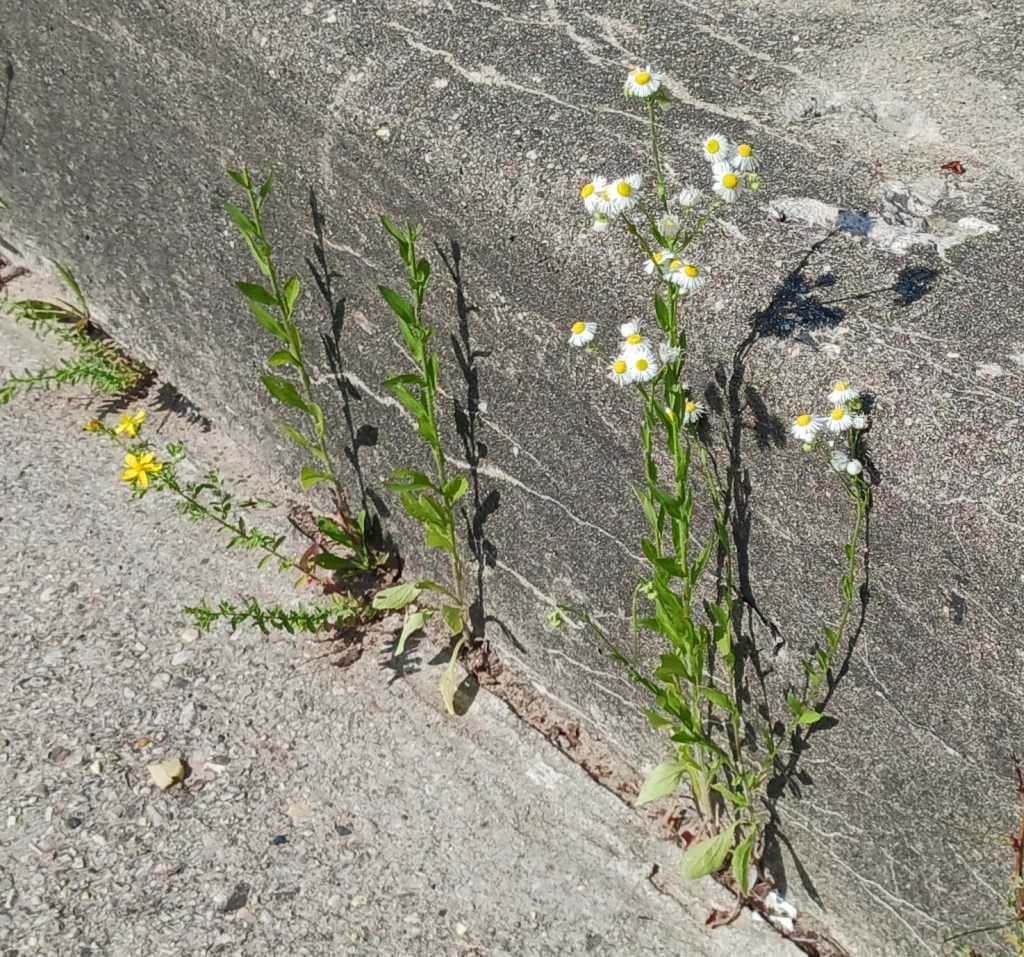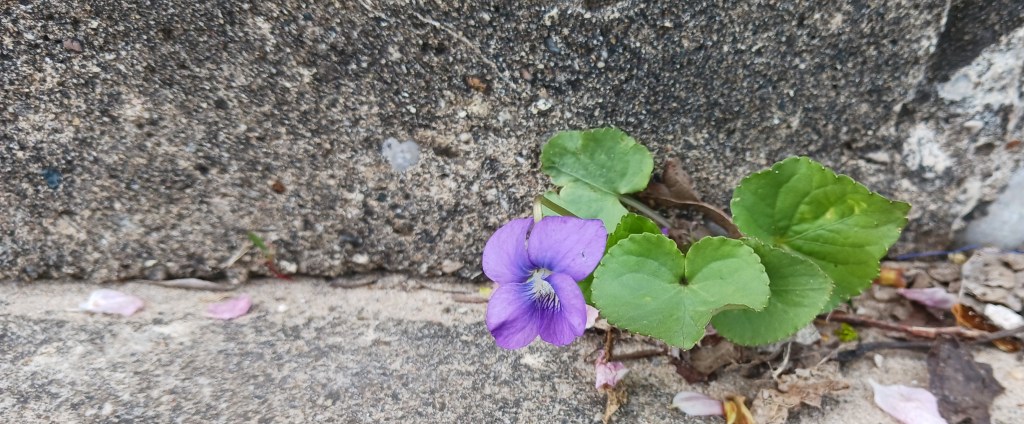
A weed, according to the Penguin Dictionary of Plant Sciences and the Wordsworth Dictionary of Botany, is a “plant growing where it is not wanted.” Merriam-Webster goes further: “a plant that is not valued where it is growing and is usually of vigorous growth; especially: one that tends to overgrow or choke out more desirable plants.”
Joey Santore in his book Concrete Botany: The Ecology of Plants in the Age of Human Disturbance has a different, more extended rant, as you would expect (pages 114, 117):
“All the word ‘weed’ meant was that the plant wasn’t wanted; it wasn’t intentionally planted. It wasn’t ‘subordinate.’ It grew where it was able within the general monstrosity that is most human development.[…]
“My technical term for ‘weeds’ became ‘anthrophytes’ — plants that have adapted to the human setting, defined as it is by concrete, gravel, railroad ballast, chain-link fences, brick, and asphalt. Though far from ideal subjects for studying ecosystem dynamics because most were aggressive invasive species, these anthrophytes were a form of ‘nature’ moving back in, reclaiming the space humans had taken from them. […] I realized this was a whole realm of plant ecology virtually nobody was keeping track of or studying: ‘concrete botany,’ figuratively speaking.”
And as we know: If you build it, they will come.