Is their new life really better than it would have been on Earth?
by Sue Burke
Nicoletta knew her mother would die soon. Many adults had gotten cancer from radiation during the long space flight. Her mother had recently developed a lump in her neck and had trouble breathing.
But she still liked to talk, and as Nicoletta prepared the oven to cook yams that Bryan had brought in from the fields, her mother said, “Would you like to hear a story? There’s a story I always loved when I was a little girl. It’s called Cinderella. Okay? Once upon a time there was a girl, well, really a young woman, not a girl.”
“What are you telling her that useless crap for?” Bryan said.
Nicoletta looked up. This was one of her last chances to hear her mother say anything, and now Bryan was going to ruin it. Why couldn’t he be the one dying? He was always complaining anyway. Besides, the yams he brought were very dirty, so it would be hard work to clean them, and there didn’t seem to be a lot of yams, so some people might not get enough to eat – again. But she didn’t say any of this because it wouldn’t be nice.
Her mother had no such concerns. “It’s just a fairy tale! Kids ought to know something about Earth culture. It wasn’t all bad.”
“What will she learn from Cinderella? Fairy godmothers and princes? What good is that here?”
Nicoletta spread out the embers in the bottom of the oven and added a little more wood, careful not to burn herself. Although she was young, she knew how to make fires burn hotter, or brighter, or slow enough to last all night: useful skills, and she liked to be useful.
“These are ancient stories with important lessons,” her mother said.
“Like glass slippers? Glass!”
“You don’t know the whole story. Nicky, maybe you should take those yams outside to brush the dirt off there. Bryan, help her. The bag’s too heavy for her to move. Daniel will be coming soon with water to wash them.”
As she worked outside the kitchen hut, she listened to them argue inside. Words like “archetype” and “Disney” meant nothing to her, but she knew what glass was: there were glass jars and things in the medical clinic. Her mother very much wanted to tell the story, and what she said made Nicoletta want to hear it all the more. It had important lessons, glass slippers, and fairies, whatever they were.
She fumed about Bryan while she rubbed sandy soil off the yams with a rag – only twenty-nine yams, but there were forty-one people in the colony. And some of the yams were small. Children got preference at mealtimes, but that didn’t always mean they got enough, and it hurt to see anyone go hungry. Adults were so skinny.
Daniel arrived carrying a big bucket of water. He set it down and pointed. “My papa caught a fish.”
She looked at it. “Mom, he has a fish! It’s a two-tail!” It wasn’t especially big, but two-tails tasted good.
A little later, she was carrying the fish guts to a garbage pit next to some fruit vines to fertilize them, and Daniel had come with her. He was older and smart, so she asked, “What’s Cinderella?”
“Hmm. Don’t know.”
“It’s a story from Earth. About fairy things. What are they?” She prepared to dump the pail into the pit.
“Hey, don’t. Let me do that. There’s a lot of corals around the pit. See? They could sting.” He took the pail and tossed the contents from a safe distance. The corals, little hard-shelled animals that lived on the ground, snapped their tentacles at the tiny lizards who were disturbed by the splash and darted around.
She leaned over to see if any got caught. It always surprised her that a tentacle so small it would merely sting her could immobilize a lizard – and there, a brown one smaller than her finger arched its back, shuddered, and gave a final hoot. Poor thing. But it would be a good meal for a coral. What would it be like to eat a lizard? One big enough to eat, of course…
“Fairy,” Daniel repeated.
“Oh. Right. Mom said fairy tale, fairy godmother.”
“And these are thing from Earth? Hmm. Is fairy bad?”
“Mom said she loved the story when she was little.”
“Stories work best when there’s something bad in them. Those are villains. I’m studying about them in my school lessons about literature. “ He added: “The stories are hard to make sense of because you have to know a lot about Earth.”
“I want to know more.”
“Did you know there were lots and lots of people on Earth? Billions, sometimes!”
“Billions!” She giggled.
“That number’s so big, it’s more than all the trees in the forest. You could never even know everyone’s name.”
She tried to imagine it and failed. “I know that Earth had lots of water, just like here.”
They often exchanged tidbits of knowledge about Earth, a place they knew they would never see, since their parents’ expedition had been one-way and they didn’t have the technology to go back even if they wanted to. Nor was Earth likely to send any ships to visit, since space trips took so long they required hibernation. Perhaps Earth didn’t even remember the expedition, and of course it wouldn’t know that many people hadn’t arrived safely, but the survivors had managed to set up a small colony.
Dinner offered more food than Nicoletta had expected. The meal was held, as always when the weather permitted, in the plaza in the middle of their village rather than in their little family huts. They ate at rough tables under what used to be solar panels when they had worked, but now they were merely a sort of roof that kept the whistling bats from swooping down to snatch some food. There was an entire small yam for her, a morsel of fish, a leaf of lettuce, broth from the bones and scraps of yesterday’s roast, and a piece of fruit from the vines. She – everyone – would have enough to eat that day.
It confirmed her faith in the adults. Problems made her worry, but adults tried solve them, and they knew what they were doing. They had studied and prepared very hard before they had left Earth to colonize a distant planet.
But food wasn’t all she wanted. As soon as everyone sat down and began eating, she said, “Mom, can you tell me Cinderella now?” Bryan was sitting pretty far away. Maybe he wouldn’t even hear.
Wendy, an adult who was sitting across the table, laughed happily. “Fairy tales. Oh, that would be fun!”
“The kids won’t understand,” said another adult. “They don’t have enough points of reference.”
“And they’ll learn wrong things,” Vera said. “It’s all about stratified social classes, wish fulfillment –.”
“But also the joy of imagination. These are symbolic stories.”
“Besides,” her mother said, “this would be the Charles Perrault version, not the Disney one. It has a moral.”
“And princes and fairies and pumpkins turning into coaches. Fantasy,” another adult said sarcastically.
“Glass slippers!” Bryan added.
Nicoletta listened with awe. All the adults knew the story! It must be important, since they had so many opinions about it.
“It’s not fantasy,” her mother said. “It’s mythical. Basic motifs and instinctual wisdom.”
“But it’s not our myth anymore,” Vera said. “Not this planet. We left to escape oppression, which Cinderella didn’t overcome. She didn’t even oppose it. She merely came out on top, and through magic! She bought into the system.”
“Please, can we hear the story?” Nicoletta said. Everyone looked at her. Adults didn’t like to be interrupted.
Wendy said, “They need to know about Earth, about why exactly we left.”
“There’s things they don’t need to know,” Bryan said.
After more debate, Paula, the leader, said they should vote, and by a slim margin, the pro-Cinderella side won. But it would be a bedtime story. The children would have to wait. And they had to promise to work hard that afternoon in school.
As the sun dropped near the horizon, the air grew cool, glowworms and fireflies sparkled in the fields, and lizards and crabs in the trees began to hoot and buzz. Eight children assembled under the solar panels – the rest, like Sylvia, were too young, and two weren’t allowed to come by their parents. Nicoletta sat in front, entranced both by the idea of hearing the mythical story and by the joy of seeing her mother in what might be her last distinguished moment.
“Once upon a time –”
“What does that mean?”
“That means it happened a long time ago, but we don’t know when. Once upon a time there was a girl who was very good and very beautiful, but her mother died, and her father married again. He married a woman who was nasty and who had two nasty daughters…”
It turned out to be a long story, so long that they had to go straight to bed afterwards rather than discuss it. For Nicoletta every moment was magic – that is, it was different from reality, impossible in fact, and very exciting. Lizards became people, vegetables became little houses on wheels, and there were balls, which were special parties where people ate all they wanted and danced. And although Cinderella had a hard life, in the end, because she was always kind and good, she lived happily ever after – for the rest of her life – and she got everything she wanted, including a prince, who was really an ordinary man who got preferential treatment, but he must have been especially nice because everyone liked him.
The stuff of sweet dreams.
Imagine being Cinderella. That was what all the girls were doing the next morning. They did their chores with moments of magic.
“Look! This is my dress for the ball!” Rosemary had stuck flowers all over her clothes.
“I have glass slippers!” Cynthia was trying to walk with scraps of crab shell on her feet.
“We’ll make the lizards be people and do our work,” Leon said, holding a red lizard by the tail, which was stupid because it could twist back to give a venomous bite. You had to hold it right behind the head. He dropped it as soon as it moved to attack.
Nicoletta rubbed ashes on her hands and face and recognized that her clothes were already the coarse rags that Cinderella wore. She worked hard, picked some more flowers for Rosemary to wear, and imagined glass slippers. Bryan was wrong. Glass would make good shoes. It would keep out water and mud when it rained.
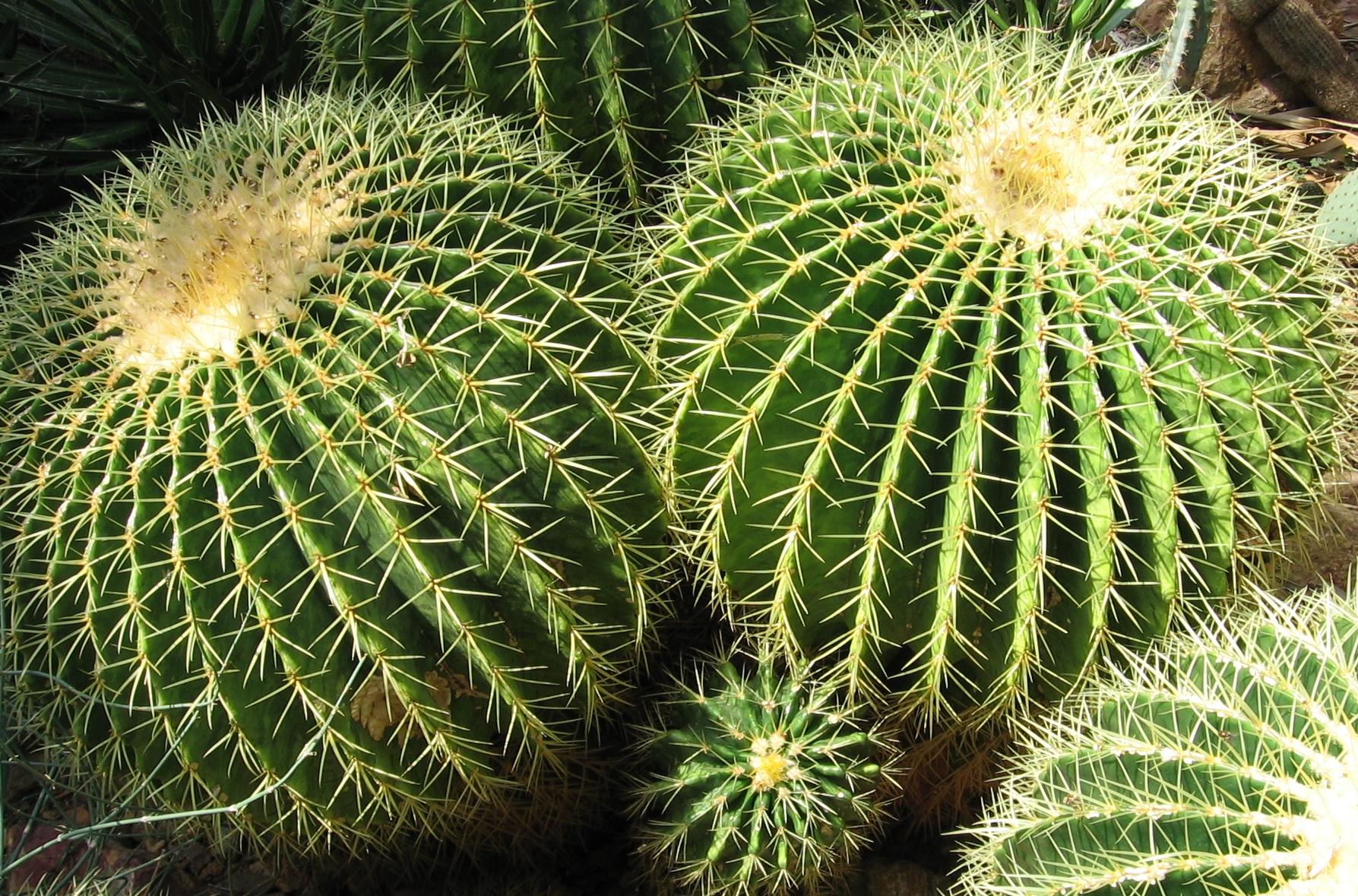
As the children fetched water and wood, picked weeds in the lettuce patch, and hung up laundry, they imagined magical houses made out of cactuses instead of pumpkins, which apparently were also hollow vegetables. Other children joked about having houses with prickers, but Nicoletta thought they would probably be warm and dry in winter, which would be a magical improvement.
That afternoon, they looked up dances on one of the last working computers. Daniel’s mom said that they probably waltzed at a ball and taught them the dance, then used counting one-two-three as a math lesson.
It was all very exciting, but not quite right. Nicoletta didn’t know why, and that evening, after supper, when some children were practicing the waltz, she talked to Daniel.
“Did you like the story?” she asked.
“I didn’t learn much about Earth. I knew that most of that stuff. I mean, there are lizards on Earth, but they’re not like the lizards here. Mice are sort of like tiny gray fippokats. And some people had a lot more stuff than other people, which wasn’t fair. All the adults will tell you that. That was one of the worst things about Earth.”
“You didn’t like it? My mom loves it.”
“Why?”
“I don’t know,” she said. “I’ll ask her.”
She got up, and, as she walked across the little plaza toward where her mother was sitting, she overheard some adults talking about the end of the wheat stores until the harvest. No more bread. That disappointed her, but she would be good and not complain.
Her mother looked weak, but she smiled when she saw Nicoletta, who felt very pleased that she could make her mother smile just by being there. She resolved to spend as much time with her mother as she could. She snuggled close to her on the bench and asked, “Why do you like the Cinderella fairy tale?”
“Wow. Why do I like it? Well, I like the way it talks about hope. Cinderella had a hard life, but in the end she got what she deserved.”
“Sure, but it took magic,” Vera said. “Cinderella couldn’t count on human justice.”
Her mother thought a moment, then nodded. “That’s right. There wasn’t a lot of justice on Earth. That’s one of the reasons we left, Nicky. Earth had a lot of problems that no one could solve, so we wanted to make a new start on a new planet and do things right. It’s very hard work, but we think the struggle will be worth it. We’ll make this place better than Earth.”
“What problems?” Nicoletta still felt very curious about Earth.
Vera answered. “Repeated pandemics, environmental degradation, business oligarchies, religious extremism, massive starvation and climate change refugee displacement, and thermonuclear showdowns.”
Nicoletta didn’t know what the words meant, but they were big and ominous.
“What you need to know,” her mother said, “is that a lot of people worked very hard to send us off to found a colony far away so we could try again. Remember how in the story, there were bad people, but there were good people, too? How Cinderella was kind even to her sisters who were mean to her, and how she tried to do everything her fairy godmother said? We used technology like magic to go to a new place so we could do something wonderful here.”
Nicoletta had heard the story about the founding of the colony again and again, but each time the details became a little clearer. Earth had big, complicated problems that couldn’t be solved, but the colony faced simple, solvable problems. Earth had bad people, like the step-sisters, who were cruel and told lies, but they had been left behind. Good people were like Cinderella, who was nice to everyone and worked hard and did what she was told.
The story wasn’t about fancy dresses or dancing or turning lizards into workers. It was about people and what they should do.
“Let’s do your hair up in ringlets,” Mom said. “A fancy hairdo for a ball.”
“But the story isn’t about fancy hair.”
“Well, it’s about fancy things, too. They’re fun, and it’s good to have fun.”
So Mom twirled her curly hair into long spirals, then declared, “Look, aren’t you beautiful? Just like a princess. Here,” and she took off her shawl and a string of beads. “Here’s a long fancy skirt, and jewelry.”
Nicoletta looked at her reflection in a piece of shiny metal, and indeed she looked special. Her mother was right. It was fun. She giggled and twirled like she was at a ball. Who was her prince? Daniel, of course, and she got him to dance with her. When they grew up, they would get married and live happily ever after.
But the next day, it was back to work. The rains always stopped in autumn and plants got dry, including the plants that floated in the air with hydrogen bubbles in them. They would blow around high in the sky until static electricity made them spark and burn, showering embers and seeds. Children and adults were posted around the wheat fields to watch for fires.
They had to watch for animals, too, which were trying to eat as much as they could before winter. Adults argued about whether they should harvest early, before things were fully ripe, just to be sure of the harvest. One night, a pack of animals with huge claws came to dig up the yam field. The children had to stay indoors while the adults used weapons and torches to chase them away, but much was lost. The adults had acted too late.
A few days later, she hurried through her task to help gather onions so she could spend time with her mother, who was resting in their hut. But before she entered, she overheard a conversation inside with the medics. “Let’s just let it run its course,” her mother said, and her voice sounded hoarse. “Save the medicine for someone who might actually recover. I don’t have much time left either way.”
Nicoletta felt love for her mother as never before, proud of her generosity, acting like Cinderella, but she was also heartbroken to think that not much time was left. And worried because so many adults were sick. What would happen when they were all gone?
Days passed quickly. Occasionally, during afternoon classes, they learned more about Earth. The sheer size and variety of Earthly achievements staggered and amazed her, even though some things repulsed her. One day she looked up the word “stirvation” – no, “starvation” – in a dictionary, and the word “refugee.” Starvation meant hunger. Refugees were people forced to leave their homes to escape something.
This left her with questions, but by then her mother had gotten a tracheotomy and communicated with difficulty, so Nicoletta didn’t know who to talk to. Those kinds of questions would make some adults like Bryan angry. Wendy said she would become her new mother, and she probably could ask her those questions, but it would be better to wait and see. Maybe parents didn’t even have all the answers anyway. Sometimes, she had noticed, they made mistakes. Even when things went right, they often didn’t go well. Life did not seem to improve, and the future did not look good.
One afternoon, the biggest wheat field caught fire. Everyone ran to put it out, but the wind spread it too fast for them.
“The wheat was green,” Bryan said as the field still smoldered. “Not all the grains burned. We can still gather some up, but we better hurry because every kind of vermin will be trying get some, too.”
Nicoletta and many people worked until sunset, then got up early and, as soon as it was light enough, they continued to pick through the ashes, looking for grains that had been only toasted or partially burned. Others harvested the remaining wheat early, although they knew it would be less nutritious and taste bad.
As she sifted through the stinking ashes, her blackened fingers scratched and stinging, she thought about making mistakes, big mistakes about big things, so big she could not quite grasp them. She thought about constant hunger. And about how winter would be long and cold. She wanted to ask her mother, “Is this really better than Earth?” but her mother was much too sick, and most of all, that question would make her immeasurably sad.
By then, almost everyone had forgotten the story about Cinderella and no one ever told it again, but Nicoletta would long remember thinking, “Is this really better than Earth?” She would remember because she realized even then that she knew the answer, and that nothing in her life was going to magically change no matter what she did.


 Semiosis