
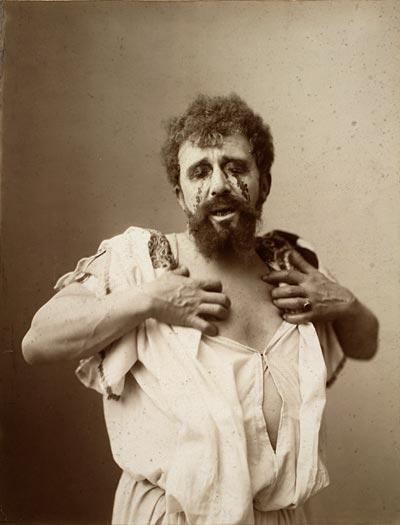
“Here is Oedipus, here is the reason why I will call no mortal creature happy.” — from Oedipus Rex, a play written by Sophocles in about 430 B.C.
Oedipus believes he is an orphan. He unknowingly kills his father and marries his mother, a queen. They live happily ever after and raise a fine family, until one day a messenger arrives…
Ancient Greeks invented dramatic tragedy in about 600 B.C. and spent several centuries refining it. Despite the limited theatrical techniques of the time, the emotions portrayed were at once subtle and intense: honor, ethics, self-knowledge, conscience, pride, insolence, responsibility, and courage.
But how do you tell a story? In about 320 B.C., Aristotle examined what makes a good tragedy, and his lecture has survived as the book Poetics— which Shakespeare studied and put to good use. Here are Aristotle’s rules:
1. Show don’t tell.
2. Try to keep the time frame short, perhaps “a single circuit of the sun” for a stage play or short story. Otherwise, you might have an epic, which has its own rules.
3. Be serious. This isn’t a satire. Try to express yourself well, with lively language full of images.
4. Make characters lifelike, and make them do things, not ponder things. “All human happiness or misery takes the form of action,” Aristotle writes. “Character gives us qualities, but it is in our actions, in what we do, that we are happy or the reverse.”
5. Plot is paramount. Try to make the plot powerful. It should have a beginning, middle, and end. It should be long enough to allow for a sequence of necessary or probable events that will bring about a change from good fortune to calamity, but not so long that we can’t remember it all easily.
6. Unity of plot means you leave out as much as you can, “for a thing whose presence or absence makes no visible difference is not an organic part of the whole.”
7. Tragedy inspires fear or pity. The events should surprise us, but they must follow cause and effect, because logic is more amazing than convenient coincidences.
8. The best plots are complex. A complex plot has either a reversal of the situation, or a recognition, or both. These reversals or recognitions should be a necessary or probable result of what went before.
Reversal is a change of a situation into its opposite. For example, in Oedipus Rex, a messenger brings good news to Oedipus: the mystery of his parentage has been solved … and it turns out to be disastrous news.
Recognition is a change from ignorance to knowledge, and makes people change their feelings about each other. “The best form of recognition is coincident with a reversal of the situation, as in Oedipus,” says Aristotle. But it can also come from something like a trivial object that provides crucial information that results in knowledge, particularly knowledge about other people that provokes fear or pity in the audience.
9. The end result is suffering, “such as a death on the stage, bodily agony, wounds, and the like,” Aristotle says. If you like gore, you’ll like Oedipus Rex and other ancient Greek plays. Modern horror is often like classic tragedy; modern readers outside of the horror genre tend to prefer emotional pain to of buckets of blood, although there’s nothing quite as fearsome as ripping your own eyeballs to ribbons the way Oedipus does to show his shame, is there?
10. A perfect tragedy does not involve a virtuous person brought to ruin, for this moves neither pity or fear; it merely shocks us. Nor a bad man passing from adversity to prosperity, obviously; nor a villain brought to ruin. You want a good and just protagonist whose purposes are noble but who brings misfortune on himself not by vice or depravity, but by an error or frailty, usually some sort of immoderation — an excess of justice, truth, vengeance, self-sacrifice, love, pride, egotism, constancy, stubbornness, or anger. An unhappy ending is the right ending.
 Semiosis