My publisher, Tor, has posted the opening of the novel Interference, the sequel to Semiosis. As with Semiosis, each chapter is a different character. This is the opening to Chapter 1. Don’t worry, Stevland eventually gets his own chapter — and he owns it. No spoilers….
This year’s World Science Fiction Convention, or Worldcon, will be in Dublin, Ireland, from August 15 to 19. About 5,000 people are expected to attend. If you’ve never been, events include panels, gaming, writing workshops, costumes, speeches, awards, movies, music, dancing, parties, art, science, theater, children’s activities, and a lot more.
Worldcons are run by us fans — no paid staff. This helps account for the variety of activities. The size of the venue, not our collective imagination, is the only limitation. That’s why when you buy your ticket, it’s a membership fee. You don’t just observe, you belong.
I’m scheduled for four events:
Panel: Continuing relevance of older SF
Friday, August 16, 11:30 to 12:20, Odeon 4 (Point Square Dublin)
We are in a new millennium, a literal Brave New World. Surely much of the fiction of the 20th century no longer holds relevance? Or does it? The panel will discuss the fiction of the past and how it can still be relevant in the 21st century. What lessons from older authors such as Orwell, Asimov, Butler, Delany, Kafka, and Atwood can we apply to our app-loaded, social media-driven age?
I’ll moderate panelists Alec Nevala-Lee, Aliza Ben Moha, Robert Silverberg, and Joe Haldeman.
Book launch: World Science Fiction #1: Visions to Preserve Biodiversity of the Future
Saturday, August 17, 12:30 to 13:30, Point Square: Warehouse 2 – Performance space
Science fiction happens everywhere! World SF #1 collects some of the best stories published by Future Fiction, a multicultural project created by Francesco Verso to preserve the narrative biodiversity of the future. Come and celebrate these science fiction stories from thirteen countries and six languages. I translated the story “Francine (draft for the September lecture),” by Maria Antónia Marti Escayol. There will be light refreshments.
Panel: Into the woods
Saturday, August 17, 16:00 to 16:50, Wicklow Hall-1 (CCD)
From Little Red Riding Hood’s forests to Annihilation’s eldritch fungi, nature and plants have been a powerful force in fiction from historical fairy tales to far-future hydroponics. How have forests shaped fiction, and how has the use of nature in fiction changed over time? What do we love — or hate — about leaves?
Navah Wolfe will moderate panelists Jennifer Mace, Sarah Gailey, Seanan McGuire, and Sue Burke.
Reading: Sue Burke
Sunday, August 18, 17:30 to 17:50, ECOCEM Room (CCD)
I’ll read from Interference, the sequel to the novel Semiosis, and something else fun and plant-related.
***
My husband and I are also coming to Ireland a week earlier as tourists. We’re preparing to be enthralled by the beauty of the Emerald Isle, the depth of its culture, and the charm of its people.
If you’re in Britain, you can hear me at 21:00 tomorrow, July 31, on BBC Radio 4, as part of the Stranger than Sci-Fi show’s episode “Talking Plants.”
I’ll provide some strange science fiction ideas for your hosts, physicist Dr. Jen Gupta and comedian Alice Fraser. Discover real-life science that sounds too strange to be true.
Pods on some other kinds of Oxalis explode, too. They’re commonly sold as “shamrock plants” around St. Patrick’s Day and make lovely houseplants. I also have an Oxalis triangularis and Oxalis regnellii.
Pods of various kinds explode as an effective way to spread seeds — one of many strategies. Dandelion seeds fly far using an air vortex that forms above their fluff. Other seeds put mucilage to various uses besides gluing themselves to you so you’ll inadvertently carry them away.
My novel Semiosis was on the shortlist, and I’m deeply honored by that.
Just in case, my editor at HarperVoyager in Great Britain, Jack Renninson, came with a speech to read on my behalf. In it, I thank Arthur C. Clark Award judges, for starters:
“The list of people I also need to thank is long: the ones who helped me with critiques and suggestions, the ones who helped me bring it to readers, and the ones who offered support at every stage. A book is a big group project.
“This novel started when I noticed my houseplants fighting with each other for sunlight. I began to learn more about plants, and I discovered how astonishing they are.
“An oak tree is as perfectly prepared for the challenges of survival as a human being, and it struggles as actively and aggressively as we do to meet those challenges. All life here on Earth is closely related and mutually interdependent. I wanted to explore those relationships, and science fiction gave me the tools to do it, especially to focus on one key question: What if our need for each other overcame all other concerns?
“We have that need, here and now. I hope this idea seeped out of the novel. Our survival as a species depends on the survival of countless other species.”
Las Médulas, Spain, the remains of a mountain that was excavated in Roman times for its gold. Photo by Sue Burke.
What’s it like to write a novel? Much has been said about it, perhaps too much, but let me add one more metaphor anyway:
It’s like digging a big hole. By hand. You likely start out choosing where to dig and knowing the approximate size of the final hole — that is, you’ve chosen the genre and you know the final manuscript should be the size of a book. You may have carefully researched the site, taken copious notes, and done your best to be prepared. Or maybe you’re just going see what you find. In either case, you start digging, one handful of dirt at a time. The project is big and goes on for a long while.
If you’re lucky or did some test digs, you won’t find an enormous rock in the middle of the dirt you need to excavate. You will certainly find smaller rocks, tree roots, some worms and other critters — and bits of archeological ruins because we always encounter the past.
You’ll also find buried treasure, maybe a lot of treasure. That’s your best clue that you’re digging in the right place.
Photo by Sue Burke at the Mitchell Park Horticultural Conservatory in Milwaukee, Wisconsin.
“Where do you get your ideas?” If you’re a writer, you may have been asked that. Here’s how I got the idea behind Semiosis and turned it into a novel. How it happened is neither typical nor unusual – there are a lot of paths to a novel, and they’re all good – but it does illustrate an essential and sometimes overlooked aspect of writing.
The whole thing started with the houseplants on my dining room table. One day, I discovered that the little pothos in a mixed planter had wrapped itself around another plant and killed it. At first, I blamed myself for not having noticed earlier and stopped it. Then a philodendron on a bookshelf tried to sink roots into another plant. I became suspicious and did some research.
What I learned was disturbing. According to botanist Augustine Pyrame de Candolle, “All plants of a given place are in a state of war with respect to each other.” They compete for light and nutrients, and they use ingenious tactics to abuse and even kill each other. For example, roses have thorns so they can impale their prickles into other plants and climb over them. In the process, they might kill the other plants — but this is war. Roses don’t care as long as they’re victorious.
Even more disturbing, I learned, are the ways plants use animals for a variety of tasks. They grow flowers to attract pollinators, as we all know, and they’re sometimes very unkind to hard-working insects. Plants also grow fruit so that we’ll eat it and spread their seeds. When a tomato (tomatoes are technically fruit) turns red, the tomato plant is sending you a message: eat me now! We think we grow crops to feed ourselves, when from the point of view of many plants, they reward us with food to manipulate us into helping them survive in wartime. We serve the plants.
I wrote and sold a magazine article about the viciousness of the vegetable kingdom, and as a science fiction writer, I thought I ought to do something more with the idea. But what was the story?
Then, at a science fiction writing workshop, the instructor posed a writing prompt about a special kind of wall that suddenly appears in a war zone. War? That might work. What if, on a distant planet, a human colony suddenly appeared like a wall between warring plant factions? (Two classmates also got good ideas from that prompt. One wrote a tender steampunk love story, and another wrote an epic fantasy novel.)
Soon enough, my short story was written and published, dramatizing the dangers of setting up a colony between warring plants. A couple of years later, I came back to the story and thought about expanding it into a novel — so I began more research. Even a fairly Earthlike planet needs a carefully designed ecology.
A few unexpected details discovered during that research became critical. On Earth, most iron has sunk to the planet’s core, but a lot remains mixed in the crust, so iron is common. However, if a planet happens to have a lot of carbon as it is formed, almost all the iron sinks and the crust becomes iron-poor. Plants need iron to create chlorophyll. Your blood is red from hemoglobin, which contains iron. You have what plants want. Stories need conflict. This one could be life-or-death.
I also realized that no matter how I tweaked the plants, they’d respond slowly. They’re low-energy beings. I needed to slow down the story but still keep it compelling. I decided to jump in time between chapters by skipping from one generation of the human colonists to the next, a kind of story called a roman-fleuve.
By then, I had finally developed the idea enough to begin writing – after spending a few years to amass all the details.
Story ideas come from many sources: sometimes from a conversation, a news report, an old memory, an episode from history, a reaction to another story, a compelling prompt, or a random observation as you’re walking down the street. I believe that ideas are as easy to encounter as snowflakes in winter. What’s hard are stories. Ideas need to be dramatized. It may take time, observation, research — and possibly a little luck — to discover the drama behind the idea.
There’s no right or wrong way to find the drama. I can only offer one piece of advice: Be patient with the process. The idea is only the first step.
My brother’s family sent me this plant for my birthday yesterday.
They know me well. “Another plant for your growing jungle!” the card said. (Kathy, my sister-in-law, invented the fippokat as a child and lent it to me for Semiosis and hasn’t complained about the ways I’ve used and abused them.)
The card from the florist identified the gift as a “Green Plant(s). Moderately bright locations are preferred on most plants. Water thoroughly when soil is dry to the touch…”
I needed to know more, of course. What was it? How exactly should I care for it? Plants always want something from their service animals, sometimes something very specific, and I’m willing to acquiesce in order to have strong, healthy, happy houseplants.
The flower, a spadix, told me it’s a member of the Araceae or arum family. That narrowed it down to about 3700 species. But only a few of them were likely to show up in a Chicago florist shop. A peace lily (Spathiphyllum)? Wrong leaves. Chinese evergreen (Aglaonema)? Maybe. The variegation and texture of the leaves seemed familiar, but pink?
In any case, the plant originated in Asian jungle undergrowth. The Missouri Botanical Garden, which has a large collection of Araceae, recommends partial to full shade and home-level warmth. NC State U Extension adds that they like humidity. No problem. I live next to Lake Michigan and it’s foggy here a lot.
Welcome to your new home, Pink Splash/Lady Valentine! May you live long and prosper. I’ll do my best to make that happen.
Full disclosure: The author approached me to see if I wanted to write a blurb for her book, a literary thriller, and if so, she’d send me a copy. The book was about plants, and plants are my thing. I took a look at her other writing and decided I would probably enjoy the novel.
I was right. Here’s my blurb:
The delight and grit of Paris, the desperation of poverty, the love of plants and family – all beautifully and authentically told. The literary side of the novel brings sensitivity and texture to the struggling characters and their surroundings, and the thriller side kept me up late, anxious to find out what happens next.
Literary novels tend to emphasize character, and with only a few words, Karen Hugg creates people you might recognize if they came walking down the street. She presents the protagonist with complexity and depth. Renia is a poor Polish immigrant to Paris, working in a floral shop. She has a flower whose scent only seems to attract trouble and danger, but she has neither the resources nor strength to protect the flower and herself and her sister at the same time.
Thriller novels emphasize peril. Because Renia is trapped by poverty, by a conflicted and demanding family that she loves deeply, by other people’s bad decisions, and by a situation that requires more than she has to offer, her troubles grow until her life and the lives of others are in danger. She won’t surrender, but her choices become few and dire.
Those two sides of storytelling combine to become a potent combination.
Finalists for this year’s John W. Campbell Memorial Award for Best Science Fiction novel have been selected, and Semiosis is on the list! I am deeply honored.
The John W. Campbell Memorial Award for Best Science Fiction Novel , or Campbell Memorial Award, is an annual award presented by the Center for the Study of Science Fiction at the University of Kansas to the author of the best science fiction novel published in English in the preceding calendar year. It is the novel counterpart of the Theodore Sturgeon Award for best short story, awarded by the same organization.
(The John W. Campbell Award for Best New Writer is a different award presented along with the Hugos at Worldcon. Yeah, I was confused at first, too.)
The Campbell Memorial Award will be presented in Lawrence, Kansas, on June 28. This year’s jury included Gregory Benford, Sheila Finch, Elizabeth Anne Hull, Paul Kincaid, McKitterick, Pamela Sargent, and Lisa Yaszek.
The full list of nominees:
• Semiosis, Sue Burke (Tor)
• A Spy in Time, Imraan Coovadia (Rare Bird)
• The Calculating Stars, Mary Robinette Kowal (Tor)
• Time Was, Ian McDonald (Tor.com Publishing)
• Blackfish City, Sam J. Miller (Ecco)
• Moon of the Crusted Snow, Waubgeshig Rice (ECW)
• Theory of Bastards, Audrey Schulman (Europa Editions)
• Unholy Land, Lavie Tidhar (Tachyon)
• Space Opera, Catherynne M. Valente (Saga)
• The Freeze-Frame Revolution, Peter Watts (Tachyon)
• The Loosening Skin, Aliya Whiteley (Unsung Stories)
 This year’s World Science Fiction Convention, or
  If you’re in Britain, you can hear me at 21:00 tomorrow, July 31, on BBC Radio 4, as part of the Stranger than Sci-Fi show’s episode “Talking Plants.”
 Rosewater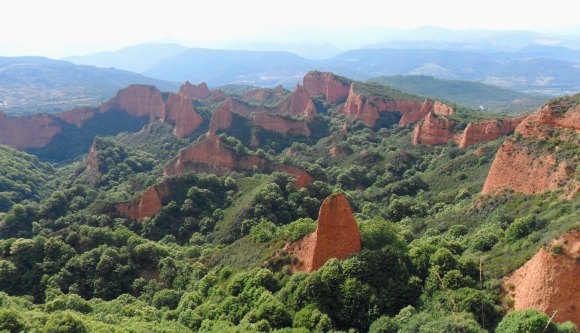


 Semiosis