Sue Burke’s most recent science fiction novel is Usurpation, the conclusion of the trilogy that began with Semiosis and Interference. She began writing professionally as a teenager, working for newspapers and magazines as a reporter and editor, and began writing fiction in 1995. She has published more than 40 short stories, along with essays, poetry, and translations from Spanish into English of short stories, novels, poetry, and historical works. Find out more at https://sueburke.site/
It’s long been known that acacia trees in Central America have a mutual relationship with ants. The ants guard the trees, and the trees give the ants food and a place to live. But an enzyme in the acacia food makes ants dependent on the tree. The ants can eat no other food and must protect the tree as their only source of sustenance. They become true service animals.
In another case of mistreating insects, it seems that the “love vine” or Cassytha filiformis, which is a vine-like parasitical plant, not only steals nutrients from other plants, it steals from wasp galls, too. This is a parasite parasitizing a parasite — there is no honor among thieves.
Another parasite, Pilostyles hamiltonii, doesn’t simply sink rootlike structures (haustoria) into another plant, it lives inside its host entirely. Only its flowers emerge, erupting out of the host plant when the time is right. Imagine suddenly breaking out in alien flowers.
If you can’t steal from them, kill them. Some flowers produce toxic nectar. Why they do that isn’t clear. Honey made from toxic nectar is toxic to humans, and in the past, we’ve used it as a weapon. The only thing sneakier than plants are human beings.
Finally, there’s plant blindness — our blindness to plants. This Youtube video by biology student Benedict Furness explains the danger of failing to see plants and how we can overcome it. And we should. Plants are dangerous and aggressive, and we fail to see them at our own peril.
I’ll make three public appearances in the first two weeks of September.
On Tuesday, September 4, from 6:30 to 8:30 p.m., I’ll be at the American Writers Museum in Chicago. I’m part of the Fearless Women in Science Fiction panel with Mary Robinette Kowal, whose latest book is The Fated Sky, and with Tessa Gratton, author of The Queens of Innis Lear. I’ve met them both before, and they and their books are amazing. You can find out more about the panel here at the tickets page and at the Facebook event page.
On Sunday, September 9, I’ll be at the Kerrytown Book Festival in Ann Arbor, Michigan. I’ll appear on a panel with Mary Robinette Kowal again and with Jacqueline Carey. Our panel is from 3 to 3:45 p.m., with a book signing from 3:45 to 4 p.m. You can find out more about the festival at its website and Facebook event page.
Finally, on Monday, September 10, at 7 p.m., I’ll be at the Cromaine Library in Hartland, Michigan, as part of a series called Sallie’s Author Visit. I’ll talk about my novel and getting published. Here’s the library’s webpage and details about the visit.
If you’re in Chicago or Michigan, I hope I get to meet you.
People who had read my novel, Semiosis, recommended this book to me, so I bought it, and they were right, it’s a good book. Later I learned that Adrian Tchaikovsky had provided the extremely favorable cover blurb for the British edition of my novel. I owe him one for that.
There’s a lot to love about Children of Time. Tchaikovsky probably doesn’t know it, but in the Kindle edition, at the 99% mark (that is, at the very end) this sentence has been highlighted by 686 readers: “Life is not perfect, individuals will always be flawed, but empathy — the sheer inability to see those around them as anything other than people too — conquers all, in the end.”
This assertion is the rocket fuel that propels the book to science fiction’s heights. Our better natures triumph.
Here’s the official description:
“Winner of the 30th anniversary Arthur C. Clarke Award for Best Novel
“Adrian Tchaikovsky’s critically acclaimed, stand-alone novel Children of Time, is the epic story of humanity’s battle for survival on a terraformed planet.
“Who will inherit this new Earth?
“The last remnants of the human race left a dying Earth, desperate to find a new home among the stars. Following in the footsteps of their ancestors, they discover the greatest treasure of the past age — a world terraformed and prepared for human life.
“But all is not right in this new Eden. In the long years since the planet was abandoned, the work of its architects has borne disastrous fruit. The planet is not waiting for them, pristine and unoccupied. New masters have turned it from a refuge into mankind’s worst nightmare.
“Now two civilizations are on a collision course, both testing the boundaries of what they will do to survive. As the fate of humanity hangs in the balance, who are the true heirs of this new Earth?”
Just as I had been told, the book touches on some of the same themes as mine: human beings attempting to colonize other planets, first contact with non-human life forms, and the sad certainty that humans will make at least a few foolish choices. Tchaikovsky approaches those questions from an entirely different angle, though, one that produces a different but very satisfying story.
He also uses some wise storytelling techniques. The narration alternates between the stories of humans and uplifted spiders. He finds a way to follow the same human beings across a long period of time (600 pages and thousands of years). The new masters of humanity’s last refuge, the spiders, go through a great many generations (this is not a spoiler) but they keep the same names. All this helps the reader move easily through a complex and ambitious plot.
In the end, the humans and spiders enter into direct conflict, but they don’t share the same culture or technology, so they don’t want the same outcome from the conflict. This is the ending that inspired so many highlighters.
Permeating both his book and mine is this question: How would intelligence differ in different species? It’s a question with as many right answers as there are species. Tchaikovsky’s book considers what spiders would think if they could think. He works through that question with patience and logic and creates a fascinating alien civilization.
I have only one quibble. The ideal reader for this book would have arachnophobia. I do not, and now I wish I did so I would have enjoyed the book even more as I overcame my fears during the course of the story. Here on Earth, I admire the spiders I encounter, even the ones inside my house — they eat mosquitoes, so I consider them allies. What if we could go to the stars with these clever beings? This book makes me want to do that.
Every writer needs an editor. Another pair of experienced eyes can strengthen any written work. But there’s a right way and a wrong way to edit.
First, let me clarify that there are several kinds of editing, generally falling into these three categories:
• Developmental, substantive, or structural editing helps give overall shape to the piece: what to include or exclude, how to control the pacing, and how to make sure that the piece flows logically from beginning to end. This kind of editing should be done fairly early in the process, and it’s what a critique group ought to do. It’s “big picture.”
• Copyediting or line editing is what most people who aren’t trained as editors (yes, you can go to school for that) think of when they think of “editor.” Copyediting should fix grammar, usage, tangled syntax, and mistakes, and in general should polish the prose. This is what I’m going to be talking about because this is where wannabe editors get confused and abusive. Copyediting works at the paragraph and sentence level.
• Proofreading or mechanical editing checks for typos and makes sure that a style sheet is applied (whether you abbreviate months, spell out numbers, and so on). This is sometimes confused with copyediting by wannabe editors who are tasked to proofread but who get over-ambitious. Proofreading should look at the individual words and punctuation marks.
How do you copyedit correctly? Here is the rule: Only suggest changes to correct an objective error or problem. “Objective” means you should be able to explain the precise reason for the change. “In this sentence, the antecedent is separated from its pronoun.” “There might be too many short sentences in a row in this passage.” “The reader would be helped if the attribution were moved up in the quote.” “This paragraph isn’t in chronological order and is confusing.” “Bullet points and parallel construction could work well here.”
Any piece of writing can be changed in an almost infinite number of ways, however. Just because something can be changed, that doesn’t mean it should be changed. You are not a good editor because you can see all the possible changes. You are a good editor because you can see all the necessary changes. If the meaning is easy to understand, the writing won’t need much changing at all.
Bad editors want to change things that don’t need to be changed. They tip their hand in their explanation for their edits because they can cite no objective reason. They say something like, “I made it sound better.” “It reads smoother.” Why? “It just does.”
Usually it doesn’t sound better or read smoother — not objectively. “Sounds better” is a subjective judgement. The wannabe editors believe it sounds better because it does — to their ears. This is what these wannabe editors actually mean but don’t realize that they mean: “It sounds more like I wrote it.” Their changes sound better to their ears because we all love the sound of our own voice. My voice is uniquely beautiful to me. You have a voice, too. It’s not like mine, yet it should be respected.
When bad editors change your writing “to sound better,” they make it sound like their own voice, not like yours. In the process, they silence your voice. This may infuriate you, and it should.
You have a right to be yourself. Your writing ought to reflect your voice, and it should sound like you wrote it, not like someone else did. Good editors, if they fiddle with the voice at all, try to make the writing sound even more distinctively like the writer’s own unique, beautiful voice.
Good editors respect and celebrate the writer. They do not impose their own voice. They only change what needs to be changed. Writers love editors like that.
I’ll be at Worldcon 76, the World Science Fiction Convention, from August 16 to 20 in San Jose, California. Here’s my official schedule. I’ll also be working as staff of the Worldcon newsletter, The Tower.
Autographs, Friday, August 17, 10:00 to 11:00 a.m., in the Convention Center Autograph Area
Also signing during that hour will be Charlie Jane Anders, Annalee Newitz, Richard Hescox, G. David Nordley, and JY Yang. This is a good time to come say hi, no autograph request necessary. I don’t expect long lines.
Exploring a Wider Universe: Beyond the World of Anglophone SFF, a panel on Friday, August 17, 5:00 to 6:00 p.m., in 210B
A tremendous amount of high-quality science fiction and fantasy is being published around the world. In XB-1 in Czechia, in Nowa Fantastyka in Poland, in Hayakawa SF in Japan. In countries like Mexico, Spain, Nigeria, France, Italy, Hungary, South Korea, and many more. What is being published? Join us as we chart this universe of stories that English readers may not be familiar with, but should be!
I will be moderating. Panelists: Rani Graff, Yasser Bahjatt, Gerardo Horacio Porcayo, Crystal Huff, Yao Haijun.
Beyond The Border II: Borders, Crossings, and The Lands Beyond, a panel on Saturday, August 18, 2:00 to 3:00 p.m., in 210B
Some of the first SF books were written in Spanish. Some of the most prominent speculative films of the last few decades have a Mexican as a director. Speculative fiction has taken many shapes in Spanish throughout history, and now we want to talk beyond the past and the present and into the future. We want to think about the ways SF written in Spanish might be evolving and the routes it is taking. What have the borders done? What are the similarities and differences with English and between Spanish countries? Have geography and language created something different on the other side? Where do we imagine it may be going? Panelists will discuss in Spanish with an English translator for non-Spanish-speaking audience members.
I will be moderating and translating. Panelists: Gabriela Damián Miravete, Gerardo Horacio Porcayo, José Luis Zárate, Andrea Chapela Saavedra.
Broad Universe Rapid-Fire Reading, Saturday, August 19, 210G
Broad Universe is a nonprofit international organization of women and men dedicated to celebrating and promoting the work of women writers of science fiction, fantasy and horror. In our Rapid-Fire Reading, members will read a few minutes of their works: just enough to whet your appetite. Come see how many genres we can jam into one group reading. I’ll tell you what would happen if I were a plant.
Loren Rhoads moderator, and quite a few of us presenting scrupulously timed four-minute-max readings.
Poetry Reading, Sunday, August 19, 11:00 a.m. to Noon, 212C
The Science Fiction and Fantasy Poetry Association (SFPA) was created in 1978 to bring together poets and readers interested in speculative poetry. Some of its members will share their favorite speculative poems in this reading.
G.O. Clark, moderator, Mary Soon Lee, John Philip Johnson, Sue Burke, Alan Stewart, Denise Clemons, Andrea Blythe.
HarperCollins has just published a paperback, ebook, and audiobook edition of Semiosis in Great Britain available today, August 9, and in Australia.
The cover art, similar to the American cover art, features the leaves of a sundew plant (Drosera). The dew-like drops on the hairs of its leaves are actually a kind of glue that attracts and traps insects. Then the hairs and tentacle wrap around the victim and excrete digestive fluid. The leaves are also sometimes referred to as “tentacles.” The idea of motile, flesh-eating tentacles on plants is creepy. I’m glad sundews are small, because they grow in many areas of the Earth, including the American Midwest, where I live.
The text hasn’t been adapted to British English, which disappoints me a bit. I would have enjoyed seeing the word “color” with an extra U.
British author Stephen Baxter was given an advance copy, and he said this: “Semiosis combines the world-building of Avatar with the alien wonder of Arrival, and the sheer humanity of Atwood. An essential work for our time.”
If you weighed every living thing on Earth, what kinds of things would weigh the most?
Scientists Yinon M. Bar-On, Rob Phillips, and Ron Milo tried to answer that question. They estimated the amount of carbon stored in organisms — that is, our planet’s biomass: wild birds, viruses, fish, plants, fungi, etc. Overall, it amounts to roughly 550 gigatons of carbon. Their paper, “The biomass distribution on Earth,” was published in Proceedings of the National Academy of Science of the United States of America on May 21, 2018.
The numbers are rough but revealing. The authors come to several conclusions, including “the mass of humans is an order of magnitude higher than that of all wild mammals combined.”
You can see it in the chart. Humans amount to 0.06 gigatons. We outweigh wild mammals, which are a mere 0.007 gigatons; our livestock outweighs us both together at 0.11 gigatons. Wild birds amount to 0.002 gigatons, while domesticated poultry weigh three times more.
Plants rule the planet at 450 gigatons of life, but the authors of the study estimate that since the start of human civilization, the total biomass of plants has fallen to half its previous level.
You can read the six-page article at PNAS or reports about the article at The Economist and Vox. Vox has created an especially easy-to-understand chart. The Economist explains briefly but carefully the enormous impact that human beings have had on the planet.
We rule the Earth and have changed it in ways we don’t notice day to day. The big picture is instructive. It tells us how a single species can entirely reshape the structure of life on a planet.
On a related note, this article at Bloomberg shows how land in the United States is used: pastures, forests, crops, urbanizations, and special uses like parks, roads, and golf courses. Most land is used as livestock pasture/range. Considering the weight of livestock, this comes as no surprise.
A burnet rose (Rosa pimpinellifolia) ready for a fight to the death.
Not every mind is human, which is a challenge for authors. It’s hard enough to write from a different human point of view: we’re a varied species, each one with our own experiences and quirks, but at least we can talk to each other. Non-humans … well, they never have long conversations with us, alas.
Yet, if we’re going to write speculative fiction, we can’t let that stop us. For my novel Semiosis, I wanted to write from the point of view of a plant — an alien plant with similarities to Earthly ones. All right, where to start?
Obviously, we know some things about Earth plants, and I began researching them. What is their experience of life? For one thing, they’re under a lot of stress. Growing seasons are short, and weather is uncertain.
Spring ephemerals, such as trilliums and snowdrops, illustrate this anxiety. They grow and flower as early as possible in spring, sometimes even through snow, dangerous though that must be. They catch the sunlight before the trees put out leaves and cast shade. Spring ephemeral flowers offer nectar to the first bees that wake up after winter, monopolizing their attention. Then these plants go dormant until next spring: that’s the extreme step they have to take to get their day in the sun. They leap upward at the first hint of springtime.
Plants compete for sunlight and actively fight over it. A common houseplant called the asparagus fern (Asparagus setaceus) has pretty, lacy leaves — and thorns it can anchor into other plants to climb over them. Its aggression has earned it the status of noxious weed in some parts of Australia. Roses have thorns for the same reason. If the ferns or roses happen to starve other plants by blocking out the sunshine, that’s just survival of the fittest.
Vines climb up trees to get sunshine without the cost of growing a sturdy trunk. Other plants may grow large leaves quickly to cast shadows on their neighbors, or poison the ground to keep out competition.
So plants lead lives of quiet desperation, in constant combat using a variety of weapons.
The book What a Plant Knows: A Field Guide to the Senses by Daniel Chamovitz documents what he and his fellow botanists have long known. A plant can see, smell, feel, know where it is, and remember. “Plants are acutely aware of the world around them,” he writes.
Trees, like us humans, have social lives. In The Hidden Life of Trees: What They Feel, How They Communicate, German forester Peter Wohlleben describes how trees of the same species in forests create communities that help each other. As a result, they enjoy much longer, healthier lives than isolated city trees. Trees also make decisions, such as when to drop their leaves, which can be a life or death gamble on the coming weather.
Plants are alert to their surroundings and can recall the past and plan for the future. They’re gregarious, and being isolated hurts them.
As we would expect from highly aware, social creatures, they relate to other species including animals. They grow flowers to attract pollinators, they grow fruit to encourage animals to spread their seeds, and they enter symbiotic relationships with animals to further their needs. If nutrients are especially scarce, plants turn carnivorous. (The leaves depicted on the cover of Semiosis are of a sundew. The drops are glue to catch insects.)
Through photosynthesis, plants create their own energy. We can’t know how that feels, although we can observe how sap courses up and down stems and through leaves, and how carefully plants arrange their leaves in a “leaf mosaic” to capture light efficiently. Plants that store food for winter know how much they have because they stop and shed their leaves when they think they have enough. They have body awareness.
Plants differ from us in one essential way: they have no set body type. Humans have two arms, two legs, and a standard-sized brain. A tree has as many branches and roots as it can support. A single tree can be huge, spreading out from its roots to create its own grove, and some can live for centuries, even millennia.
A possible personality for my imaginary plant has begun to emerge: anxious, active, aggressive, alert to its surroundings, impatient, reflective and forward-looking, physically singular, self-aware, long-lived, manipulative of animals, and painfully lonely if it has no companions of its own species. Add intelligence and we have a point of view:
“Growth cells divide and extend, fill with sap, and mature, thus another leaf opens. Hundreds today, young leaves, tender in the Sun. With the burn of light comes glucose to create starch, cellulose, lipids, proteins, anything I want. Any quantity I need. In joy I grow leaves, branches, culms, stems, shoots, and roots of all types. … Intelligence wastes itself on animals and their trammeled, repetitive lives. They mature, reproduce, and die faster than pines, each animal equivalent to its forebearer, never smarter, never different, always reprising their ancestors, never unique.”
Did I succeed? Readers will decide. I tried, though, and I hope other writers will, too — because I love to read about non-human protagonists.
I am a total Earthling. By that I mean I am entirely used to this planet’s environment.
Here’s a small example:
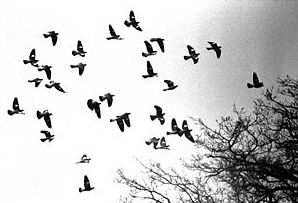
One day I was out on my morning walk, and up ahead a wood pigeon sprang into the air and started flying toward me. With a 30-inch wingspan, it’s a fairly big bird. But I didn’t flinch. I knew that the bird, very common in that neighborhood, had no interest in messing with me. It would swerve with plenty of time.
Think about all the other potentially scary if not genuinely dangerous natural wonders we encounter on a normal day, such as a bee, dog, or cactus — to say nothing of technology.
Imagine Earthlings on a new, unexplored planet. How could they know if what looked like a bird or a mere stick of wood was really harmless? They couldn’t know. They would have to face their new world with courage.
What have you encountered so far in your day that would frighten a newcomer to Earth?
Plants move slowly — except when they need to move fast, for example to capture insects (and eat them). They can even explode to scatter seeds or spores, and sometimes spores can jump around. Find out how they manage to move so fast in this ScienceNews article and watch a fun little video of speedster plants set to the finale of Tchaikovsky’s 1812 Overture.
We know that plants communicate with each other. So do pathogens. Sometimes, though, plants and pathogens share the same communication system. Botany One takes a look. Plants and pathogens do this because they are a holoboint, a “macrobe and its numerous microbial associates.” The web of life gets more and more complex the closer we look at it.
Quartz brings us this article: “A debate over plant consciousness is forcing us to confront the limitations of the human mind.” I wrote my book to explore that question on a planet far away because I didn’t think it could happen here. I may have been wrong.
 People who had read my novel, Semiosis, recommended this book to me, so I bought it, and they were right, it’s a good book. Later I learned that Adrian Tchaikovsky had provided the extremely favorable cover blurb for the British edition of my novel. I owe him one for that.
 I’ll be at Worldcon 76, the World Science Fiction Convention, from August 16 to 20 in San Jose, California. Here’s my official schedule. I’ll also be working as staff of the Worldcon newsletter, The Tower.
 HarperCollins has just published a paperback, ebook, and audiobook edition of Semiosis in
  If you weighed every living thing on Earth, what kinds of things would weigh the most?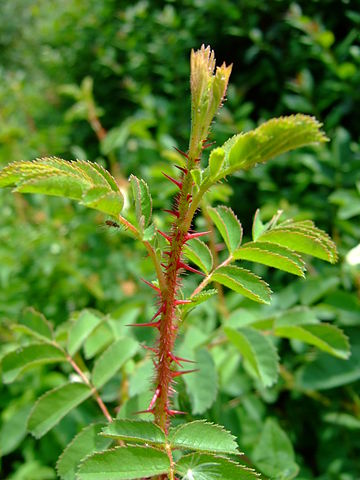
 I am a total Earthling. By that I mean I am entirely used to this planet’s environment.
 Semiosis