Categories
Uncategorized

Texas Library Association: “Semiosis” is “a pleasure to read”

20181015_lariat_287I lived in Austin, Texas, in the late 1990s — not for very long, sadly, but long enough to be improved some and to be legally entitled to say “y’all.”

So I’m excited that the Texas Library Association has included Semiosis in its 2019 list of outstanding fiction that merits special attention from adult readers.

“Since 2009 the goal of the Lariat Adult Fiction Reading List has been to highlight outstanding fiction that is simply ‘a pleasure to read.’ Each year 25 outstanding fiction titles are selected by a nine member committee.”

It’s an honor, y’all.

Categories
Uncategorized

Storing wealth in the soil

snow_covered_treesHere in the upper Midwest, the landscape looks desolate right now. Gardens and weeds are dead or dormant. Trees and bushes are as bare as if they suffered some sort of apocalypse — and they did! The air got freezing cold. That’s fatal to most plants unless they make complex adjustments.

What happened, of course, is winter, a regularly scheduled event. Come springtime, everything will turn green again — fast. From one day to the next, the landscape can change before your eyes.

This sudden rejuvenation happens in part because, during winter, nutrients are stored in the soil, which is famously fertile in this corner of the world. That’s how plants survive the hostile climate. Plants recycle their “food” from year to year as leaves fall and annual plants die and decompose.

By contrast, soil in tropical rainforests tends to hold few nutrients. Growing conditions are always good, so nutrients get reused almost immediately.

You probably knew this already. It’s basic environmental science. But it’s not simple science. Soil takes centuries to build up its riches. So if you’re staring at bare trees, you’re looking at the visible part of a complex and carefully adapted ecosystem, starting with what’s beneath your feet, buried treasure in the soil.

Categories
Uncategorized

Off to a bad start

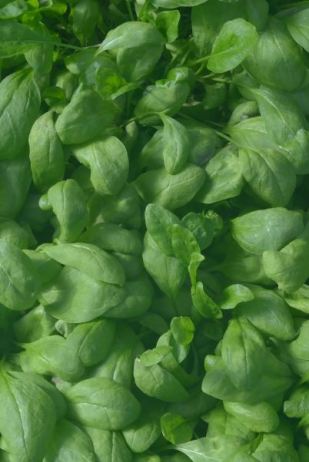
SpinachLike every writer I know, I’ve started too many stories that petered out and sit there on my hard drive tucked out of sight so they don’t depress me. These are mistakes — and I know why some of them happened. Here’s an analogy:

I’ve got a great starting idea for dinner today: I should use that lovely bag of baby spinach. But how? Too many possibilities make me indecisive. I can’t start cooking until I have a goal in mind, a finished dish.

For that reason, menus list dishes rather than random, tasty ingredients. MasterChef uses the random ingredient challenge to torture its contestants because the odds are against them cooking up something delectable. It’s fun to watch them fail.

Yet writers commonly start stories “to see where they’ll go.” Stephen King champions this technique. I think his story “Obits,” nominated for the 2016 Hugo Award, shows how it can fail. In the story, a man discovers he has an extraordinary skill. And then … he runs away and never does that thing again. The consequences of his skill, good or ill, are never explored. I suspect that King didn’t know what to do with the idea. He didn’t win a Hugo, either.

By contrast, consider “Eutopia” by Poul Anderson in the 1967 Harlan Ellison anthology Dangerous Visions. In that story, a time traveler must flee for something horrible he did, although he seems upstanding. The very last word of the story tells you what happened (no spoilers), and its impact helped Dangerous Visions redefine science fiction. This was no accident. Anderson started the story knowing precisely how it would end — a great ending — and every word from the beginning pointed toward that end.

If I start a story or novel without knowing the ending, I might get blocked and, panic-stricken, grab at the first ending I think of, although it could be hackneyed or weak or miss the mark. Or I might not finish the story at all. If I start with a strong ending in mind, success is not guaranteed, but my odds are better.

I’ve learned that my ending idea need not be too specific: “He wins, although it means betraying some of his core values so he can uphold others,” or “She kills her rival and takes over,” or “He lures the ghosts to a morgue and leaves them there, trapped.”

I still hope to achieve Poul Anderson’s genius at endings — which means I have a goal (an ending) for the story of my writing career.

These days, if I’m working on a writing prompt, I try to write the ending of a story. I might draw on one of those randomish ideas rattling around my brain, or I might come up with something new. I get a story I know how to finish. Much more needs to be done to flesh the idea out, of course, but the end is in sight.

Tonight, by the way, I’ll make a chicken-pasta-vegetable toss for dinner. The fresh baby spinach should be a delicious final touch. Bon appétit!

— Sue Burke

Categories
Uncategorized

“Semiosis” is on some year’s best SF lists

I am gratified (and relieved!) by how many people have enjoyed my novel Semiosis. Readers send me notes, booksellers are glad to see me, and the novel has made some year’s best lists for 2018. This is an unexpected and wonderful holiday gift.

New York Public Library
“Our librarians — through their experience recommending books to patrons and as readers themselves — have highlighted their picks for 100 best books written for adults and published this year.”

New York Magazine’s Vulture
“This first-contact story is up there with the best of Le Guin in terms of beautiful, engrossing, brilliantly imagined sci-fi.”

The Verge
“Alien life likely won’t take the form of a bumpy-headed alien, but something that we might not recognize as intelligent at first blush.”

Chicago Review of Books
“The 10 Best Science Fiction Books of 2018: From arctic metropolises to killer plants.”

Powell’s Books
“The only thing wrong with this spectacular debut is that it isn’t long enough.”

The Best Sci Fi Books
“25 Best Science Fiction Books of 2018: A lot of science fiction writers got weird. Good stuff.”

A Goodreads Listopia of Hugo 2019 Eligible Novels
“It’s hard to keep track of all the science fiction and fantasy books published in one year.”

— Sue Burke

Categories
Uncategorized

How do you read?

SAM_1317
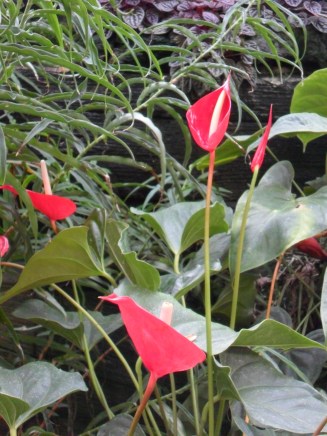
The colors of a flower mean “notice me.”

The word semiosis refers to the relationship between a sign and its meaning — a relationship that permits communication. Among humans, we usually use language to communicate, but humans have many languages, each one with a unique system of oral and written signs.

I speak English and Spanish, and here’s an unexpected way that the signs used by the two languages work differently:

I used to live in Spain, and one day when I was at home, I picked up a magazine, started reading, and the words made no sense. I felt surprised and confused. I had magazines in both English and Spanish, and I knew those languages well. There should have been no problem.

I took another look. The magazine was in English, but I had been reading it as if it were in Spanish. There’s a big difference.

In English, we read mostly by the shape of the word, not by the letters one at a time. The letters themselves don’t always signify a lot: every rule of spelling and phonics has too many exceptions. Words are what matter, and English-language readers naturally learn to decode whole words at a time.

But Spanish is written phonetically. I can look at any word, even if I’ve never seen it before, and pronounce it correctly. When I read in Spanish, I mentally sound out the letters because it’s the most efficient reading strategy for that language. The sounds naturally add up to the word.

That’s what I’d been doing with English: reading letter by letter as if it were Spanish. The result was gibberish. Until that moment, I hadn’t realized that I used different techniques for different languages. I just read.

*****

Reading is only the first step to translating between languages. I’m a certified translator for Spanish into English, and among my literary translations is the novel Prodigies by Angélica Gorodischer. Recently Axion e-zine interviewed me and Amalia Gladhart, who has also translated a Gorodischer novel. We discussed why specific works get translated, and some of the technical and artistic considerations at the level of sentences and word choice. Beautiful prose follows different rules in Spanish and English.

When you read, a lot can be different and yet achieve the same goal: communication and shared meaning.

Categories
Uncategorized

“Semiosis” is on sale: $2.99 for the ebook

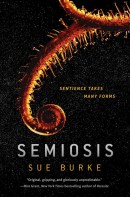
Cover_SmallMy novel Semiosis on sale until January 1: only $2.99.

You can buy it from Amazon, Barnes and Noble, eBooks.com, Google books, iTunes, and Kobo. The publisher’s link to the ebook all those sites is here.

What would make a better holiday gift for yourself or for others than a story that will forever change the way you look at your garden?

Categories
Uncategorized

Mediate like the stars

Andromeda GalaxyHow do you meditate? Sitting still, eyes closed? That’s one way to do it: We can imagine ourselves serene like the stars overhead, moving in stately, measured rhythms. We breathe in and out, and they rise and set.

Or we could meditate like the stars as seen from another point of reference, dashing to and fro frenetically. Our Sun moves at 43,000 miles per hour. Nearby Barnard’s star is moving away from us at 200,000 miles per hour, while a star called Ross 128 is moving toward us at 69,000 miles per hour. Stars race through the sky, and they outnumber the grains of sand on all our beaches. Their heavenly haste creates the galaxies that fly like hurricanes across the cosmos.

You can sit still to meditate. Or you can emulate a star and race like a cannonball from place to place, tugged throughout your journey by bodies as small as a planet or as large as the black hole at the center of a galaxy. Your course will be constantly modified by outside forces as you careen past them.

Movement is beauty. Speed is ecstasy. Stars never travel alone and never make the same journey as their neighbors — and here on Earth, their every moment is tracked with scientific awe.

You can be like them. Savor tomorrow morning’s mad rush. Imagine yourself as a star as you move fast and phrenetic, your destination subject to constant influence and change.

Meditate on your blazing, ecstatic celerity toward parts unknown. You will be heavenly.

Categories
Uncategorized

Authors and astronomers at the Adler Planetarium Book Club

On Saturday, December 1, from 1 to 3:30 p.m., three Chicago authors will be talking with astronomers at the Adler Planetarium about our inspiration from the stars. I’m one of the authors.

I’ll be discussing life on other planets and how huge the universe is with Mark SubbaRao, president-elect of the International Planetarium Society and director of Adler’s Space Visualization Program. Asteroid 170009 Subbarao is named after him for his work on the Sloan Digital Sky Survey.

Astronomer Mark Hammergren will talk with Michael Moreci, author of the science fiction novel Black Star Renegades. Astronomer Maria Weber will talk with Lori Rader-Day, author of the murder mystery Under a Dark Sky.

Admission to the book club talk is free with general admission, and if you’re an Illinois resident, you get free admission to the entire planetarium on Saturday with a valid Illinois ID as part of Illinois Resident Discount Day.

Books will be available for purchase, and we’ll be signing books and chatting with the audience after the talk. You can get full information about the event and books here.

Science informs fiction! Come find out how.

Categories
Uncategorized

Plants in print: Books about botany

There’s always more to learn and say about the vegetable kingdom. Here are some recent worthwhile books:

The Revolutionary Genius of Plants: A New Understanding of Plant Intelligence and Behavior by Stefano Mancuso
Plants can learn, remember, and innovate, Mancuso says. Unlike animals, who often try to avoid problems, plants are rooted in place and must solve them. He suggests that one key to their problem-solving ability is decentralization: plants respond to their environments with their whole bodies. In fact, he says, some of their solutions could help us solve our own problems.

Sex on the Kitchen Table: The Romance of Plants and Your Food by Norman C. Ellstrand
Plants have sex in a lot of ways, some of them complex. Ellstrand tells his tale with five foods: tomato, the plant sex manual; banana, a life without sex; avocado, timing is everything; beet, philander and philanderer; and squash and more, sex without reproduction. Each chapter is followed by a recipe.

Flora Unveiled: The Discovery and Denial of Sex in Plants by Lincoln Taiz and Lee Taiz
We now know that plants have sex, but it took a long time to figure it out. The authors document that discovery from the Paleolithic Age to the 19th century, covering fields as diverse as history, archaeology, linguistics, and comparative religion. The idea of plant sex was finally put forward in the late 17th century, and then ridiculed for 150 more years. Why was it so hard? Plants were all considered female.

Weird Plants by Chris Thorogood
In their relationships with animals, plants will eat us, trick us, kill us, kidnap us, or hold us subservient. Plants can be mean to each other, too — and do unexpected things, such as serving willingly as a toilet. Consider this: there’s a plant named “devil’s guts,” a tough name to acquire. Tales of plant oddities are accompanied by the author’s oil portraits of the weirdness in question.

The Overstory by Richard Powers
This novel, which has won accolades and prize nominations, examines relationships and conflicts between humans and trees. The first nine chapters capture an event in which trees changed the life of a person in different places and times. The second half of the book tells how those people fight to save trees. “If the trees of this earth could speak, what would they tell us?”

The War Between Trees and Grasses by Howard Thomas
Over time, trees, grasses, and humans have evolved together, but not always in harmony. The creature most changed has been ourselves. An appendix summarizes the geological timelines of the millions of years that have brought us timber and food — and famines of both. We humans have a dog in this fight, but we might not know when and if we’ve won.

Plants That Kill: A Natural History of the World’s Most Poisonous Plants by Elizabeth A. Dauncey and Sonny Larsson
Lots of colorful illustrations introduce us to the murderers of the vegetable kingdom: rincin, henbane, and aconite, among many others. But as the refrain says, the poison is in the dose. Many of these poisons can also cure us: colchicine for cancer, galantamine for Parkinson’s disease, and curare to relax muscles for surgery. Plants’ defenses can turn them into our allies.

The Songs of Trees: Stories from Nature’s Great Connectorsby David George Haskell
With lyrical prose and almost spiritual reverence, the author visits a dozen different trees around the world to capture their ecological aesthetics not as individuals but as part of the same web of life we humans belong to.

Categories
Uncategorized

The last thing a plant sees

SEMIOSIS_421x421