Sue Burke’s most recent science fiction novel is Usurpation, the conclusion of the trilogy that began with Semiosis and Interference. She began writing professionally as a teenager, working for newspapers and magazines as a reporter and editor, and began writing fiction in 1995. She has published more than 40 short stories, along with essays, poetry, and translations from Spanish into English of short stories, novels, poetry, and historical works. Find out more at https://sueburke.site/
Full disclosure: I’m a contributor to this anthology. When I got my contributor’s copy, I read the other stories. It’s a theme anthology about living (or not) on a dying Earth, and the stories range from high fantasy to grim science fiction.
The strength of this anthology is the variety. It opens with a tale of science gone wrong, then a story about the making of a movie on Earth, followed by a sort of parable about Gaia herself. In the sixteen stories, sometimes humanity survives, sometimes it doesn’t. Maybe cockroaches are the future. Maybe we just have to survive in the wreckage of a grand failure. Two of the stories seem to start the same and then head in very different directions. My story deals with an ecological disaster, but other disasters are possible. Gods might die, or humans might die — and they might deserve to die.
My favorite story is the last one, “Convertir” by Andrew Leon Hudson. It starts with a lot of tension: a girl is being raised in a cult whose beliefs she doesn’t share — then it takes a wild, weird turn. Andrew tells me he’s expanding it into a YA novel, and I want to read it.
This kind of anthology, in the end, invites the reader to dive deeply into the theme. How might the Earth end, and will humanity go down with it? Will it involve radiation, robots, or dragons? If speculative fiction predicts the future (or helps us try to avoid bad futures), can we get any hints about what to do, here and now, to keep Earth alive?
A Community Read Conversation with Sue Burke: I’ll be at Longwood Gardens as part of its Community Read program on March 27 and 28. Semiosis is one of this year’s books. At the Longwood blog, I answer some questions about the book and my love for plants.
Lisa Carter is founder and creative director of Intralingo Inc., and she’s a leading professional in the translation world. She was kind enough to feature me in her Spotlight series, meant to promote authors and translators and their work. In this 22-minute video interview (also available as a podcast), we talk about language, including the challenges of creating languages for Semiosis and Interference that were alien “enough” but still comprehensible to the reader.
Spain has a tradition of tertulias, which are informal social gatherings, usually in bars, often to discuss art or literature. When I was living in Madrid, Spain, the Tertulia Madrileña de Literatura Fantástica (Madrid Tertulia for Speculative Fiction, called TerMa for short) was meeting, and I had the pleasure to take part. TerMa became an engine for science fiction, fantasy, and horror from its founding in 1991 and for the next two decades. Now a half-hour documentary revisits those exciting times. Available on YouTube, La TerMa, semblanza de una época interviews the people whose literary lives were changed. I say a few words, too. In Spanish.
On YouTube, Linguistics in SFF Recommendations by Kalanadi, a book reviewer, has a v-blog about language, xenolinguistics, interspecies communication. “This is my favorite topic in science fiction by far” she says. “I’ve been asked occasionally for a recommendations video about this, so today I attempt to deliver.” Among the recommendations is Semiosis.
Finally, on YouTube, you can listen to this Clarkesworld Magazine podcast of my novellette, “Who Won the Battle of Arsia Mons?” The story was published in the November 2017 issue of Clarkesworld Magazine and is read by Kate Baker.
I took this photo last summer at Blarney Castle* in Ireland. The castle’s grounds contain a wonderful variety of gardens — jungle, Himalayan, bog, fern, and more — as well as the poison garden.
The castle’s web page describes it this way: “Hidden behind the castle battlements, you will find the new poison garden, which you must enter at your own risk. In this garden, the plants are so dangerous and toxic that they may be kept in large cage-like structures.… ”
Why is this plant behind bars? Because it’s poison ivy, Toxicodendron radicans. You have to be protected from it. Study it carefully, and if you see it in the wild, back away slowly.
This garden also grows wolfsbane, mandrake, and other plants that have medical or toxic properties, or were once believed to have an effect on humans.
I also saw a scraggly little plant growing inside a big cage: a marijuana seedling. That plant was being protected from us.
*I didn’t kiss the Blarney Stone. I gab too much already.
I’m going to Capricon this weekend, February 14 to 16, a science fiction convention held annually in the Chicagoland area since 1981. We’ll be at the Westin Chicago North Shore, discussing and debating topics about books, movies, television, anime, space exploration, and science, with special tracks for children and teens. This year’s theme is the Tropics of Capricon. Specifically, as the con describes it:
The tropics is a band around the globe from 23 degrees north to 23 degrees south. This region includes 40% of the world’s population and is underrepresented in science fiction and fantasy. These areas will also be disproportionately affected by global warming. For example, entire island nations like the Maldives and Tuvalu are in danger of being wiped out by rising sea levels.
The word tropics evokes sun-drenched beaches, bustling marketplaces, and lush rain forests. The tropics can be a setting for escape and exploration, or for colonialism and dystopia. Will the future of the region be filled with glittering cities, or a wasteland ravaged by climate change? What does it mean for a science fiction and fantasy setting to be tropical? Come with us as we explore the nexus between geography and culture for science fiction and fantasy settings.
I’ll participate in two panels:
Real Tropical Killers, Friday, 2:30 p.m.
A jungle is a war zone. Jaguars and snakes and other animals will try to kill you, but there’s so much more danger. Many plants will also try to kill you or each other, animals hunt each other, disease lurks, and the climate might get you, too. In our fiction, we can invent all kinds of perils, or we can just incorporate all the threats that menace us in real life. Panelists: Jonathan Brazee, Patricia Sayre McCoy, Shelly Loke, Sue Burke, and Mari Brighe.
Lessons I Learned as a First-Time Novelist, Friday, 8:30 p.m.
From finding a publisher, working with an editor, to marketing your book and everything in-between, our panelists discuss what it’s like to publish your first novel. Panelists: Mark Huston, Sue Burke, John O’Neill, Clifford Johns, Tracy Townsend, and Jon R. Osborne.
I’ll also be autographing at the Autograph Table on Saturday, 11:30 a.m. to 12:15 p.m. Come by and say hi! You don’t have to bring something to sign, and there probably won’t be a line.
You have eleven more months to celebrate the International Year of Plant Health. The United Nations General Assembly declared it with the slogan “Protecting Plants, Protecting Life.”
The UN’s Food and Agriculture Organization explains the reasons behind the declaration this way:
Plant health is increasingly under threat. Climate change and human activities have altered ecosystems, reducing biodiversity and creating new niches where pests can thrive. At the same time, international travel and trade has tripled in volume in the last decade and can quickly spread pests and diseases around the world causing great damage to native plants and the environment.
I can see the truth behind that statement every time I travel around Illinois, where I live. The Emerald Ash Borer, a beetle that attacks ash trees, has turned once-beautiful forests into vast stands of dead trees. In Italy, olive trees are being killed by xylella fastidiosa, a plant bacteria. A fungus may wipe out the most common banana.
Plants make up 80% of the food we eat and produce 98% of the oxygen we breathe.
We can do a lot to help. For starters, be careful when taking plants and plant products with you when you travel because they may spread plant pests and diseases. Be cautious when ordering plants and plant products online or through postal services because small packages can easily bypass regular phytosanitary controls. Try to manage or reduce your environmental footprint and protect and manage natural resources.
I’m honored to announce that Semiosis is this year’s Community Read at Longwood Gardens, along with the nonfiction book Weird Plants by Chris Thorogood, and for younger readers, The Enormous Potato by Aubrey Davis.
Longwood Gardens is a public horticultural garden in Kennett Square, near Philadelphia, PA, where “garden design, horticulture, education, and the arts interplay to inspire and enlighten our guests.”
Community Read events start on February 1, including book discussions at local public libraries, workshops such as a potato planting, and storytimes.
I will be at Longwood on Friday, March 27, and Saturday, March 28.
On Friday morning, I’ll teach a class, Creative Writing: Telling a Plant’s Story. The class description:
“Open your mind to the endless possibilities about plant life and its interaction and interdependence with humans. Join acclaimed author Sue Burke as she guides you through writing exercises to explore ways to approach plants as a point of view, using the tools of both speculative and literary fiction. Spend the afternoon writing and reflecting using Longwood Gardens as your inspiration. What new plant might you invent? What new world might you create?”
If you attend, I can tell you about the writing exercise that led to Chapter 1 of my novel.
On Saturday evening, I’ll participate in ”Attack of the Plant Nerds: Science Fiction vs. Science Fact. The event description:
“Are you Team Science Fiction or Team Science Fact? Join Semiosis author Sue Burke and a team of plant nerds for an evening exploring plants both real and imaginary. Burke discusses the inspiration behind the world of Pax, as well as answers questions about Interference, the sequel to Semiosis. Plant nerd experts round out the evening by sharing tales of their favorite odd and unusual plants.
“Following the talk, continue the conversation in our glorious Conservatory. Burke will hold a book signing, and the plant nerds will be available to answer questions. A light dessert reception adds to the fun.”
I’m hoping for a chocolate dessert.
When I’m not busy with events, you’ll find me wandering through the beautiful gardens.
If you can make it to Longwood Gardens, I’d love to meet you.
“I would go out to share some truffle with Pitman soon, and I would sing him a sad song about fear and hope, failure and healing, about sweet and fresh sap in leaves evergreen with grief. Maybe I could teach the pack to coo along. Music the Pax way. Cross-species communication. They never did that on Earth. Singing fippolions. Dancing fippokats. Helpful, talkative plants with a sophisticated appreciation of abstract ideas. Good times. They can happen. Wait and see.”
Here are the lyrics to that song. Feel free to set them to music if you want, and I would love to hear it if you do.
Grief Evergreen (Higgins’s Song)
People will die, and I knew that yesterday.
People will cry, and I know that now today.
I would have been fine just knowing that yesterday.
I didn’t want to learn I was right today.
(Chorus)
Fresh sap in the leaves evergreen,
clean and new every season,
grief evergreen.
The ache of a soul that lived a night too long,
the one that brought sorrow and failure and wrong,
the one I saw coming. I knew all along
I couldn’t stop it. I wish I were that strong.
(Repeat chorus)
Life is a song, and time never stops breathing.
I can’t be quiet, I can’t refuse to sing.
I can’t stop sunrise, and I can’t stop the spring.
It hurts more to keep silent. I have to sing.
On Thursday, January 9, I took part in the monthly Tangelo Reading here in Chicago. We had a wonderful evening with talented and passionate readers and an engaged and friendly audience. I read the opening pages of Semiosis and then a little essay about houseplants — with a window full of beautiful houseplants behind me as I spoke. If you couldn’t attend, here’s the essay I read:
***
Perhaps you have houseplants. I do. Perhaps you’ve killed a few. I certainly have. That means we’re serial killers.
So, do our houseplants hate us? No, they don’t, no matter how much you neglect them. In fact, they’re praying to their green gods for your prosperity. They’ll struggle on as best they can, offering you beauty and silent non-judgmental companionship in exchange — they hope — for more or less regular watering and a spot near sunlight.
Plants need you, no matter how inconstant you are. A lot of the vegetable kingdom depends on animals, in fact, and plants haven’t always chosen well.
Consider this story of apples and oranges — osage oranges, to be exact.
First, the apple: colorful and tasty. Many animals love sugary treats. Apple trees make sweet fruit for us to munch on so we’ll throw away the core, and the seeds can germinate in a new place. (They don’t trust us much, though. They’ve made their seeds too bitter to consume so we’ll do our job right.)
How has this strategy worked out?
Apples originated in central Asia, and ancient peoples brought them east and west. When apples reached North America, they found a champion named John Chapman, “Johnny Appleseed,” who brought orchards to the United States frontier. In the 20th century, with more human help, the trees conquered large portions of Washington State. Now, 63 million tons of apples are grown every year worldwide, much of them in northern China.
From the apple trees’ point of view, it doesn’t get better than this. They grow worldwide and get lots of tender loving care. Human beings have served them very well.
In contrast, there’s the osage orange tree. It also produces fruit: green, softball-sized, and lumpy, full of seeds and distasteful latex sap. No one eats it. The tree originated in North America and once grew widely, but by the time European settlers arrived, its territory had shrunk to the Red River basin in eastern Texas. How did it fail?
The fruit had appealed to the Pleistocene’s giant ground sloth, a member of North America’s long-lost megafauna. The sloth scarfed them down, not chewing much, and the seeds traveled safely through its digestive system, emerging in new territory. Then, 11,000 years ago, human beings came to North America and couldn’t resist the allure of a couple of tons of meat per slow-moving beast. Giant ground sloths disappeared, and six of the seven species of osage orange also went extinct.
Why haven’t the remaining trees adapted their fruit to contemporary tastes? Because trees live for a long time, and 11,000 years ago for them is like the High Middle Ages for us. Lucky for them, humans find their wood useful and rows of the trees effective windbreaks, so they currently grow across the United States and the world.
Still, useful wood isn’t much to offer the animal kingdom. Plants usually bribe us with food, the way that prairie grass entices grazers like bison to clear its domain of weeds. The bison nibble away weeds at the same time they munch on tasty grass leaves, which grass plants can easily replace. There used to be a lot more bison in North America, though. This strategy is starting to look shaky.
Flowering plants give bees nectar in exchange for hauling pollen from flower to flower, but bees seem to be having a rough time these days, too. If they go, both wild and domestic plants are in deep trouble.
Plants find animal partnerships tempting. We’ll work hard for a fairly low price. But we’re unreliable and short-lived as individuals — and too often as species.
Back to your houseplants. Many of them likely originated in tropical rainforests. Your living room resembles a jungle: warm, reasonably humid, and moderately lit. Growing in confinement there isn’t such a bad life.
You, on the other hand, are fragile, distractible, hyperactive, and a bit murderous of your own kind as well as other species. Have your houseplants fallen into good hands? Can apples rely on us, and for how long? Are osage oranges one more extinction away from their own disappearance?
Your houseplants suffer from existential angst. Food is love, and so is fleeting beauty. They give their all for you. Go water them, offer reassurance, and consider what you owe to plants. You — and other species — need to be there for them now and in the future. Make them happy.
I’ll be participating in the Tangelo reading series, held from 7 to 9 p.m. on Thursday, January 9, at The Martin performance space, 2515 W. North Ave., in the West Town neighborhood of Chicago.
I plan to read from Semiosis and share a short essay — about what? I haven’t decided yet.
The event, the 23rd of the Tangelo series, will also feature: Emma Casey, a writer and performer and maker from Chicago. Levi Todd, a queer poet and lifelong Chicagoan, working as a healthy relationships educator with youth. Jitesh Jaggi, a recent immigrant from India who uses storytelling, poetry, dance, and writing to share his narratives.
Actually, I feel kind of bad about doing that. We have a nice planet. What I really enjoy are big ideas, so when I was asked to contribute to SSFWorld’s anthology Dying Earths, I thought, “What fun!”
Specifically, I was asked by the editors, Andrew Leon Hudson and N. E. White, for an ecological apocalypse — and I could interpret that theme broadly.
I had a head start thinking about that, given our own real-life ecological apocalypse. I also knew the Earth had gone through an ecological apocalypse — not by human hands — at the end of the Carboniferous Period. That led to some “what if” ideas, and soon I had a new, future apocalypse as a means to wreak destruction.
Dying Earths is out now as an ebook from Amazon for only $2.99, but it will also be available as a print-on-demand paperback early in the new year.
Stories from sixteen authors from around the globe are included: P.J. Richards, Daniel Ausema, Jez Patterson, Jeremy Megargee, N.E. White, Matthew Hughes, Andrew Leon Hudson, James Maxstadt, Lena Ng, George Bradley, Shana Scott, Christopher Stanley, Jude Reid, Scott J. Couturier, Kat Pekin, and myself.
You can read an interview of me and Matthew Hughes here.
 Dying Earths: Sixteen Stories from the Ends of Times by Sue Burke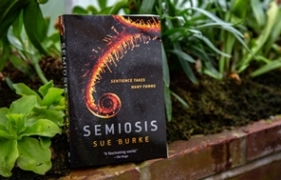
 Spain has a tradition of
  The
The  I took this photo last summer at Blarney Castle* in Ireland. The castle’s grounds contain a wonderful variety of gardens — jungle, Himalayan, bog, fern, and more — as well as the
  I’m going to
  You have eleven more months to celebrate the
  I’m honored to announce that Semiosis is this year’s
  Chapter 3 of Semiosis ends with Higgins saying: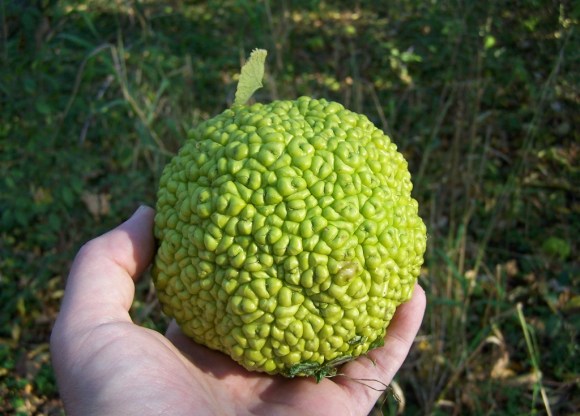
 I’ll be participating in the Tangelo reading series, held from 7 to 9 p.m. on Thursday, January 9, at
  I always enjoy destroying the Earth.
 Semiosis