Sue Burke’s most recent science fiction novel is Usurpation, the conclusion of the trilogy that began with Semiosis and Interference. She began writing professionally as a teenager, working for newspapers and magazines as a reporter and editor, and began writing fiction in 1995. She has published more than 40 short stories, along with essays, poetry, and translations from Spanish into English of short stories, novels, poetry, and historical works. Find out more at https://sueburke.site/
It’s not a sequel to Semiosis and Interference (the sequel, Usurpation, is on the way). Instead, this is the story of separated sisters, a virus, a rebellion — and a cantankerous woolly mammoth.
Photo: Birr Castle gardens, Ireland. Photo by Sue Burke.
(This is a section cut from the manuscript for reasons of length in which Stevland declares his faith.)
Human meteorologists tell me that rain comes as the result of vast movements in the air that bring warmer or cooler, and wetter or drier air masses from here to there, and that the heat from sunshine powers these movements. But the meteorologists are Sun worshippers, and thus they will see the Sun as the causative factor behind everything. The same humans assure me that planets without water are dead, though the Sun shines on them. They do not make the obvious conclusion: Water is life.
I inherited a root that identifies a god of water, a vast animal that lives in the oceans and whose minions are other animals, in particular large intelligent ones, clearly a superstition by its irrationality and ignorance, and the elaborate stories in the root concerning the water god and its minions obscure the facts about water and animals. The stories allege that god sends water to help its animals and that the animals can petition for rain, so I must win the favor of the animals and keep them near. Even less sophisticated plants hold large, intelligent animals in a certain appreciation that points to awe.
It is true that in times of drought, many animals die, go dormant, or leave; animals, especially large intelligent ones, make up a minute part of the biomass of life and their presence is an indicator of water, but it is not a causative agent. Animals irrigate their favored plants, so animals do control water to an extent, and the idea that currying favor with those animals brings the blessing of water is true only in its most mundane sense. The human meteorologists can predict the rain, and with that information, they and we intelligent plants can make plans accordingly.
But water moves as it will, a god of total power that feeds on the Sun’s energy just as we plants do, a god that permeates all life but whose life differs from mine the way a fire differs from the Sun. I must accept its acts, whether helpful or harmful, always impersonal, and I must cope as rationality gives me the tools.
Water may not have sent the human animals, but water has allowed me to grow and understand their role. The belief that animals were divine agents did not prevent us bamboo from slaughtering them in the past; in fact, it may have encouraged it, because to kill an enemy’s minions is to harm the enemy and help oneself, even if the deaths occur so far away that their bodies’ iron cannot be savored. Being divine may be a curse. Humans are mundane, fortunately, yet they are valued not only by me but by other plants.
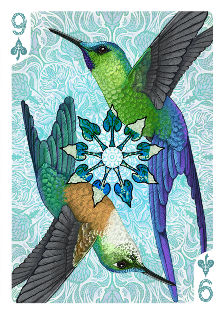
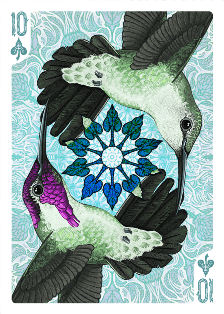
A reader contacted me to ask how Stevland’s name is pronounced (STEEV-land) and passed on sketches of some Pax creatures made by her daughter, who had also read Semiosis. The sketches were wonderful! The daughter, Rene LeCompte, was kind enough to let me share her art and ask her a few questions via email.
***
Do you make illustrations for all the books you read? Even just in your head?
I don’t usually draw images from the books I read, but I do frequently imagine and visualize them in my head, yes. I especially enjoy authors who are able to clearly describe settings, people, and creatures like the ones in your books. And I always find it interesting as my visualization can change and morph as authors add details, until my final vision of a thing is quite different from my initial impression. It’s very different from watching say, a movie or TV show. I like the work placed on the reader to use their imagination and mind’s eye.
I especially like the ground eagle, which is scarier than I imagined. You seem rather fond of birds. How did your love of birds start? Why parrots in particular?
I am extremely fond of birds; of all the animals on Earth, they are my favorite. My love of birds started probably when I was about 12 years old and got a cockatiel as my first pet. She had a profound impact on me, and was much loved for the 13 years I had her. As I grew older, my love of birds did as well. I now have a Green-cheek conure, a White-capped pionus, and another cockatiel, with hopes to expand my aviary in the future. As for why parrots, they make such good companions. You wouldn’t expect a bird to be cuddly, but my conure is extremely so; she always wants to be on me or in my hands. They still have their wild nature, so my relationship with them comes down to how well I read and understand them. It’s a very different type of relationship from the one I have with my dog. Getting the trust of something so tiny and fragile is a rare and precious thing to me.
For you, what’s the best part of the process of making art? Getting ideas, creating the art, sharing it, or something else?
The best part for me is the making, especially the coloring and detail work. This is the time I really get into the zone, and can work for hours without even thinking about it. I definitely enjoy creating art more than sharing as my social media skills aren’t as good as some other artists’. It is however very gratifying when my art is seen by a truly appreciative audience.
What project(s) are you working on now? How would you describe your creative style?
My current project that I just started is a deck of hummingbird-themed playing cards. In the past few years, I’ve become really interested in the style and design of playing cards in general, and this deck would be my third major playing card project, with the other two being owl and parrot themed. Speaking of which, I also currently have the parrot deck in production right now, as the project funded on Kickstarter a few months ago. As for my creative style, I would describe it as illustrative realism — I try to keep any species I draw recognizable, but I don’t aim for hyper-realism. I love color, and I tend to bump any color naturally occurring in an animal up a notch.
What (if anything) is important to you besides making art and wrangling pets?
Self-sufficiency is very important to me — I don’t like to just hire a person to fix a thing or make a thing for me — I like to do it myself so I can understand the process. My major hobbies right now are woodworking and mead making (my hobbies tend to wax and wane as I gain and lose interest in many things). I also really enjoy home renovation, and have done most of the major projects in my house, including putting down a new laminate floor and completely remodelling a bathroom. My philosophy in the past few years has evolved to ‘if someone else can do it, I can too!’ While this might lead me to making a few mistakes, it’s also helped me get the ball rolling on a variety of projects without too much fear of failure.
Is there a link where readers can see your work? And why ‘maggock’?
Yes, I have an Artstation account: https://www.artstation.com/reneelecompte and a Twitter account that’s updated with smaller projects: https://twitter.com/maggock. At this point the ‘maggock’ handle is about 20 years old, and I created it back when I was fresh out of high school. I wanted a handle that sounded like ‘magic’ and that’s what my young brain came up with. Nevermind that it also really looks like ‘maggot.’ Oops. I’ve thought about changing it due to that, but never got around to it.
In the acknowledgments to Semiosis, I wrote: “I owe thanks to Gregory Frost, whose writing exercise about a special kind of wall led to this novel.”
That exercise took place in 1996 at the Clarion Science Fiction and Fantasy Workshop, which I attended. As one of the instructors, Greg assigned several exercises over his week of teaching, one of them involving a wall. As I recall, it went something like this:
“Imagine a wall that appears overnight between two groups about to go to war. They can see through it, they can communicate through it, but they can’t pass through it and attack each other. Begin that story.”
We only had to write the opening paragraphs, but some of us were inspired to continue. Mike VanWie wrote a bittersweet love story in a style we would now call steampunk, but back then we just called it imaginative. Dan Jeffers came up with a comic sword and sorcery novel with sex scenes and other digressions in the appendices.
(The photo shows us hard at work on a different exercise, a group project involving tropes.)
I eventually wrote a science fiction short story in which the wall was a human colony on a distant planet. That story was published in 1999 as “Adaptation” by the magazine LC-39, and later I expanded it into a novel, Semiosis.
Thanks again, Greg. Great oaks from little acorns grow.
As you may know, the novels Semiosis and Interference are set on a distant planet and feature a small animal called a fippokat. The fippokat is based on my sister-in-law’s imaginary childhood animal.
This year, for Christmas, I commissioned a friend who is a fiber artist to create a fippokat for her as a gift. The artist did a fine job. Fippokats are cute, cute, cute.
My sister-in-law was delighted — especially by the curly tail, which is canon. The little stuffed animal was like imagination come to life, she said.
Happy holidays. May your best-imagined hopes for 2021 find a way into the real world.
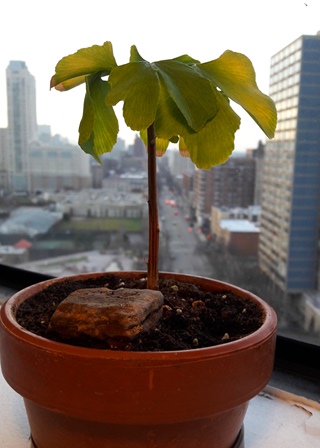
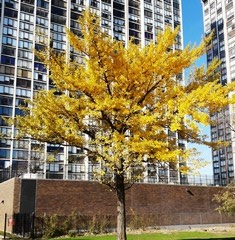
I’m trying to convince my tiny tree, a Gingko biloba, that winter has come, and I’m not having much success.
I grew this sapling from a seed I gathered in the fall of 2019 from a tree in the park next to my home. I kept the seed refrigerated over the winter and planted it in the spring, hoping to create a bonsai. (This might not be realistic.)
Gingko are temperate-climate trees that can grow as far south in the United States as Zone 8, which includes Austin, Texas, where I used to live, and as far north as Zone 3, which is the border between Minnesota and Canada. I currently live in Chicago, Zone 5. Summers here can be hot, although not as hot as Austin, and winters can be colder than a Texan wants to imagine.
Gingkos are also deciduous trees, which means they lose their leaves in fall. Trees do this, among other reasons, to protect themselves from winter storms. If leaves get coated with ice, the weight can pull down a branch in a high wind, which can be a fatal injury. Bare branches are safer.
The tree’s “mother,” which I can see from my window, turned a lovely shade of golden yellow, typical of the species, in early November. By then it had endured chilly nights, even some frost, and a few nasty storms. Soon after I took the photo, another howling storm tore all the autumn leaves from all the trees in the neighborhood.
My little tree, however, is in front of a big window in my living room, where the living is easy: no storms and constant comfortable temperatures. The edges of its leaves grew brown at the same time as the leaves on the gingkos outside, probably in response to the shorter days. But the leaves on my tree have remained mostly green.
I’ve been trying to convince my tree that winter is coming. Because I don’t have a porch or balcony to let it experience real weather, I’ve been putting the tree in the refrigerator at night and watering it with ice cubes; roots are very sensitive. The tree has noticed the cold, but hasn’t been eager to react.
According to this scientific article, gingkos grow best with warm temperatures and good soil moisture. Maybe my living room and its eternal, moist summer isn’t such a bad habitat. Maybe not losing its leaves means the tree knows it will be safe.
Although I’ve been writing professionally for 48 years, there’s always more to learn about writing. That’s why I read this book: to learn the “secrets of the perfect turn of phrase.”
Author Mark Forsyth opens the preface by saying, “Shakespeare was not a genius.” Instead, he says, Shakespeare learned how to write well, and we can see his growth in writing skills between his early and his later plays. In particular, Shakespeare learned to use figures of rhetoric. The Bard of Avon isn’t the only one who has been using turns of phrase to good advantage, either. Other authors, songwriters of all kinds, and speech writers use the same techniques.
Forsyth goes on to explain 39 different figures of speech. I already knew some of them, like alliteration and personification. Some of the others, like epistrophe and chiasmus, I recognized the moment I saw them, but I’ve never thought deeply about them and how to use them well.
Although Forsyth’s writing is full of jokes and fun, I read the book in one brief chapter per day. Lessons, like strong spirits, are best drunk in sips. I’ll keep the book for reference, too. Most of all, I hope to write a little better — with a little more intentional rhetorical flourish. If it worked for Shakespeare, it might work for me.
On the imaginary planet of Pax, there’s a plant that disguises itself as poop. On Earth, plants do that too, as I mentioned in an earlier blog post.
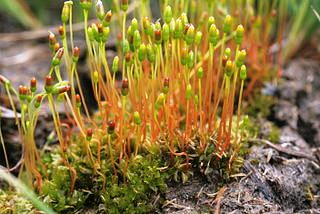
Earth also has poop moss. It looks like moss. It gets its name because it grows on poop. Specifically, it grows on dung in damp places, especially fens. Its varied species can be found in northern North America, Europe, and Asia.
In the United States, one species, Splachnum sphaericum, is known as pinkstink dung moss because of its color and because, like others of its kind, its spores are distributed by flies that feed on dung. The moss produces the odor of dung to attract the flies. When they land on the moss, the spores, which are borne on long stalks, rub onto the flies’ bodies and are carried away to new places to grow as the flies land on real dung to feed.
It’s a tough life, and since humans seem to like draining swamps and fens, these rare mosses are getting rarer. One kind of dung moss grows only on white-tailed deer droppings which have lain on the peat for four weeks in July. Others prefer fox or moose dung.
The rarest place of all for these humble mosses has been found in pitcher plants, the Nepenthes. Most pitcher plants eat bugs. Some eat poop — that is, they have found a way to encourage tree shrews to poop into them as if they were toilets. Like all toilets, they can get messy, and the moss grows on the poop stuck to the sides of the pitchers.
Animal poop is a treasured gift to the plant world, and plants put its natural wealth to creative uses. We are careless with it, which reflects poorly on our character as a species.
On a slightly related subject, moss also grows in the icy cold. Sometimes, moss forms into rolling balls on glaciers known as glacier mice.
This novel won the Hugo, and it involved space opera and poetry, so I thought I’d like it. I did.
The novels starts a little slow – though not boring – and builds up to a fine climax. The main character arrives as an ambassador at a planet she admires and has studied in depth, and bit by bit she discovers how little she actually understands. She knows the Teixcalaanli Empire has aspects that are problematic, but in fact, something very wrong and dangerous is going on, and it involves her, and she has to find out exactly what it is.
She’s also an outsider and, as an ambassador, she must act within a defined role. She’s alone and soon becomes even more alone, intensely aware of all her anxieties and doubts.
The plot is occasionally hamstrung by her status. The story is compelling in its complexity, but rarely heart-stopping in its action. The “opera” of this space opera is more like ominous background music. She goes to a lot of meetings and talks and listens a lot. That’s what diplomats do: they interface and cope with bureaucracies. But soon her life is on the line, then the stakes get even higher. Can diplomacy save the day? Because that’s all she has.
It’s tricky to tell a story like this where the agency of the main character faces so many external limits. That’s the real story: how to take control of a situation you cannot manage. At every moment, it’s believable. Her predicaments and their resolutions are satisfying.








 Semiosis