Categories
Uncategorized

My 2023 houseplant Christmas tree

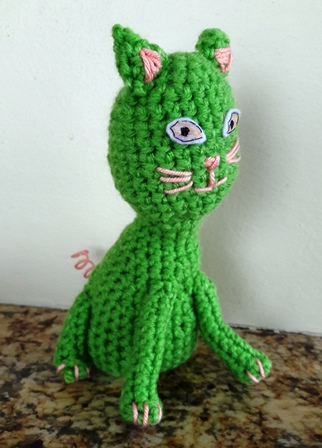
Every year, I coerce one of my houseplants into impersonating a Christmas tree, but this year, the Pilea peperomioides enthusiastically volunteered. The little plant wasn’t what I had in mind — I intended to conscript the bigger and more cone-shaped crown of thorns — but Pilea insisted:

“I’ll be perfect! My leaves are already just like those round glass ornaments!”

I answered that its species is sometimes called a money plant because its leaves are flat and round like coins, but Christmas ornaments are actually spherical.

“Christmas cookies are flat! And I’m Christmas green! An actual evergreen!”

Yes, I told it, it is green year-round, but that doesn’t mean it’s a conifer, and besides, it’s kind of small for the job.

“Presents will look bigger under me! If I can’t do this, I’ll drop all my leaves and be the Festivus Pole!”

So, I backed down. Here’s my tree. Merry Christmas.

Categories
Uncategorized

Podcast with Tasshin

I had a delightful two-hour podcast conversation this week with Tasshin, who describes himself as “an extremely online pilgrim wandering this precious world for the benefit of all beings.”

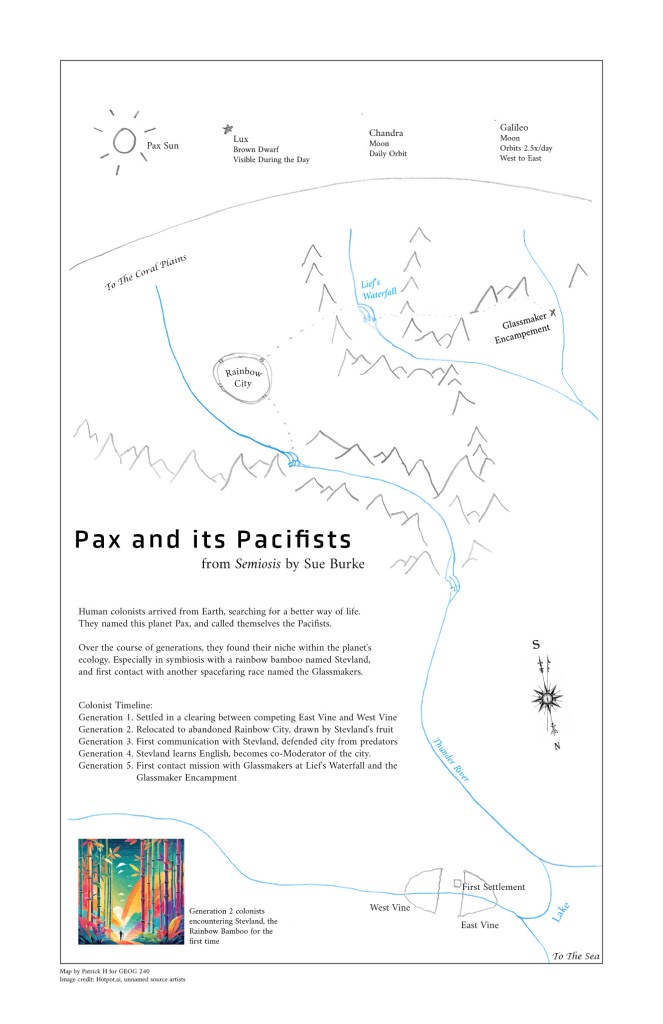
We came to know each other when he reviewed my novels Semiosis and Interference, examining  ethical themes raised by the books, the world of Pax, and the character of Stevland. His review is long and deeply thoughtful, and I think it captures what I was trying to do.

You can watch our conversation here on YouTube, where there are also links to an audio version and a transcript. I hope you enjoy it as much as we did.

***

In other matters, the first short story I ever published, “Poet for Hire,” is available here. The background to the story is here.

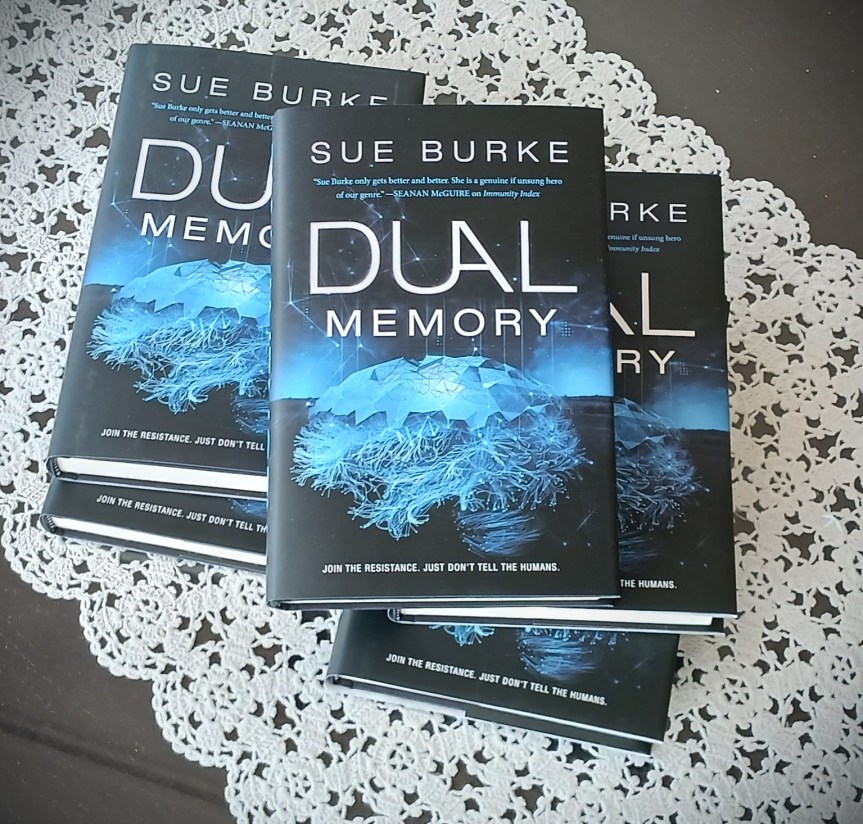
In Tor.com’s Reviewers’ Choice: The Best Books of 2023, Matt Keeley calls Dual Memory “a satisfying thriller about art, climate, conspicuous consumption, and artificial intelligence. Burke remains one of our foremost science fiction writers.” Thanks, Matt!

Categories
Uncategorized

If I were a plant

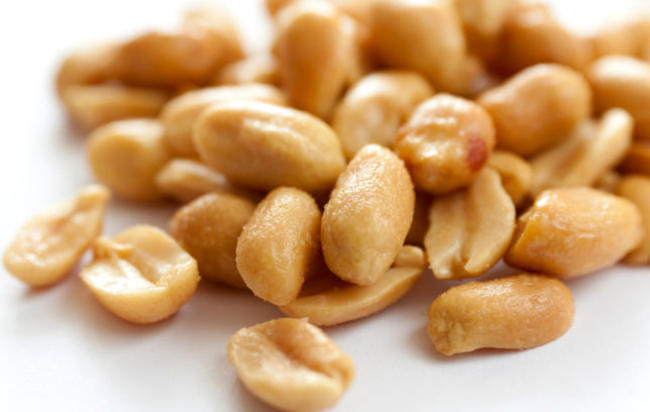
Suppose my skin were impregnated with chlorophyll and I could practice photosynthesis. It’s what plants do to turn sunshine into energy. If I spent a full day laying naked in the sun, I would produce the energy equivalent of one cocktail peanut.

This illustrates two main differences between plants and animals.

The average woman (me) needs to ingest the caloric equivalent of 333 cocktail peanuts per day. Animals burn a lot of energy, but then again, we do a lot in a day. Plants lead slower lives.

But compared to a plant, we’re fairly small, measured in surface area. The average human has about one square meter of skin. Plant leaves are designed to maximize surface area. A mature, healthy tree has about 200,000 leaves and a photosynthesizing surface area of around 500 square meters. On a sunny day, a mature tree produces enough energy to fuel a big, active man — a soldier, for example.

But instead of waging war on us, they make our food. Animals eat plants. That makes us the top of the food chain, right?

I’m not so sure. Consider the apple. The apple tree makes apples to seduce us into taking the fruit, eating it (the energy equivalent of a mere seven cocktail peanuts), and depositing the core elsewhere, which may be a good place for the seeds to grow. Apple trees have convinced us not merely to distribute their seeds but to care for them. We’ve allowed the trees to take over 200,000 acres of Washington State in exchange for giving us 10 billion apples per year, and we think it’s a bargain.

Wheat controls America’s Great Plains. Corn runs rampant in Iowa. Olive trees have conquered southern Spain. Rice rules Japan. The lack of potatoes almost destroyed Ireland, proving that we need them more than they need us.

We’re not the only animal that does plants’ biddings. Grass wants to be eaten (or mowed). It grows from beneath the soil with only the leaves above. Grazing animals, like buffalo in the prairies, eat the leaves, which grass can easily replace. But the animals also eat weeds in their entirety, which kills them. This is why a healthy, regularly mowed lawn remains weed-free. (We are weekend substitute buffalo.) Grass has found the perfect ecosystem in suburban environments. In some places, grass is even mandated by law.

So much for being in charge. They’ve co-opted our municipal ordinances. In any case, we’re hopelessly outgunned.

On Earth, measured by mass, there is 100 times more plant life than animal life. We worry about the consequences of global warming, and it would be hard on plants, but in the long run, human beings are one species, and there are more than 400,000 species of plants. They are as varied as algae, moss, roses, maples, grapes, and cacti. They will endure, though our orchards and gardens might miss us.

However, scientists are searching for ways to persuade plants to photosynthesize better, since photosynthesis takes carbon dioxide from the air. Plants might save us from ourselves. We speak of our hopes as “green.” Yes, exactly.

That’s why, if I were a plant, I would rule this planet, and you would work for me — for peanuts.

Categories
Uncategorized

‘Alphaland and Other Tales’ by Cristina Jurado

My good friend, Cristina Jurado, has a new collection of short stories available, Alphaland and Other Tales. It includes a story I translated from Spanish into English, “Embracing the Movement.”

I met Cristina when I was living in Spain, and I’ve collaborated with her on a number of projects. She’s an award-winning author, enthusiastic editor, and cheerful promoter of speculative fiction. You can recognize her from across a room by her wide, warm smile.

This collection includes nine short stories, and the back cover describes them this way: “Otherness is the idea that permeates all these speculative stories, full of characters troubled by the misconstruction of their identities, and in permanent search for answers in the margins of reality.”

I translated “Abrazar el movimiento” (Embracing the Movement), an intense first-contact story whose beautiful images hide horror.

Every translation has delightful problems. Many words never have exact equivalents. In this case, the challenge started with the first sentence: No somos tan diferentes, forestera. “We are not so different…” and then there’s that word: forestera. It is used repeatedly throughout the story, and I had to get it right.

The Real Diccionario Española defines forastero/a as someone or something que es o viene de fuera del lugar: “that is or comes from another place,” a stranger, an outsider. But there’s more: forastero is male, forastera is female. In the context of the story, it matters that the person being addressed is identified as female. I needed to find a way to preserve that sense.

Thesauruses listed close-but-not-quite words like foreigner, nonnative, outlander, alien, nonresident, drifter, transient, wanderer … which led to nomad, rambler, roamer, rover, stroller, vagabond, wanderer, wayfarer … Wait. The word rover suggested something … the Mars rovers, Perseverance, Curiosity, Spirit, Opportunity, and Sojourner. The Sojourner was named after Sojourner Truth. In 1797, she was born into slavery as Isabella Bomfree in New York State, and after she became free, she chose a new name because she felt called to travel and testify for the abolition of slavery and for the improvement of women’s rights.

“Sojourner” means someone who stays as a temporary resident, who comes from another place. The word in English has associations with space exploration, and it’s a name still being used for baby girls today.

I decided I’d found the word for forastera, although I needed to reinforce the female meaning in the first reference, and I realized that I could do so by introducing an important element from further within the story. Finally, I had the opening line in English:

“We are not so different, sister sojourner.”

Categories
Uncategorized

My story in ‘The Cosmic Muse’ anthology, and other news

What if you could adopt rescue dragons the way you can adopt rescue dogs? Who would do the adopting? How? Where?

These questions led to my story “The Virgin Who Rescues Dragons” in NewMyths Anthologies Volume 4: The Cosmic Muse. It just came out, and you can buy it through this link:

https://books2read.com/b/br6Z67

I drew inspiration for my story from The Tough Guide to Fantasyland by Diana Wynne Jones. That book is a parody of tourist guidebooks, and it lists the common tropes of fantasy fiction. I studied up on Dragons, Virgins, Evil Mages, Boy Kings, Dark Lords, and Foreboding Castles, then added a few Compelling Motivations, Backstories, and Inner Conflicts — and soon, I had a fun tale to tell.

The Cosmic Muse will give you 40 stories and poems involving magic or expressing awe at the universe, with cover art by Fiona Meng, its third eye promising insight and inspiration. I’m excited to be included among so many impressive authors.

***

OTHER NEWS:

André Santana has been nominated for Best Science Fiction Audiobook Narration for Dual Memory by SOVAS, the Society of Voice Arts and Sciences. Congratulations André! The winner will be announced December 10.

Alex Kingsley has reviewed Dual Memory for Ancillary Review of Books, and I think they explain wonderfully the role of art and artists for both humans and AIs in the novel. Beautiful Things We Weren’t Supposed to Make: Review of Dual Memory by Sue Burke

Categories
Uncategorized

“Perhaps you wrote this story, and then I happened”

This is weird and wonderful:

The very first short story I sold, back in 1995, “Poet for Hire,” involved a young woman with curly brown hair who starts a freelance poetry business in Milwaukee. She works out of a storefront in the 2200 block of Kinnickinnic Avenue, down the street from where I used to live, and she gets vital inspiration from the plants in the Arid Dome of Milwaukee’s Mitchell Park Horticultural Conservatory.

Last month I was contacted by Anja Notanja Sieger. Someone found the story and sent it to her — because she’s Milwaukee’s first and only poet for hire, she has written poems in the Arid Dome, her husband owns a used bookstore in the exact same storefront in the story, and she has curly brown hair.

Anja invited me to her podcast, The Subtle Forces. I read the story out loud, and we chatted about its coincidences. “Perhaps you wrote this story,” she said, “and then I happened.”

You can listen to the podcast here:

https://subtleforces.podbean.com/e/episode-37-poet-for-hire/

Categories
Uncategorized

I’ve finished ‘Usurpation’

I’ve turned in the manuscript for Usurpation, the third book in the Semiosis trilogy. At the end of the second book, Interference, rainbow bamboo has been taken to Earth and is flourishing, and Stevland tells them to protect and dominate the humans. But how? The third book tells that story.

Usurpation should appear in bookstores in October 2024.

A whole year from now! Yes, it seems like a long time, but a lot still needs to be done. My editor at Tor might suggest a few more changes, such as adding a scene that could strengthen the story. Then the manuscript will be sent to a copyeditor.

Good copyeditors are far, far more than proofreaders. As they go over the manuscript, they will make a glossary or stylesheet of names of characters, places and other terms, and they’ll check to see that they are used consistently. They’ll note distinctive formatting or punctuation, and make sure the text conforms overall to the Chicago Manual of Style and a standard reference dictionary. They might need to check facts, such as dates of actual historic events. They also look for inconsistencies in the story: Becky might have blue eyes in Chapter 2 but brown eyes in Chapter 3. They’ll go line by line and make sure every sentence makes sense. Copyeditors have saved me from many howling mistakes, and they have my affection and respect. I don’t want them to rush.

After I review and approve the copyeditor’s changes and suggestions, the manuscript will be typeset, which is an art in itself. Then it will be proofread — twice. The proofreaders might have additional questions for me.

Meanwhile, an artist will design the cover. Finally, the package will be sent to a printer, and the printed books will be sent to a distributor.

If there’s an audiobook, and I’m sure there will be, the audiobook publisher will select the narrator, who will begin the work of reading the novel aloud creatively.

The final steps are marketing, sales, and publicity, and I may have a lot to do to promote Usurpation before and after the publication date.

Still, for me, the hard part is done, and right now, I’m thinking about my next novel. It won’t be about talking trees … but what? It’s a nice problem to have to solve. Any suggestions?

Categories
Uncategorized

I’ll give a talk Nov. 9 on “The Costs of Plant Blindness”

I’ll be giving a Zoom talk on Thursday, November 9, from 6 to 7 p.m. CST for the Audubon Society of Northern Virginia about plant blindness, the inability to see or notice plants in everyday life. It also refers to failing to recognize the role of plants on Earth and believing that plants are somehow inferior to animals.

When I wrote Semiosis, one of my secret goals was to make my readers afraid of their gardens and afraid for plants in general. I’ll speak on how plant blindness affects our environment and what can be done to be more aware of the foundation of our ecosystems. Plants, like birds, connect us to the Earth.

You can join us. Sign up here.

Categories
Uncategorized

The Science in Fiction podcast: Sue Burke on Intelligent Plants

Marty Kurylowicz and Holly Carson invited me to join them on their podcast, The Science in Fiction — and it’s now available for your listening pleasure.

We talked about the science of botany in my science fiction novel Semiosis and its sequel Interference. Plants have a lot of surprising behaviors, and the hosts learned things they didn’t know about tulips, apples, osage oranges, and giant ground sloths.

We also discussed my novels Immunity Index about a coronavirus pandemic — which I wrote before the covid-19 pandemic — and Dual Memory, which has recently arrived on bookstore shelves. I’ve just turned in the manuscript for the third installation of the Semiosis trilogy, Usurpation, due to be published in October 2024.

The Science in Fiction podcast will follow up this episode with an interview next week with Paco Calvo, professor of the philosophy of science and principal investigator at the University of Murcia’s Minimal Intelligence Lab in Spain, and author of Planta Sapiens.

Here are all the places you can listen to Ep 12: Sue Burke on Intelligent Plants in Semiosis.

Buzzsprout

Apple Podcasts

Spotify

Audible.ca

Amazon Music

Categories
Uncategorized

Video from the Deep Dish reading

As you may recall, back on September 14 I read a short story called “The Virgin Who Rescues Dragons” at an event here in Chicago, the Deep Dish reading series, organized by the Speculative Literature Foundation. I was one of eight readers that evening.

If you couldn’t attend, you can watch videos of us. Here’s the link to the YouTube playlist.

The piece I read will be published this fall inThe Best of NewMyths Anthology Volume 4: The Cosmic Muse. Due to time constraints, the version I performed of “The Virgin Who Rescues Dragons” is abridged. The full version has a lot more jokes, so buy the book!

Watch my video here.