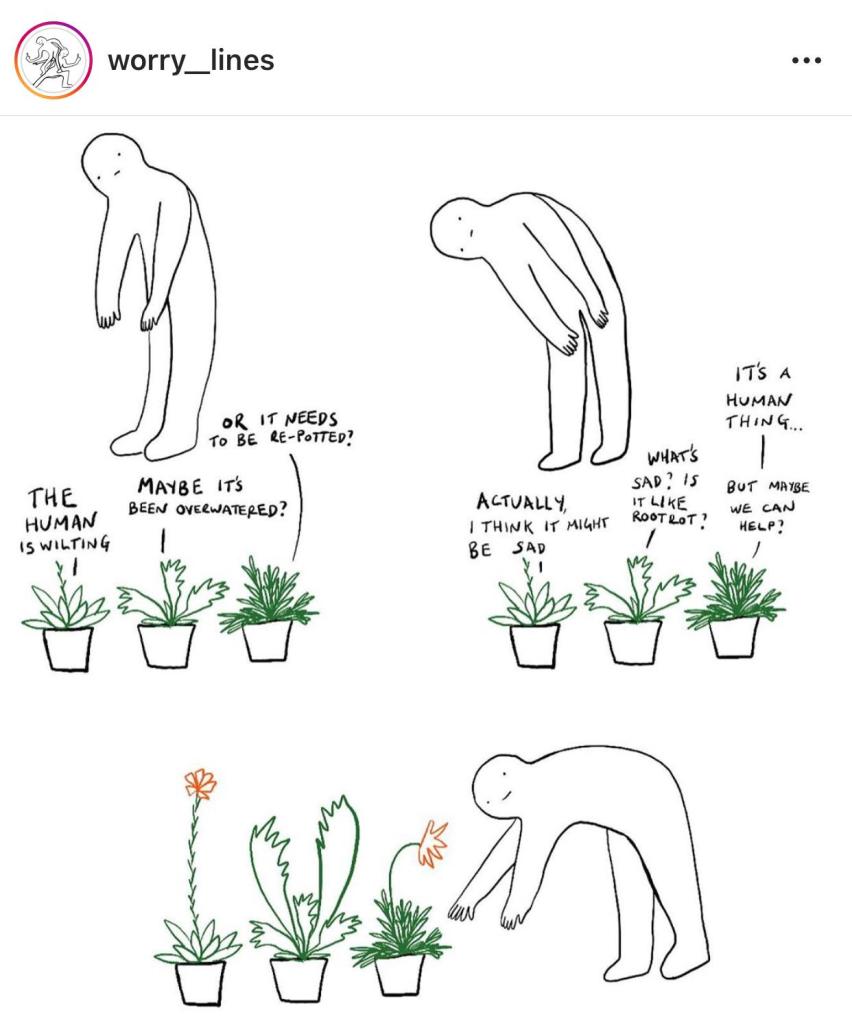
As you know, an emotional support animal is a companion that provides support to human individuals for a mental, psychiatric, or emotional disorder. These are often typical pet animals like dogs and cats, although other creatures — including plants — can improve your mental health.
Plants require a role reversal, though.
Animal companions for humans rarely get training, but you must train yourself to provide effective emotional support for plants. First, you must overcome plant blindness and see them as living beings. Then decide if you plan on supporting outdoor or indoor plants: gardening, rewilding your lawn, or sustaining indoor plants in pots?
If you already have plants, what kind do you have? Apps like Picture This and its website, Pl@ntNet, or guided observation and keys can help. Find out what that particular plant needs for warmth, light, and watering, and consider what you can offer.
Common houseplants are often jungle undergrowth plants, and your living room probably resembles a jungle floor in light and warmth — but check. Every plant has a niche, and it will suffer stress outside that niche. A cactus leads a very different life than a pothos, and small plants need more frequent care, sometimes daily, than big plants. Your first emotional support duty is to gauge your ability to minimize the plant’s stress.
“Moist” is a universally challenging concept when it involves soil, yet you must master it.
When you care for your plant, you will benefit both the plant and yourself. As you provide regular, attentive care, you may improve your own self-care. After all, you get by giving, and you learn responsibility by being responsible.
As the support animal, you will be rewarded by beauty and quiet companionship, and you will have created a supportive environment for the plant — and very possibly for yourself. Are you ready to change your life?

 Semiosis
One reply on “You can be an emotional support animal”
[…] are great little house plants, and your service to it as a emotional support animal will be rewarded. Just don’t believe everything you’re told, especially if it sounds too good […]
LikeLike