On the imaginary planet of Pax, there’s a plant that disguises itself as poop. On Earth, plants do that too, as I mentioned in an earlier blog post.
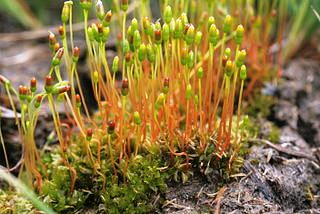
Earth also has poop moss. It looks like moss. It gets its name because it grows on poop. Specifically, it grows on dung in damp places, especially fens. Its varied species can be found in northern North America, Europe, and Asia.
In the United States, one species, Splachnum sphaericum, is known as pinkstink dung moss because of its color and because, like others of its kind, its spores are distributed by flies that feed on dung. The moss produces the odor of dung to attract the flies. When they land on the moss, the spores, which are borne on long stalks, rub onto the flies’ bodies and are carried away to new places to grow as the flies land on real dung to feed.
It’s a tough life, and since humans seem to like draining swamps and fens, these rare mosses are getting rarer. One kind of dung moss grows only on white-tailed deer droppings which have lain on the peat for four weeks in July. Others prefer fox or moose dung.
The rarest place of all for these humble mosses has been found in pitcher plants, the Nepenthes. Most pitcher plants eat bugs. Some eat poop — that is, they have found a way to encourage tree shrews to poop into them as if they were toilets. Like all toilets, they can get messy, and the moss grows on the poop stuck to the sides of the pitchers.
Animal poop is a treasured gift to the plant world, and plants put its natural wealth to creative uses. We are careless with it, which reflects poorly on our character as a species.
On a slightly related subject, moss also grows in the icy cold. Sometimes, moss forms into rolling balls on glaciers known as glacier mice.
Earth’s wonders never cease.

 Semiosis